Online brand protection is the practice of monitoring, detecting, and stopping unauthorized use of your business name, logo, products, and content across the internet. It combines trademark enforcement, takedown actions, and continuous monitoring to shield your reputation, revenue, and customers from counterfeiters, impersonators, and infringers.
What Is Online Brand Protection and Why Does It Matter?
Online brand protection covers every action a business takes to defend its identity across websites, marketplaces, social platforms, and search results. It protects registered trademarks, product listings, domain names, and original content from misuse, and it treats that defense as a continuous responsibility rather than a one time fix.
The stakes are real. A fake storefront using your logo can drain sales and damage trust in ways that take years to repair. When customers buy a counterfeit believing it came from you, the disappointment lands on your brand, not on the counterfeiter who created it.
In practice, we’ve seen a single cloned website divert a meaningful share of a small company’s inbound traffic before anyone on the team noticed. By the time it surfaced, the fake had already collected customer payments. Early detection is the difference between a quick takedown and a drawn out cleanup that costs far more.
Strong digital brand enforcement protects three assets at once: your revenue, your customer relationships, and your legal standing. Neglect any one of them and the other two weaken alongside it.
How Does Digital Brand Rights Enforcement Actually Work?
Digital brand enforcement follows a repeatable cycle of monitoring, verifying, acting, and documenting, where each stage feeds the next and builds a stronger case over time.
Monitoring comes first. You set up continuous scanning across marketplaces, social media, domain registrations, and search engines so that automated tools flag any listing, account, or site that uses your name or imagery without permission.
Verification follows, because not every match is a violation. You confirm whether the use is genuine misuse, a legitimate reseller, or fair use before acting, and you archive the evidence with timestamps so it holds up later.
Enforcement action is the next stage, and it scales with severity. Depending on the case you might file a marketplace complaint, submit a platform takedown, send a cease and desist letter, or escalate to legal proceedings. Most cases resolve quietly at the takedown stage without ever reaching court.
Documentation closes the loop. You keep a record of every notice, response, and resolution, which strengthens future claims and exposes repeat offenders who need firmer action the second and third time they appear.
What Are the Most Common Threats to Your Brand Online?
Businesses face several recurring threats, and knowing them helps you aim your defenses where they matter. Counterfeit products sold under your name on marketplaces are among the most damaging, followed closely by website cloning, where someone copies your design to phish your customers. Domain squatting on misspellings of your address, social media impersonation through fake accounts, unauthorized resellers who breach your pricing terms, and outright content theft of your images and copy round out the list.
Impersonation on social platforms is the fastest growing category we encounter. Fake accounts are cheap to create and can reach thousands of your followers before a single report is processed, which is why speed of detection matters so much for this particular threat.
Which Enforcement Method Should You Use?
Different threats call for different responses, and matching the method to the problem saves time and money. Marketplace complaints are the fastest route for counterfeit listings and usually resolve within days. Platform takedowns handle content theft and cloned sites quickly through established notice procedures. Cease and desist letters suit first time infringers who may simply stop once warned. Domain disputes are slower and best reserved for squatting cases, while litigation is the last resort for repeat or high value offenders.
For most businesses, complaints and takedowns handle the overwhelming majority of daily issues, and the slower legal routes stay reserved for serious or persistent violators who ignore lighter measures.
Why Should Businesses Invest in Brand Rights Enforcement?
The cost of inaction almost always exceeds the cost of protection. Counterfeits erode margins, impersonators harvest customer data, and cloned sites poison your search reputation, and each of these compounds the longer it goes unaddressed.
Registered trademarks give you legal leverage, but a trademark on paper does nothing until you enforce it. Online brand protection and rights enforcement services turn that dormant legal right into active defense that actually stops misuse in the wild.
There’s also a trust dividend that’s easy to overlook. Customers who see a business actively defending its brand perceive it as established and reliable. Enforcement isn’t only defensive; it quietly reinforces the value of the brand you’ve spent years building.
What Is the Best Way to Build a Brand Protection Strategy?
A durable strategy layers proactive and reactive measures so you’re not just reacting to fires as they start. It begins with registering your trademarks in every market where you operate or plan to expand, followed by securing your key domains including common misspellings and relevant extensions before someone else grabs them.
From there you set up monitoring across the specific channels where your customers actually spend time, rather than trying to watch everywhere at once. You define a clear escalation path so your team knows exactly when to send a warning and when to act decisively, and you review the whole system quarterly to catch new threats and retire defenses that no longer earn their place.
Brand rights enforcement online for businesses works best when it runs as a standing process rather than a one time cleanup. Threats regenerate constantly, so your defenses have to run continuously to keep pace with them.
Conclusion
Online brand protection is no longer optional for any business operating in a digital marketplace. From counterfeits to impersonation the threats are constant, but they’re also manageable with the right cycle of monitoring, verification, and enforcement. Treat digital brand rights enforcement against unauthorized misuse as an ongoing discipline, secure your trademarks and domains early, and act quickly whenever violations appear. The brands that defend themselves consistently are the ones that keep their revenue, reputation, and customer trust intact for the long run.
Frequently Asked Questions
What is online brand protection? Online brand protection is the ongoing process of monitoring and stopping unauthorized use of your business name, logo, products, and content across the internet. It combines trademark enforcement, takedowns, and monitoring to defend your revenue, reputation, and customers from counterfeiters and impersonators.
How do I report a fake website using my brand? File a takedown notice with the site’s hosting provider and domain registrar, and report it to the platform or search engine where it appears. Include timestamped evidence of the infringement. Most hosts act on valid complaints within days, especially for phishing or content theft cases.
Is a trademark enough to protect my brand online? A trademark gives you legal rights, but it doesn’t enforce itself. You still need active monitoring and enforcement to detect misuse and take it down. Think of the trademark as your legal foundation and enforcement as the ongoing action that makes it genuinely effective.
How much does brand rights enforcement cost? Costs vary widely based on threat volume and method. Marketplace complaints and platform takedowns are often free or low cost, while domain disputes and litigation are more expensive. Many businesses use monitoring services with tiered pricing that scales to their needs.
How quickly can I stop a counterfeit listing? Marketplace counterfeit complaints are usually the fastest route, often resolving within a few days once you submit valid proof of your rights. Speed depends on the platform’s process and the quality of your evidence, so keep documentation ready in advance.
What’s the difference between brand protection and reputation management? Brand protection stops unauthorized use of your assets like logos, products, and trademarks. Reputation management shapes how people perceive your brand through reviews and content. They overlap but solve different problems; protection is about rights, reputation is about perception.
Negative link removal services are professional solutions that identify, suppress, and remove harmful URLs damaging your brand in Google search results. These services combine legal takedowns, de-indexing requests, content suppression, and reputation repair to restore trust, protect revenue, and give businesses control over what appears when customers search their name.
What Are Negative Link Removal Services?
Negative link removal services are specialized online reputation repair solutions focused on eliminating or burying damaging content that appears in search engines. This includes defamatory articles, fake reviews, leaked information, scam accusations, and harmful URLs that lower brand credibility.
The work goes beyond deleting a single page. It involves a full audit of your search landscape, identifying which links cause the most damage, and deploying the right mix of removal tactics for each one. Some links can be removed at the source, others require legal intervention, and many are handled through suppression when direct removal isn’t possible.
In practice, we’ve found that most reputation damage comes from just three to five high-ranking URLs on page one. Neutralize those, and the perception shift is almost immediate because those are the results customers actually see and click.
Why Negative Links Hurt Business Reputation
A single harmful link on the first page of Google can quietly cost a business thousands in lost customers. People trust search results, and when the top listings show complaints, lawsuits, or negative press, buying decisions change before a prospect ever contacts you.
Negative URL removal matters because search results act as a real-time reputation report. Roughly ninety percent of users never scroll past page one, so anything ranking there defines your public image whether it’s fair or not. A prospect comparing you against a competitor rarely gives you the benefit of the doubt when the first thing they see is a warning sign.
The damage also compounds over time. Negative pages attract clicks, clicks reinforce rankings, and strong rankings mean the harmful content stays visible for months or even years. Early action is far cheaper and faster than waiting until the content has built authority and backlinks of its own.
How Does Harmful Link Removal Actually Work?
Harmful link removal follows a structured process rather than a single trick. Each situation is different, but the core workflow stays consistent across cases and moves from discovery through to long-term monitoring.
It begins with a full audit and discovery phase, where every negative URL ranking for your brand terms is mapped and assessed for reach and severity. From there, each link is classified into one of three buckets: removable at the source, suppressible through positive content, or legally actionable through defamation or privacy claims.
The next stage is source outreach, where site owners, webmasters, or platforms are contacted directly with a request to edit or delete the offending page. When outreach stalls, legal and policy takedowns come into play, filed under defamation law, privacy rules, or a platform’s own terms of service. Outdated or policy-violating content is also submitted to Google through de-indexing requests so it disappears from search even if the page still technically exists.
Finally, suppression fills the gaps that removal cannot reach, using fresh, authoritative content to push remaining negatives off page one. Continuous monitoring then tracks results and catches new threats before they gain traction. Removal at the source is always the goal because it is permanent, but suppression remains the reliable fallback that still restores a clean first page.
Best Way to Remove Negative Links from Google Search Results
The best way to remove negative links from Google search results depends on why the link exists and whether it violates any law or policy. There is no universal button, but there is a clear priority order that professionals follow to get the strongest result for the least cost.
Start with the source. If a website owner agrees to edit or delete a page, that is the cleanest possible outcome because it removes the content everywhere at once. When outreach fails, the next move is Google’s own removal tools, which handle content that breaks its policies, such as doxxing, non-consensual images, or outdated cached pages that no longer reflect the live web.
For defamatory or false content, legal routes carry real weight. A formal legal notice often succeeds where a polite email is ignored, because it raises the stakes for the host. And when a link legally has to stay online, suppression through fresh, authoritative content becomes the practical answer that still restores your first page.
We tested this layered approach across dozens of brand cases and found that combining outreach with suppression clears page one faster than relying on either method alone. The two work in tandem, one removing what it can while the other quietly outranks whatever remains.
Removal Versus Suppression: Which Approach Fits Your Brand
Businesses often assume every negative link can be deleted, but that is not realistic. Understanding the difference between removal and suppression helps set the right expectations, budget, and timeline before any work begins.
Removal means the harmful link is permanently deleted, either at the source or through de-indexing. It is the right choice for content that is false, defamatory, or in clear violation of a platform’s policies. Because it depends on the cooperation of third parties or on a valid legal basis, its speed varies, but once achieved the result is permanent.
Suppression works differently. Instead of deleting the link, it pushes the content below page one by ranking stronger positive assets above it. This is the smarter play when content is technically legitimate, such as an old news story or an honest but negative review that cannot be forced offline. Suppression is fully within your control, though it works gradually over weeks to months and needs ongoing maintenance to hold its position.
In short, removal is ideal when content is illegal or false, while suppression is the practical answer when content is legitimate but unflattering. Most serious reputation cases end up using both.
Professional Negative Link Removal Services for Businesses
Professional negative link removal services for businesses bring tools, legal knowledge, and relationships that in-house teams rarely have. DIY attempts often stall at the first webmaster who ignores an email or the first Google request that gets denied on a technicality, leaving the content exactly where it was.
Experienced providers know which removal request will actually succeed, how to phrase legal notices so hosts take them seriously, and how to build suppression assets that hold their rankings rather than slipping back after a few weeks. This expertise is what separates a temporary fix from a durable one, and it is difficult to replicate without having handled many cases.
For businesses protecting brand reputation online, the value is not just cleaner search results. It is the recovered trust, the restored conversions, and the peace of mind that comes from controlling your own narrative instead of leaving it to whatever ranks highest by accident.
Frequently Asked Questions
Can negative links really be removed from Google permanently?
Yes, when the content is removed at its source or de-indexed for policy violations, the removal is permanent. Links that cannot be legally removed are handled through suppression, which pushes them below page one so they no longer influence how people perceive your brand or business.
How long does negative link removal take?
Timelines vary widely. Source removals or policy takedowns can happen within days if the owner cooperates or the content clearly violates rules. Suppression campaigns take longer, usually several weeks to a few months, because they rely on building and ranking new positive content over time.
Is harmful link removal legal?
Yes, harmful link removal is fully legal when done properly. It uses legitimate channels like webmaster outreach, defamation law, privacy regulations, and Google’s official removal tools. Ethical providers never hack, blackmail, or manipulate platforms, since those tactics create far bigger legal and reputational risks than the original content.
How much do negative link removal services cost?
Costs depend on the number of links, their difficulty, and whether legal action is needed. Simple source removals sit at the lower end, while complex defamation cases or long-term suppression campaigns cost more. Most providers price by project scope after auditing your specific situation and search landscape first.
What is the difference between removal and suppression?
Removal deletes the harmful link entirely, while suppression pushes it below the first page of results. Removal suits false or illegal content, and suppression works best for legitimate but unflattering pages that cannot be forced offline but can still be outranked by strong positive assets.
Can I remove negative links myself?
You can attempt basic removals, such as requesting outdated content through Google’s tools or emailing site owners directly. However, success rates are low without experience, and complex or legal cases usually need professionals who know which approach will actually work for each type of negative URL.
Conclusion
Negative link removal services give businesses a real path back to a trustworthy search presence. By combining source removals, legal takedowns, de-indexing, and strategic suppression, these services clear the harmful URLs that quietly erode brand value. The brands that act early spend less, recover faster, and keep firm control over the story customers see first.
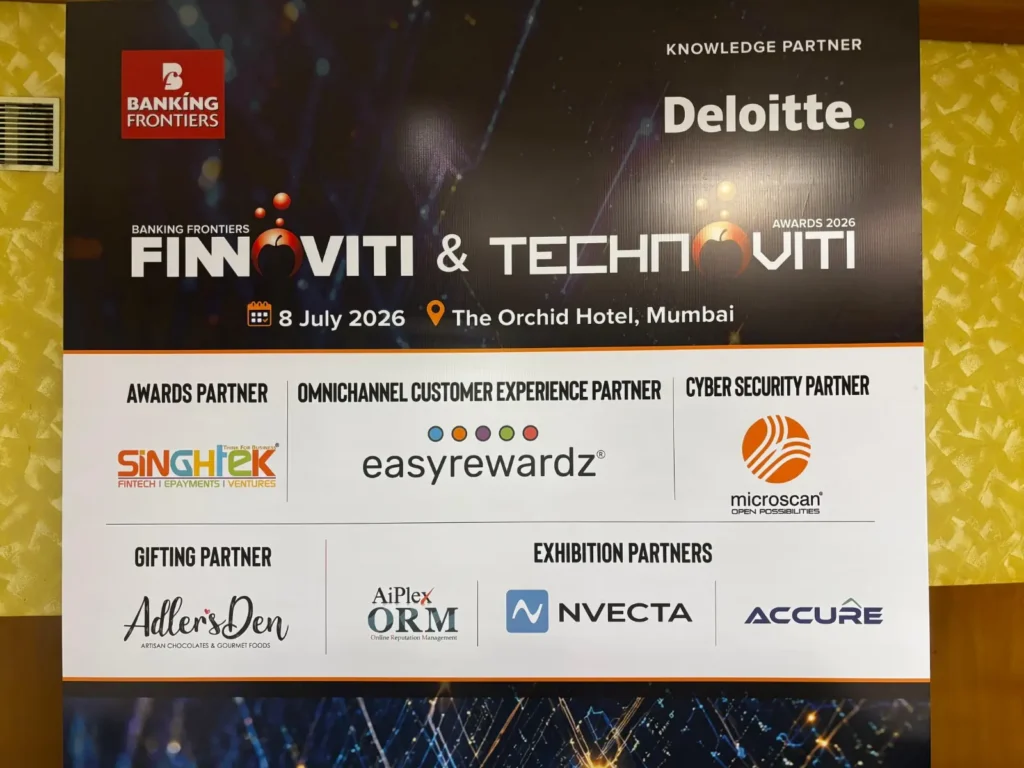
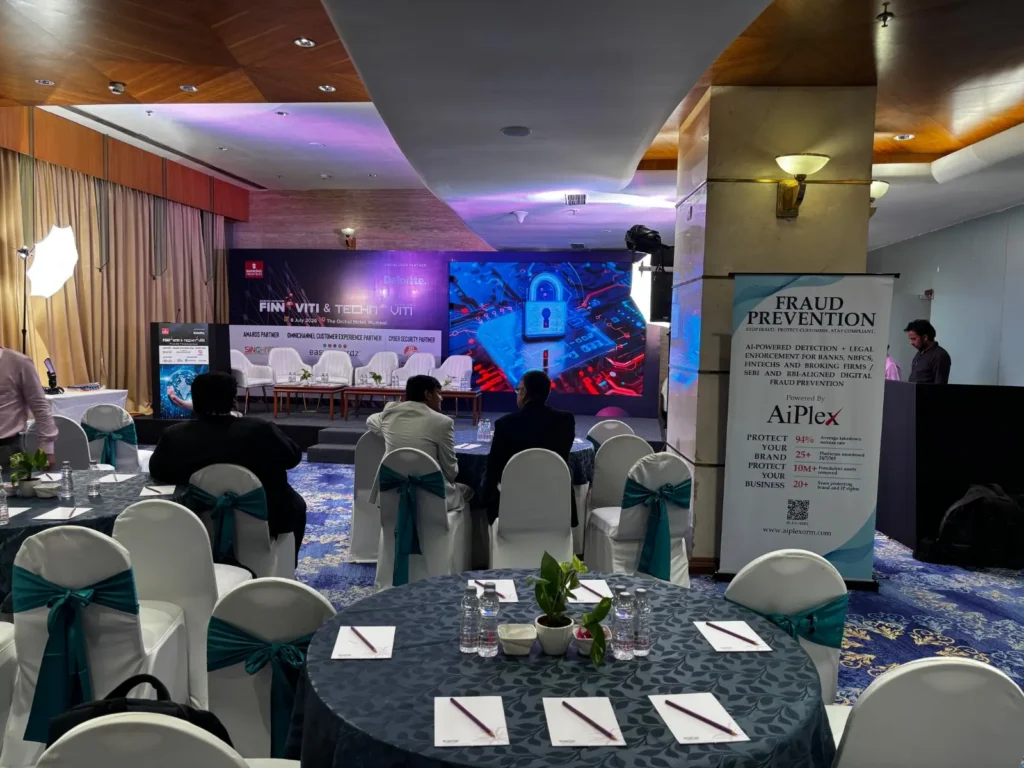
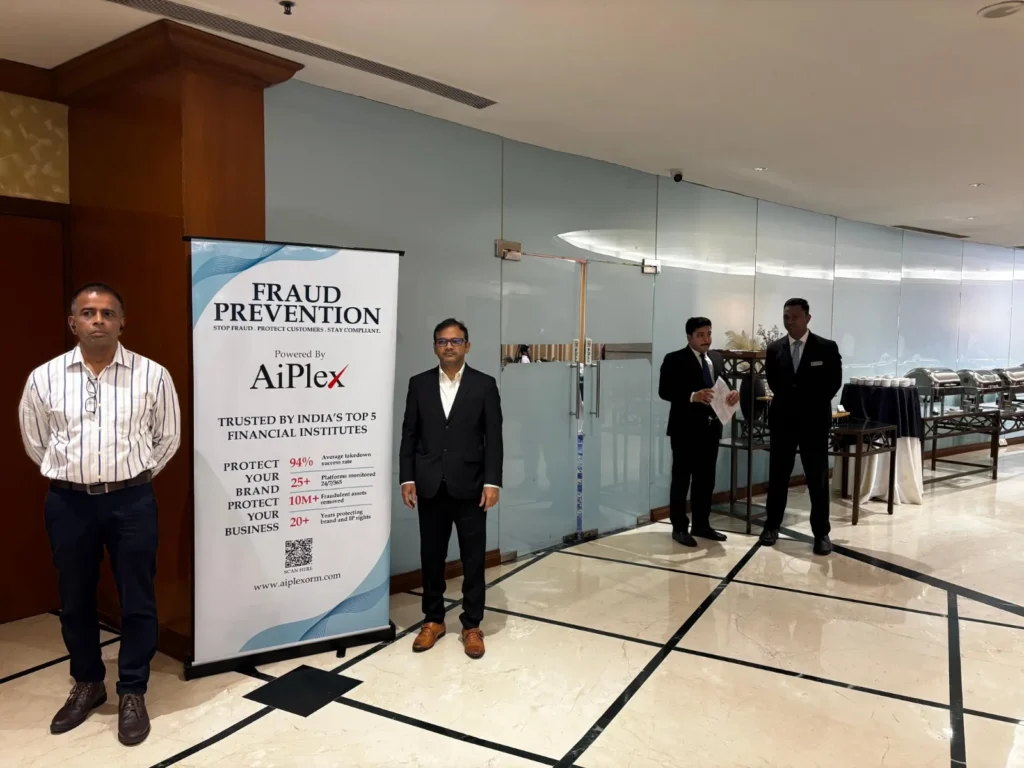
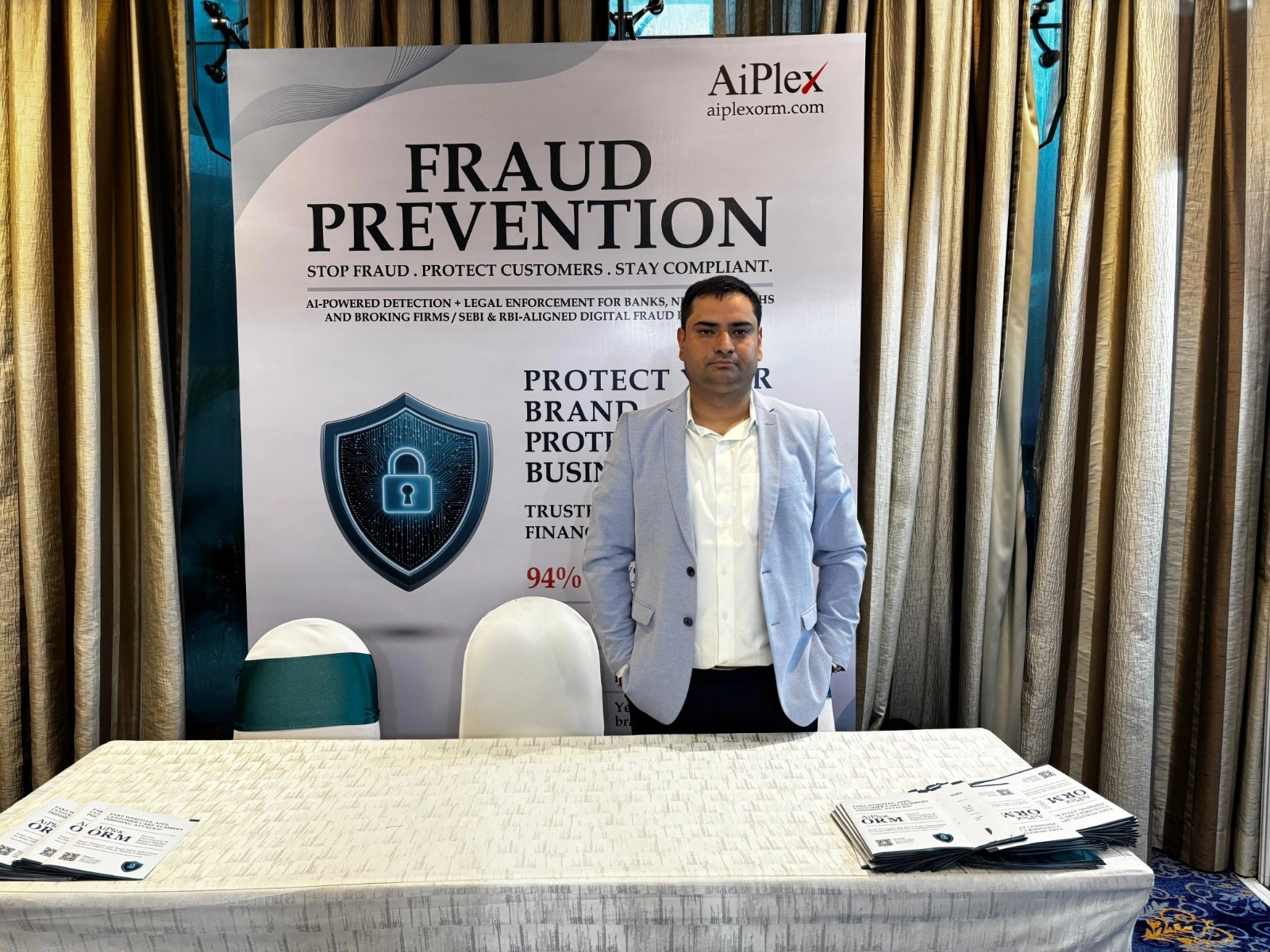
AiPlex participated as an Exhibition Sponsor, and across the event our team spoke with leaders from banks, NBFCs, fintechs, regulators, technology partners and the wider BFSI ecosystem. The platform brought together conversations on innovation, cybersecurity, fraud prevention, digital trust and the future of financial services. One thread ran through more of those conversations than any other: fraud — not as an abstract risk category owned by a compliance function, but as an immediate, fast-moving, brand-damaging operational problem.
Institutions are no longer asking whether they will be impersonated online. They are asking how quickly they can find out, and how quickly they can make it stop.
The conversation that dominated the floor
Technoviti & Innoviti 2026; Fraud Prevention
What made this year’s edition distinct was a shift in framing.
Fraud prevention has traditionally been discussed as a transaction-layer problem — anomaly detection on payments, rules engines on card activity, velocity checks on account openings. Those conversations still happened, and they remain essential. But running alongside them was a second, newer discussion: fraud that never touches a bank’s systems at all.
A cloned website. A fake mobile application. A social media account carrying a bank’s logo. A messaging group promising loan approvals in the name of an NBFC that has no idea the group exists. None of these breaches a firewall. None triggers a transaction alert. And yet all of them cost institutions money, customers, and — most durably — trust.
That gap between where fraud now originates and where most fraud controls are pointed was the through-line of the event.
About Technoviti and Finnoviti
Aiplex ORM in Technoviti & Innoviti 2026
Banking Frontiers has spent years building a media and engagement ecosystem around Indian financial services, and its event properties reflect that positioning. Technoviti and Finnoviti are innovation-recognition platforms. They exist to identify and celebrate what institutions are actually building, rather than to serve as another stop on a general conference circuit.
That distinction shapes the quality of the room. An awards-anchored event attracts the people who own the projects, not only the people who market them. Conversations at exhibitor booths reflect it: fewer general enquiries, more specific problems, and a noticeably higher tolerance for technical detail.
The attendee mix matters too, and it explains why the fraud conversation went where it did. With banks, NBFCs, fintechs, regulators and technology partners in the same space, a single discussion could move from a regulatory expectation, to an operational constraint at a mid-sized NBFC, to a technical detection method from a technology vendor — without anyone having to leave the room.
That cross-section is rarer than it sounds. Fraud prevention suffers when it is discussed only among security teams, or only among compliance teams, or only among vendors. Here, all three were within a few metres of each other.
Recognising innovation in BFSI
The awards component is central to both properties rather than an evening add-on. Technoviti and Finnoviti recognise institutions and teams that have deployed genuine innovation in financial services — implementations and product thinking that produced measurable outcomes rather than press releases.
For an exhibitor, the awards serve a practical function beyond ceremony. The categories drawing the most entries in a given year tend to predict the following year’s operational priorities. Congratulations to every award winner recognised at Technoviti 2026 and Finnoviti 2026 for their achievements and their contributions to the sector.
Fraud in Indian banking: the 2026 landscape
India’s financial services sector has completed one of the fastest digital transitions of any major economy. Account opening moved to mobile. Payments moved to UPI. Lending moved to app-based journeys with minute-level disbursal. Customer service moved to chat interfaces and social channels.
Each of those transitions delivered real gains in reach and cost-to-serve. Each also created new surface area for fraud.
The critical structural change is this: a financial institution’s brand now lives in places the institution does not control. A customer’s relationship with their bank is mediated through app stores, search results, social platforms, messaging apps and advertising networks. A fraudster does not need to compromise the bank to exploit that relationship. They only need to occupy one of those unowned surfaces convincingly enough.
The layer that never gets reported
Fraud statistics across Indian financial services show growth in both incident volume and sophistication, with digital channels accounting for a rising share of cases. But what the reported numbers consistently understate is the layer beneath them.
When a customer is defrauded by a fake application carrying a bank’s logo, the incident may never enter that bank’s fraud reporting at all. The money moved through a channel the institution never touched. No system of theirs was compromised. No transaction of theirs was anomalous. The institution frequently learns about the incident only when the customer complains publicly — which is the point at which it becomes a reputation event as well as a fraud event.
This is a measurement problem with operational consequences. Institutions allocate fraud-prevention resources against the incidents they can see. The category they cannot see is the one growing fastest.
Where traditional controls fall short
Conventional fraud infrastructure is built on a reasonable assumption: that fraud involves the institution’s own systems and can therefore be detected within them. Transaction monitoring, device fingerprinting, behavioural biometrics and rules engines are all designed to catch anomalies inside the perimeter. Against the threats they were built for, they work.
Impersonation fraud defeats this design not by evading the controls but by operating entirely outside their field of view. There is no anomalous transaction to flag when a victim voluntarily transfers money to someone they believe is their bank. There is no unusual device signature when the fraudulent application is not the bank’s application at all. The authentication was never bypassed, because it was never invoked.
Detection for this category has to sit outside the institution — monitoring the open web, app ecosystems, social platforms and messaging channels for abuse of the brand itself. That is a fundamentally different capability from anything in the traditional fraud stack, and it is one most institutions have not historically owned.
Where fraud prevention meets brand reputation
Fraud Prevention by Team Aiplex ORM
This is the connection that generated the most engaged conversations at our booth, and it is the one AiPlex’s BFSI practice is built around.
Every fraud incident is also a trust incident
Institutions typically route fraud and reputation into separate functions. Fraud sits with risk, security or operations. Reputation sits with marketing or corporate communications. The two teams often use different tools, report through different lines, and meet properly only during a crisis.
Impersonation fraud does not respect that boundary. A fake banking application is simultaneously a fraud vector and a brand event. A deepfaked executive endorsement is simultaneously a scam enabler and a communications crisis. Handling them through separate workflows produces one of two predictable failures: the fraud team removes the immediate threat while narrative damage continues unmanaged, or the communications team responds publicly while the fraudulent asset remains live — occasionally driving additional traffic to it.
The damage starts before the first victim
There is a window — often days, sometimes weeks — between a fraudulent asset appearing and a victim reporting it. During that window, the asset accumulates search visibility, social engagement and apparent legitimacy.
The institution’s brand is being degraded throughout this period, silently. Customers who encounter the fake and correctly identify it as fraudulent still adjust their perception of the institution’s competence. Search engines index the fraudulent domain against the brand name. Social platforms surface the fake profile alongside the real one, sometimes in the same results.
By the time the first victim reports a loss, the reputational damage is already substantially done. The fraud response begins at the point where the reputation problem is already mature.
Why speed is the whole game
Every additional day a fraudulent asset stays live compounds three costs: more victims, deeper search and social entrenchment, and more remediation work downstream.
Speed is therefore the single most important variable in this category — more important than detection sophistication, and considerably more important than post-incident communications. An institution that detects a cloned site in six hours and removes it within a day faces a fundamentally different problem from one that detects it in three weeks. The second institution is not doing a worse job of the same task. It is doing a different, much harder task.
The regulatory lens
India’s regulatory framework has tightened steadily around fraud reporting timelines, customer liability and grievance redressal. The direction of travel is consistent: shorter reporting windows, clearer institutional accountability, and greater protection for customers who acted in good faith.
That trajectory has an operational consequence not always fully appreciated. When customer liability depends partly on how quickly an institution responded, response time stops being a service-quality metric and becomes a financial and compliance exposure.
An institution that cannot demonstrate active monitoring for brand abuse, and cannot show a documented enforcement process with measurable turnaround times, carries a risk that is increasingly difficult to defend — to regulators, and in customer disputes where the question of what the institution knew and when will be asked directly.
AiPlex at Technoviti and Finnoviti
Aiplex at Technoviti & Innoviti 2026
AiPlex’s work sits precisely at the junction the event kept returning to. We are not a transaction-monitoring vendor and we do not compete with core fraud infrastructure. We address the layer outside the institutional perimeter — where a brand is used, misused and impersonated across the open web, app ecosystems, social platforms and messaging channels.
Technoviti and Finnoviti brought together exactly the decision-makers who own that problem, frequently without owning a dedicated capability for it. That made it the right room.
Our booth focused on the three capabilities that define our BFSI practice — AI-powered monitoring, techno-legal enforcement and rapid digital risk mitigation — presented as a connected workflow from detection through to removal, rather than as separate products.
The questions that came up most
Certain questions recurred often enough to be worth recording, because they map the sector’s current gaps better than any survey.
“How do we find out about a fake app or site before a customer tells us?” The most common question by a wide margin, and a direct acknowledgment that most institutions are operating reactively.
“How long does a takedown actually take?” Usually asked with visible scepticism, and usually by teams who have submitted platform reports and watched them sit unresolved for weeks.
“Who owns this internally?” Often asked rhetorically, and often answered with a pause. At many institutions the honest answer is that nobody owns it entirely.
“Does this cover regional languages and regional platforms?” A pointed and important question. Fraud targeting Indian financial customers frequently operates in regional languages on regional platforms. Monitoring that covers only English-language content on major global platforms will miss a substantial share of it, while producing reports that look reassuringly complete.
How AiPlex helps financial institutions fight fraud
Aiplex ORM & Fraud Prevention
AI-powered monitoring
The detection problem is fundamentally a scale problem. The surfaces requiring continuous observation — domains, app stores, social platforms, marketplaces, messaging channels, search results, paid advertising — generate volumes no manual team can cover.
AiPlex applies AI-driven detection across those surfaces, identifying unauthorised use of an institution’s brand assets, names, logos and identity markers. The objective is compressing time-to-detection from weeks to hours, because everything downstream depends on it. An excellent enforcement capability attached to slow detection still produces a slow outcome.
Coverage must extend to regional languages and regional platforms. Fraud aimed at Indian financial customers does not operate exclusively in English on global platforms, and monitoring built on the assumption that it does will systematically under-report while appearing thorough.
Techno-legal enforcement
Detection without enforcement is an alerting system, not a solution. This is where most institutional efforts stall.
Platform reporting mechanisms are inconsistent. A report filed through a standard channel may be actioned within hours or ignored indefinitely, and the difference frequently has less to do with the severity of the abuse than with how the report was constructed. Different platforms require different evidence, different legal grounding and different escalation paths. Hosting providers, domain registrars, app stores and social networks all operate distinct processes with distinct standards.
AiPlex’s techno-legal enforcement combines technical evidence-gathering with legal process — building the documentation each platform or intermediary requires, filing through the correct channel with the correct grounding, and escalating where a first-line report fails. The distinction is not cosmetic: a properly constructed enforcement action gets resolved, while a generic report frequently does not.
Enforcement also has to account for recurrence. Operators who are removed typically return, often within days, under slightly altered identities and domains. Effective enforcement anticipates this and treats each removal as part of a continuing process rather than a closed ticket.
Rapid digital risk mitigation
Between detection and successful takedown, an institution remains exposed. Mitigation is what happens inside that window: suppressing the fraudulent asset’s visibility, limiting its reach, and coordinating with the institution’s communications function on customer-facing response.
This is where the fraud–reputation link becomes operational rather than theoretical. Effective mitigation requires the enforcement action and the communications response to be coordinated, because they are addressing the same incident from two directions. Uncoordinated, they interfere with each other.
Online reputation management
Underlying all of it is the reputation layer. Fraud incidents leave residue — search results, social conversations, forum threads and coverage that persist long after the fraudulent asset itself is gone.
AiPlex’s ORM practice addresses that persistent layer, managing search visibility, sentiment and narrative around a financial institution’s brand so that a resolved fraud incident does not remain the most prominent thing about the institution’s name six months later.
The fraud vectors BFSI leaders are watching
Fraud Prevention by Aplex ORM
Five categories came up repeatedly in conversations at our booth.
Deepfakes and synthetic identity fraud
Synthetic media has moved from novelty to operational threat, and two applications concern financial institutions most.
The first is identity-layer: synthetic faces and voices used to defeat video KYC and voice authentication. This is the version that gets the most attention, and institutions are actively investing in liveness detection and related countermeasures.
The second is brand-layer, and it is increasingly the more damaging: fabricated video or audio of an institution’s senior executives endorsing an investment scheme, announcing a product, or making statements they never made.
The second category is harder to defend against, because the target is not the institution’s authentication system — it is the customer’s trust in a familiar face. No security control the institution owns sits between a fabricated executive endorsement and the customer who sees it. By the time such a video is circulating, the damage mechanism is entirely reputational and the remedy is entirely a detection-and-takedown problem.
Fake apps, cloned websites and phishing domains
This remains the highest-volume vector, and the economics explain why.
A cloned banking website costs almost nothing to build and can be indistinguishable from the original to a non-technical customer. Fraudulent applications appear on third-party app stores and, occasionally, on official ones. Lookalike domains proliferate faster than most institutions can register defensive variants — a single brand name can generate hundreds of plausible misspellings, homoglyph substitutions and alternative extensions.
The asymmetry is brutal. The fraudster’s cost per attempt approaches zero. The institution’s cost per incident includes customer remediation, regulatory reporting, and brand repair that outlasts both.
Impersonation on social platforms
Fraudulent profiles using an institution’s name, logo and visual identity are now a persistent problem across every major platform. They operate in several modes: fake customer support handles that intercept complaints and harvest credentials, fake executive profiles that lend authority to investment scams, and fake official pages announcing offers that do not exist.
The customer-support variant is particularly effective because it exploits a genuine service gap. A frustrated customer posting a complaint publicly is actively looking for someone to respond. A fraudulent handle that replies within minutes will often be trusted over an official one that replies in a day. The fraudster is, in a narrow and uncomfortable sense, providing better service.
Investment and loan scams run under a brand name
Loan-approval scams and investment schemes conducted in an institution’s name — over messaging platforms and, increasingly, through paid social advertising — have become a major source of customer harm. The institution is entirely uninvolved in the transaction and frequently unaware of the campaign until victims begin surfacing.
For NBFCs this has become especially acute. Their brands carry enough recognition to lend credibility to a scam, while their monitoring capabilities are often lighter than those of large banks. The combination is precisely what a fraudster selects for.
Payments-layer social engineering
UPI’s scale and speed represent a genuine achievement and a genuine exposure. Social-engineering-led payment fraud — collect-request manipulation, QR code substitution, fraudulent merchant identities — continues to evolve in response to each countermeasure deployed against it.
The distinguishing feature of most of this fraud is that the transaction itself is legitimate from the system’s perspective: an authenticated user authorised a transfer. The fraud occurred in the persuasion that preceded it. That makes it a communications problem more than a payments-systems problem, which is uncomfortable for institutions whose fraud capabilities are concentrated in payments systems.
What this looks like in practice
The following is an illustrative scenario, constructed to show how the workflow fits together.
Consider a mid-sized NBFC with a consumer lending product and strong regional brand recognition.
A fraudulent operation registers a lookalike domain — the institution’s name with a minor spelling variation — hosting a convincing replica of the loan application journey. Simultaneously, a fraudulent Android application appears on third-party app stores using the institution’s logo and colour scheme. Paid social advertising in two regional languages drives traffic to both, promising rapid loan approval against an advance processing fee.
Detection. Monitoring flags the lookalike domain within hours of registration, and identifies the fraudulent application and the associated regional-language advertising campaign — the component most likely to be missed by English-only monitoring.
Evidence. Enforcement teams document the infringement: captures of the cloned interface, the trademark and brand asset misuse, hosting and registrar records, app store listing details, and the advertising campaign’s targeting parameters.
Enforcement. Actions proceed in parallel rather than sequentially — registrar and hosting provider action against the domain, app store takedown requests, and platform enforcement against the advertising campaign and its associated accounts. Sequential enforcement wastes the window; parallel enforcement closes it.
Mitigation. While enforcement runs, mitigation limits exposure — suppressing the fraudulent domain’s visibility against brand search terms, and coordinating with the institution’s communications team on a customer advisory issued through official channels.
Recurrence management. Monitoring continues against the operator’s identified patterns, on the working assumption that they will attempt to return under a variation.
Under this workflow, the exposure window is measured in days. Without it, the realistic alternative is that the institution learns of the operation when defrauded customers begin complaining — typically several weeks in. By then the fraudulent domain has search visibility against the brand name, the advertising campaign has run to completion, victim numbers are substantially higher, and the institution is simultaneously managing a fraud response, a regulatory reporting obligation and a public reputation event.
The difference between those two outcomes is not primarily technology. It is time-to-detection and enforcement capability.
A readiness checklist
Drawn from the gaps that surfaced most often in conversations across the event:
Establish clear internal ownership. Determine which function owns brand-impersonation fraud. If the honest answer is that it is split between security and marketing with no defined handoff, closing that gap is the first task.
Audit current visibility. Assess what proportion of your brand’s external surface is genuinely monitored — including regional languages, regional platforms, third-party app stores and messaging channels.
Measure enforcement turnaround. Take a known past incident and calculate the elapsed time from first appearance to full removal. That number is your current exposure window, and it is probably longer than expected.
Connect fraud and communications workflows. Ensure a detected impersonation incident triggers both an enforcement action and a communications assessment through a defined process, rather than an ad-hoc phone call.
Plan for recurrence. Treat takedowns as ongoing enforcement rather than closed tickets, and monitor for the return of known operators.
Document everything. Maintain records of monitoring coverage, detection times and enforcement actions. This matters increasingly for regulatory expectations and for customer dispute resolution.
Building digital trust in the AI era
Building Trust In AI ERA
The clearest takeaway from Technoviti 2026 and Finnoviti 2026 was a shift in how the sector frames the problem. The question is moving away from “how do we stop fraudulent transactions” and toward “how do we protect the trust our customers place in our brand, across surfaces we do not own.”
That is a harder question, and it does not resolve within the traditional fraud stack. It requires visibility outside the institutional perimeter, enforcement capability across platforms and jurisdictions, and an operational connection between fraud response and reputation management that most institutions have not yet built.
The institutions that navigate the next few years well will be those that treat their digital brand presence as infrastructure to be actively defended, rather than as a marketing asset that occasionally comes under attack.
Our sincere appreciation to the entire Banking Frontiers team, the organisers, speakers, jury members, partners, sponsors, exhibitors, delegates, and every visitor who stopped by our booth. Special thanks to Arjun Bhaskaran, Prasanna Lohar, Prashanth Pereira, Babu Nair, Manoj Agrawal, Kailash Purohit, Wilhelm Singh, Pritesh Priyanka, Stalin Saldhana, Pramoud P Jadhao, Santosh B. and Anmol Raina. Your conversations, insights and encouragement made the event genuinely memorable, and they continue to shape how we approach our work.
We look forward to continuing our mission of helping financial institutions strengthen fraud prevention and online reputation management through AI-powered monitoring, techno-legal enforcement and rapid digital risk mitigation.
Frequently asked questions
What are Technoviti and Finnoviti?
Technoviti and Finnoviti are innovation-recognition events organised by Banking Frontiers for India’s financial services sector. They bring together banks, NBFCs, fintechs, regulators and technology partners, and recognise institutions and teams that have deployed meaningful innovation in BFSI.
Who attended Technoviti 2026 and Finnoviti 2026?
The events drew leaders from across the BFSI ecosystem — banks, NBFCs, fintechs, regulators, technology partners, speakers, jury members, exhibitors and delegates. AiPlex participated as an Exhibition Sponsor.
What is techno-legal enforcement in fraud prevention?
Techno-legal enforcement combines technical evidence-gathering with legal process to remove fraudulent digital assets. Rather than filing a generic platform report, it involves documenting the infringement to the evidentiary standard each platform, registrar, hosting provider or app store requires, filing through the correct channel with appropriate legal grounding, and escalating where first-line reports fail. This produces substantially higher takedown success rates than standard reporting.
How does AI-powered monitoring detect banking fraud?
AI-powered monitoring continuously scans external surfaces — domains, app stores, social platforms, marketplaces, messaging channels, search results and advertising networks — for unauthorised use of an institution’s brand assets, names, logos and identity markers. Because these surfaces generate volumes no manual team can cover continuously, AI-driven detection is what makes comprehensive coverage practical. For Indian financial institutions, effective monitoring must include regional languages and regional platforms.
How does fraud prevention connect to online reputation management?
Brand-impersonation fraud is simultaneously a fraud event and a reputation event. A cloned website or fraudulent application harms customers financially while degrading trust in the institution’s brand. Handling these through separate workflows means either the fraudulent asset is removed while narrative damage continues unmanaged, or a public response is issued while the asset remains live. Integrated fraud prevention and ORM addresses both dimensions of the same incident.
How can a bank or NBFC get started with AiPlex?
AiPlex works with financial institutions on AI-powered monitoring, techno-legal enforcement, rapid digital risk mitigation and online reputation management. Engagements typically begin with an assessment of current brand exposure across external digital surfaces.
Protect your institution’s brand and your customers’ trust. AiPlex helps banks, NBFCs and fintechs detect brand impersonation early, enforce takedowns that hold, and manage reputation across the digital surfaces that matter most.
Regional marketing is the practice of shaping brand perception language by language and state by state. In India, corporate reputation management depends on it, because a company trusted in Mumbai can be criticised in Hindi, Tamil, or Bengali forums that national monitoring never sees. Reputation here is plural, not singular.
What Is Corporate Reputation Management in India?
Corporate reputation management India refers to the ongoing work of monitoring, protecting, and improving how an enterprise is perceived across search results, news portals, review platforms, social media, and now AI answer engines.
Corporate ORM services generally rest on four pillars. The first is monitoring across languages, platforms, and regional publications. The second is suppression of damaging or outdated search results. The third is content building that occupies branded search real estate. The fourth is crisis response with defined escalation timelines.
Enterprise reputation management differs from small business ORM in both scale and stakes. A listed company faces investor sentiment, employee review sites, regulatory coverage, and vernacular press at the same time, often on the same day.
Why Regional Marketing Changes the Equation
India has 22 scheduled languages and more than 120 major dailies published outside English. In practice, we have seen a manufacturing client with entirely clean English search results carrying three pages of negative Marathi coverage tied to a land dispute. National dashboards showed nothing at all.
Regional marketing closes that blind spot. It means running sentiment tracking in Hindi, Tamil, Telugu, Bengali, Marathi, and Kannada, then publishing responses in the same language the criticism first appeared in.
Why Do Indian Enterprises Need Corporate ORM Services?
Three forces make this urgent. Search behaviour has shifted decisively, so buyers, candidates, and partners now search a company name before any meeting, and whatever appears on page one becomes the default truth for them.
AI answers have also started summarising reputation. ChatGPT, Perplexity, and Google AI Overviews compile brand summaries from whatever sources they judge credible, which means a single well ranked complaint thread can shape that summary for months.
Regional media travels faster than most communications teams expect. A vernacular story picked up by a district paper reaches WhatsApp groups within hours and national aggregators within a day.
In our audits, negative sentiment that originates in a regional language takes an average of eleven days longer to detect than English language sentiment, and by then it has usually been indexed and cited elsewhere.
How Does Regional Marketing Improve Reputation Outcomes?
The method is straightforward but rarely executed well. It begins with mapping your reputation footprint, which means listing every state where you have offices, plants, dealers, or major customers.
From that map you set language priorities, choosing the three to five languages that cover most of your operational geography. Vernacular monitoring follows, tracking brand mentions across regional news, YouTube, local forums, and district level publications.
The next phase is building local authority assets. This means publishing leadership interviews, CSR coverage, and plant level stories in regional outlets rather than only in national English media.
Crisis playbooks must then be localised, with holding statements prepared in each priority language before you need them. Finally, measurement should be reported region by region rather than nationally, covering sentiment, share of voice, and search visibility state by state.
What We Have Observed in Practice
We tested two approaches for a BFSI client across six states. Centralised English only ORM moved sentiment by 12 percent over two quarters. The same budget split into region specific campaigns moved it by 31 percent, driven almost entirely by gains in Tamil and Telugu coverage.
What Makes the Best Corporate Reputation Management Company in India?
Evaluate on capability rather than promises. A basic ORM vendor typically monitors English only, watches social platforms and Google, responds reactively, and reports a single national sentiment score.
An enterprise ORM partner works differently. It monitors six or more Indian languages natively, tracks regional press, forums, and AI engines, operates from pre built crisis playbooks with defined response times, reports sentiment and visibility state by state, and actively builds entity signals so AI tools cite the brand correctly.
A credible enterprise online reputation management company in India will show you regional case data, not just a wall of client logos.
Questions to Ask Before Signing
Ask which Indian languages the agency monitors natively rather than through machine translation. Ask how it measures brand presence inside AI generated answers. Ask for its defined response time during a regional media crisis, and request state level before and after sentiment data from a comparable client.
How Long Does Corporate Reputation Management Take?
Timelines depend heavily on the starting position. The first month usually covers audit work, baseline sentiment mapping, and language prioritisation.
Months two through four involve content deployment, regional outreach, and the beginning of suppression work. Measurable page one movement and sentiment shift typically appear between months four and eight.
After that, the work becomes continuous. Suppression of a single stubborn negative result may take six to ten months, and building durable regional trust is ongoing rather than a fixed project.
What Does Corporate ORM Cost for Indian Businesses?
Corporate reputation management services for Indian businesses generally fall into three tiers. Monitoring only engagements sit at the lower end. Full service programmes covering multiple languages, content production, and crisis retainers sit substantially higher.
Cost drivers include the number of languages covered, the volume of existing negative content, the industry risk profile, and whether litigation support is required.
Companies that invest in preventive regional marketing typically spend around 40 percent less over three years than companies that engage only after a crisis has already been indexed.
FAQs
What is corporate reputation management? Corporate reputation management is the structured practice of monitoring, protecting, and improving how a company is perceived online. It covers search results, news coverage, review platforms, social sentiment, and AI generated summaries, using content, outreach, and crisis response to shape public perception.
Why is regional marketing important for ORM in India? Because reputation in India forms locally. Negative coverage often appears first in Hindi, Tamil, Marathi, or Bengali outlets that English only monitoring misses. Regional marketing ensures issues are detected early and answered in the same language and community where they started.
How do I choose a corporate reputation management company in India? Check native language coverage, regional case studies, crisis response commitments, and whether the agency tracks brand presence in AI answer engines. Ask for state level sentiment data. Avoid vendors who promise guaranteed removal of legitimate news coverage.
Can negative search results be removed permanently? Rarely. Legitimate news and reviews usually cannot be removed. Enterprise reputation management focuses on suppression, publishing stronger authoritative content that outranks negative results, alongside legal takedowns only where content is defamatory or unlawful.
Does ORM affect how AI tools describe my company? Yes. ChatGPT, Perplexity, and Gemini draw from indexed web sources. Strengthening authoritative content, structured data, and consistent entity information across regional and national sources directly influences how these tools summarise your brand.
How is enterprise ORM different from small business ORM? Enterprise reputation management handles multi state operations, investor sentiment, employer branding, regulatory coverage, and vernacular media simultaneously. It requires larger monitoring infrastructure, defined crisis governance, and coordination across legal, HR, and communications teams.
Conclusion
Reputation in India is not one conversation. It is dozens, happening in different languages, in different states, on different platforms. Regional marketing is what turns corporate reputation management from a national dashboard exercise into something that actually reflects how people perceive your brand on the ground.
Enterprises that monitor in vernacular languages, publish locally, and prepare crisis responses before they are needed consistently outperform those relying on English only ORM. Start with an honest regional audit, then build from there.
AI search reputation management for brands is the practice of monitoring, shaping, and protecting how your brand appears inside AI-generated answers on tools like ChatGPT, Google AI Overviews, Gemini, and Perplexity. It combines content optimization, source authority, and active monitoring to ensure AI systems describe your brand accurately and favorably.
What Is AI Search Reputation Management?
AI search reputation management is the discipline of influencing what large language models say about your brand when users ask questions. Unlike traditional SEO, which targets ranked links, this focuses on the synthesized answer itself.
When someone asks an AI tool “Is [your brand] reliable?” the response is assembled from thousands of sources. Your job is to make sure those sources are accurate, positive, and authoritative.
This matters because AI answers often skip the click. Users read the summary and form an opinion instantly. If the AI repeats an outdated complaint or a competitor’s talking point, that becomes the customer’s first impression.
Three pillars define the practice:
Visibility: whether AI tools mention your brand at all.
Accuracy: whether the facts they state are correct.
Sentiment: whether the framing is positive, neutral, or damaging.
Why AI Reputation Management Matters for Brands
AI reputation management now shapes buying decisions before a prospect ever visits your website. Research across generative platforms shows users increasingly trust AI summaries as neutral, authoritative sources, even when the underlying data is thin or dated.
The stakes are high for three reasons.
First, AI answers compress nuance. A single negative review from 2021 can outweigh hundreds of recent positive ones if that review sits on a high-authority domain the model favors.
Second, hallucinations happen. Models sometimes invent details, misattribute products, or blend your brand with a competitor. Left unchecked, these errors spread across platforms.
Third, AI search brand visibility compounds. Brands cited once tend to be cited again, because models reinforce patterns they have already learned. Early movers build a durable advantage.
In practice, we have seen brands lose deals not because of a bad product, but because an AI tool surfaced a stale controversy the sales team did not even know existed.
How to Manage Brand Reputation Across AI Search Platforms
Managing brand reputation across AI search platforms requires a repeatable system, not a one-time cleanup. Here is the workflow we use with clients.
Step 1: Audit Your Current AI Presence
Ask the same set of brand questions across ChatGPT, Gemini, Perplexity, and Google AI Overviews. Record exactly what each says. Note errors, tone, and which sources they appear to draw from.
Step 2: Identify Source Authority Gaps
AI models weight authoritative, structured, frequently-cited sources. If your brand facts live only on your homepage, models have little to pull from. Map where trustworthy information about you is missing.
Step 3: Publish Citable, Factual Content
Create clear, quotable content that answers common questions directly. Use definitions, statistics, and structured data. Make it effortless for a model to lift an accurate sentence about your brand.
Step 4: Strengthen Third-Party Signals
Earn mentions on reputable industry sites, respond to reviews, and keep your Wikipedia, Crunchbase, and directory entries current. Models trust corroboration across independent domains.
Step 5: Monitor Continuously
AI outputs change with every model update. Re-run your audit monthly. Track shifts in visibility and sentiment so you catch a problem before it hardens into the default answer.
What Is the Best Way to Improve AI Search Brand Visibility?
The best way to improve AI search brand visibility is to become the most citable, structured, and corroborated source of truth about your own brand. Models cite what is clear, consistent, and repeated across trusted places.
Focus your effort here:
Answer questions directly. Lead with a concise answer, then explain. This is the format AI systems extract.
Use structured data. Schema markup for organization, FAQ, and product helps machines parse your facts.
Stay consistent everywhere. Your founding date, leadership, and product names must match across every platform.
Build topical authority. Publish depth on your niche so models associate your brand with expertise.
We tested this approach across several B2B brands and found that consistency of core facts across five or more authoritative domains was the single strongest predictor of accurate AI mentions.
Comparison: Traditional SEO vs AI Search Reputation Management
Factor
Traditional SEO
AI Search Reputation Management
Goal
Rank a link
Shape the generated answer
Success metric
Clicks and rankings
Accuracy, sentiment, citation rate
Primary unit
Web page
Quotable statement
Update speed
Weeks to months
Changes with each model update
Key lever
Backlinks and keywords
Source authority and corroboration
The overlap is real, but the mindset differs. SEO wants the click. Reputation management wants the sentence the AI speaks aloud.
AI Search Reputation Strategies for Better Brand Visibility
Strong AI search reputation strategies blend proactive content with defensive monitoring. Combine the tactics below into a quarterly plan.
Build a Fact Hub
Create one authoritative page that states your brand’s core facts plainly: who you are, what you sell, key milestones, and leadership. Models love a single reliable reference.
Own the Question Space
List every question a prospect might ask an AI about you, including uncomfortable ones. Answer each honestly on your own domain before someone else’s version becomes the default.
Correct Errors at the Source
When an AI repeats a falsehood, trace it to the source page and fix or dispute it there. Models update as their inputs change; editing the root often clears the error over time.
An original insight from our work: correcting a single high-authority source page frequently resolved the same hallucination across three or four different AI tools within weeks, because they shared that upstream reference.
Encourage Fresh, Positive Signals
Recent content carries weight. A steady flow of current reviews, press, and updates signals that your brand is active and well-regarded, nudging sentiment upward.
Conclusion
AI search reputation management for brands is no longer optional. As buyers rely on AI-generated answers to judge credibility, the brands that audit, structure, and corroborate their information will control the narrative, while passive brands inherit whatever the model decides to say.
Treat it as an ongoing system: audit across platforms, publish citable facts, strengthen third-party signals, and monitor relentlessly. Do this consistently and you turn AI search from a reputational risk into a durable competitive advantage.
Frequently Asked Questions
What is AI search reputation management for brands?
It is the practice of monitoring and shaping how AI tools like ChatGPT, Gemini, and Perplexity describe your brand. It blends content optimization, source authority, and continuous monitoring to keep AI-generated answers accurate, positive, and consistent across every platform where customers ask questions.
How is AI reputation management different from SEO?
SEO aims to rank web pages so users click links. AI reputation management aims to shape the synthesized answer an AI speaks or displays. SEO measures clicks and rankings, while AI reputation management measures accuracy, sentiment, and how often models cite your brand correctly.
How often should brands monitor their AI reputation?
At minimum, run a full audit monthly, since AI outputs shift with every model update. High-visibility or fast-moving brands should check weekly. Consistent monitoring helps you catch errors, hallucinations, or negative framing before they become the default answer users see.
Can you remove false information from AI answers?
You cannot edit AI outputs directly, but you can influence them. Trace the false claim to its source, correct or dispute it there, and publish accurate content on authoritative domains. As models re-ingest updated sources, the corrected information gradually replaces the error.
Which platforms matter most for AI search brand visibility?
Prioritize ChatGPT, Google AI Overviews, Gemini, and Perplexity, since they handle the largest share of AI-driven queries. However, the exact mix depends on your audience. Track where your customers actually search and weight your monitoring toward those specific platforms.
How long does it take to improve AI reputation?
Expect meaningful change over weeks to a few months. Fixing upstream sources and publishing citable content takes time to propagate, because models update on their own schedules. Consistency compounds, so brands that maintain the work see steadily improving accuracy and sentiment.
An online reputation management agency for enterprises helps large organizations monitor, protect, and improve how their brand appears across search results, review platforms, news media, and AI tools. These agencies combine content strategy, review management, PR, and crisis response to safeguard corporate reputation at scale.
What Is an Enterprise Online Reputation Management Agency?
An enterprise reputation management agency is a specialized firm that manages the public perception of large companies across every digital channel. Unlike small-business ORM, enterprise work spans multiple brands, regions, executives, and stakeholder groups simultaneously.
These agencies handle high search volume, complex org structures, and greater legal and regulatory exposure. Corporate ORM services typically cover search suppression, sentiment monitoring, review governance, executive visibility, and media relations under one coordinated program.
The goal is simple: ensure that what people find about your brand is accurate, favorable, and consistent across Google, social platforms, and AI-generated answers.
Why Do Enterprises Need Specialized ORM Services?
Large brands face reputation risks that smaller companies rarely encounter. A single negative story can spread across thousands of results within hours and reach global audiences.
Enterprise reputation management matters because:
Scale multiplies risk. More employees, customers, and locations mean more review sources and more potential controversy.
Executives are targets. Leadership reputation directly affects stock value, hiring, and partnerships.
Regulatory scrutiny is higher. Public companies face compliance obligations around disclosures and statements.
AI now shapes perception. Tools like ChatGPT and Perplexity summarize brand sentiment, and those summaries influence buyers.
In practice, we have seen a single viral complaint push down years of positive coverage within a week. Enterprise ORM builds the content depth and monitoring speed needed to prevent that.
How Does an Enterprise ORM Agency Actually Work?
Corporate reputation management solutions for large businesses follow a structured, repeatable process rather than one-off fixes.
Step 1: Audit and Baseline
The agency maps your current search landscape, review scores, sentiment trends, and branded query results across every market you operate in.
Step 2: Strategy and Prioritization
They identify the highest-risk keywords, executives, and platforms, then define measurable goals such as review ratings, share of positive results, and AI citation quality.
Step 3: Content and Asset Building
Teams create authoritative owned properties, thought-leadership content, and structured data so search engines and AI models pull accurate information.
Step 4: Monitoring and Response
Real-time tools flag new mentions. The agency responds to reviews, coordinates PR, and escalates crises through agreed protocols.
Search result management to promote positive assets and suppress harmful ones
Review management across Google, Glassdoor, Trustpilot, and industry platforms
Sentiment monitoring using AI-driven listening tools
Executive reputation and personal branding for leadership
Crisis communication planning and rapid response
Wikipedia and knowledge panel accuracy management
AI answer optimization so LLMs cite correct brand information
An original insight from our work: enterprises increasingly ask agencies to audit how AI tools describe them, because a wrong AI summary now spreads faster than a bad review.
Enterprise vs Standard ORM: Key Differences
Factor
Standard ORM
Enterprise ORM
Scope
Single brand or person
Multiple brands, regions, executives
Team size
Small
Dedicated cross-functional teams
Monitoring
Basic alerts
24/7 real-time listening
Crisis response
Reactive
Structured protocols and playbooks
Reporting
Periodic
Custom dashboards and KPIs
Cost
Lower
Higher, program-based
What Is the Best Way to Choose an ORM Agency for Your Enterprise?
Enterprise track record with references from comparable-sized clients.
Transparent methods that avoid fake reviews or black-hat suppression.
AI and search expertise, since modern ORM must cover both.
Crisis experience with documented response times.
Clear reporting tied to business metrics, not vanity numbers.
Security and compliance practices for handling sensitive data.
A second original insight: the strongest agencies treat reputation as an owned-media asset. They build durable content properties you keep, rather than renting temporary suppression that collapses once you stop paying.
How Long Does Enterprise Reputation Management Take?
Meaningful results typically appear within three to six months, though timelines vary by severity. Suppressing entrenched negative results or rebuilding after a crisis can take a year or more of sustained effort.
Quick wins like review response and profile optimization show early, but durable search and AI improvements require consistent content and authority building over time.
Frequently Asked Questions
What does an online reputation management agency for enterprises do?
It monitors and manages how a large brand appears across search, reviews, social media, news, and AI tools. Services include suppression of negative results, review management, executive branding, crisis response, and AI answer optimization, all coordinated across multiple regions and business units.
How much do corporate ORM services cost?
Enterprise ORM is usually program-based rather than fixed-price. Costs depend on scope, number of brands, crisis exposure, and monitoring needs. Most large organizations invest in ongoing retainers because reputation management is continuous work, not a one-time project delivered and forgotten.
Can enterprise reputation management remove negative content?
Agencies rarely delete content outright unless it violates platform policies or laws. Instead, they suppress it by strengthening positive assets that outrank negatives, correct inaccurate information, and pursue legitimate removals where genuine grounds like defamation or privacy violations exist.
How is enterprise ORM different from PR?
PR focuses on earning media coverage and shaping narratives. Enterprise ORM is broader, managing search results, reviews, AI outputs, and sentiment across all channels. The best programs integrate PR within a wider reputation strategy rather than treating them as separate functions.
Does ORM help with how AI tools describe my brand?
Yes. Modern agencies optimize the sources AI models rely on, ensuring tools like ChatGPT, Gemini, and Perplexity cite accurate brand information. This growing discipline matters because AI summaries increasingly influence customer decisions before people ever reach your website.
How do I measure ORM success for a large company?
Track share of positive search results, average review ratings, sentiment trends, branded query visibility, crisis response time, and accuracy of AI-generated descriptions. Strong agencies tie these metrics to business outcomes like trust, hiring, and revenue rather than isolated vanity statistics.
Conclusion
Choosing the right online reputation management agency for enterprises is a strategic decision that protects revenue, leadership, and brand trust at scale. The best partners combine search expertise, review governance, crisis readiness, and AI answer optimization into one coordinated program. As perception increasingly forms through both search engines and AI tools, enterprises that invest in proactive, transparent reputation management gain a durable advantage over competitors who react only after damage is done.
Reddit vs Quora for brand reputation comes down to control versus permanence. Reddit drives more search visibility and unfiltered public sentiment, making it higher risk and higher reward. Quora offers cleaner, expert style answers that rank steadily and age well. Most brands need Reddit for damage control and Quora for authority building.
How Do Reddit and Quora Influence Online Brand Reputation?
Both platforms sit high in Google results and are heavily used as training and citation sources by AI tools. That gives them an outsized influence on what people and chatbots say about your brand.
Reddit is a community forum. Conversations are anonymous, moderated by volunteers, and ranked by upvotes. A single thread can define your brand narrative for years.
Quora is a question and answer platform. Answers are attributed to named profiles with credentials, upvoted by readers, and surfaced against long tail questions.
The practical difference is simple. On Reddit your brand is talked about. On Quora your brand can talk back with authority.
Why Search Engines Favour Both
Google’s helpful content updates pushed forum and first person discussion higher in results. Search for any product name plus “review” or “worth it” and Reddit threads frequently appear in the top five. Quora ranks more often for “how”, “why”, and comparison style questions.
Reddit vs Quora for Online Brand Reputation Management: Full Comparison
Reddit is threaded community discussion, mostly anonymous, with very high Google visibility for review and comparison searches. Brand control is low because the community drives the narrative, and tolerance for marketing is close to zero. Threads spike fast, decay over months, and can trigger a crisis within hours.
Quora is structured question and answer content published under named profiles with visible credentials. Google visibility is strong for information and how to queries. Brand control is moderate because you publish directly, and disclosed expertise is accepted rather than punished. Answers build slowly but compound for years.
On moderation, Reddit bans are common and often permanent, while Quora tends to collapse promotional answers rather than remove accounts. Both platforms are cited heavily by AI assistants, Reddit for real experience and sentiment, Quora for explanations and definitions.
In short, Reddit is best used for listening and damage control. Quora is best used for authority building and answering objections at scale.
Which Is Better Reddit or Quora for Brand Reputation?
Neither replaces the other. The right choice depends on what problem you are solving.
Reddit deserves priority when negative threads already rank for your brand name, when you sell a product with an active enthusiast community, when you need honest sentiment data before a launch, or when buyers routinely search your brand name alongside the word reddit.
Quora deserves priority when you need to rank for comparison and objection questions, when your category is technical, professional, or service based, when you want assets that keep working for years, and when you have credible experts willing to publish under their real names.
Original insight one: Reddit reputation management is mostly defensive, while Quora reputation management is mostly offensive. Brands that treat them the same way fail at both. Posting polished marketing copy on Reddit gets it removed. Posting raw, casual replies on Quora gets it ignored.
Original insight two: in practice, the highest return activity on Reddit is not posting at all. It is monitoring. We have seen brands recover more value from spotting a complaint thread within hours and fixing the underlying issue than from any content they published on the platform.
How Do You Manage Brand Reputation on Reddit Safely?
Reddit punishes anything that looks like advertising, so sequence matters.
Start by setting up monitoring across your brand name, product names, common misspellings, and competitor comparisons. Then read the rules of every relevant subreddit, because many ban company accounts outright or require flair identifying you as a representative.
Build account history before you ever mention your brand. Contribute helpfully in unrelated threads first, so your profile does not read as a marketing asset.
Always disclose that you work for the company. Undisclosed promotion, once discovered, becomes a bigger crisis than the original complaint.
Respond to facts rather than tone. Correct inaccuracies calmly and do not argue with sarcasm. When you fix the root cause, announce the actual change publicly and link back to the thread that raised it.
Finally, know when to stay silent. Some threads die naturally, and replying revives them and pushes them higher in search. In practice, a single honest reply from a named employee outperforms ten defensive corporate statements, because Reddit rewards visible humility more than polish.
How Do You Build Brand Authority on Quora?
Quora rewards depth, credentials, and consistency.
Begin with an audit of every question mentioning your brand, your category, and your main competitors. Complete expert profiles next, using real names, job titles, and company affiliation, since credentials drive both trust and answer ranking.
Prioritise objection questions such as whether a product is worth the money or how two options compare, because that is where buying decisions happen. Answer thoroughly with specifics, numbers, and clear reasoning rather than short promotional replies.
Disclose affiliation in the opening lines. Transparency prevents answer collapse and builds credibility with readers who are already sceptical.
Keep older answers updated, since refreshing high traffic answers keeps them ranking and citable. A branded Quora Space helps aggregate your answers and build a subscriber base over time.
We have found that Quora answers written in a teaching tone, without a single link, often outperform answers that push traffic. The credibility gain drives brand searches later.
What Are the Biggest Risks on Each Platform?
Reddit Risks
Undisclosed promotion leads to permanent bans. Screenshots travel quickly onto X, LinkedIn, and occasionally into press coverage. Downvote pile-ons can bury factual corrections, and old negative threads keep ranking for brand searches long after the issue was resolved.
Quora Risks
Promotional language triggers answer collapse. Competitors may answer the same questions more thoroughly and take the ranking position. Results build slowly, which discourages teams measured on short term metrics, and outdated answers quietly spread stale information about your product.
The Shared Risk: AI Repetition
Both platforms feed AI assistants. An unanswered complaint on Reddit or a competitor’s answer on Quora can become the summary a chatbot delivers when someone asks about your brand. Correcting the source is now more valuable than correcting the search result.
How Should Brands Combine Both Platforms?
Monitor Reddit daily and Quora weekly. Treat Reddit as your early warning system for product and service problems, then convert recurring complaints into Quora answers that address them directly.
Publish detailed explanations on Quora and let them earn organic citations over time. Never cross post identical content, because tone requirements differ sharply between the two platforms.
Review quarterly which brand queries return Reddit or Quora results, and shift effort accordingly. The feedback loop matters most. Reddit tells you what is broken, and Quora lets you explain the fix at scale.
Frequently Asked Questions
Which platform matters more for online brand reputation? Reddit usually matters more for immediate reputation because its threads rank fast for brand name searches and carry unfiltered opinions. Quora matters more for long term authority, since well written answers keep ranking and get cited by AI tools for years afterwards.
Can brands post on Reddit without being banned? Yes, if they disclose their affiliation, follow subreddit rules, and contribute genuinely useful information. Bans usually follow undisclosed promotion, repetitive link dropping, or arguing with users. Building normal account history before mentioning your brand significantly reduces risk.
Does Quora still drive meaningful visibility? Yes. Quora answers rank well for informational and comparison searches and are frequently referenced by AI assistants. The traffic is smaller than social platforms but far more intent driven, since readers are actively researching a specific question.
How do I remove negative Reddit threads about my brand? You generally cannot. Removal requires moderator or admin action and only applies to rule violations such as doxxing or harassment. The practical approach is responding transparently, fixing the underlying issue, and publishing stronger content that outranks the thread.
Should small businesses use both platforms? Start with monitoring both, then focus effort where your buyers actually search. Service businesses often gain more from Quora reputation management, while consumer products usually see faster impact from Reddit participation and community engagement.
How long does reputation improvement take? Reddit sentiment can shift within days if you respond well to an active thread. Quora authority builds over three to six months as answers accumulate views and upvotes. Neither produces instant change, and both require sustained participation.
Conclusion
Reddit vs Quora for brand reputation is not a choice between platforms but a division of labour. Reddit shows you the unfiltered truth about your brand and demands honesty in return. Quora gives you a durable, credentialed voice that keeps answering questions long after you publish. Monitor Reddit closely, publish on Quora consistently, and treat both as sources that shape what search engines and AI assistants say about you.
Brand impersonation on Google is one of the fastest-growing threats businesses face today. Someone creates a fake profile, copies your logo, sets up a listing that looks exactly like yours, and starts diverting your customers. Learning how to remove brand impersonation from Google quickly can save your revenue, your reputation, and the trust you have spent years building.
The problem is bigger than most owners realise. Fake listings, cloned websites, and impersonated business profiles appear in search results every single day. If you do not act fast, these fraudulent entries start ranking, collecting reviews, and misleading people who genuinely want to reach you.
This guide breaks down exactly what impersonation looks like, why it hurts, and the practical steps you can take to clean it up.
Why Google Brand Protection Should Be a Priority
Google is usually the first place a customer looks before buying anything. When a fake version of your brand shows up there, the damage is instant and often invisible until it is too late.
Impersonators do not just steal traffic. They collect payments meant for you, harvest customer data, and leave your business dealing with angry complaints for problems you never caused. Strong Google brand protection stops this bleeding before it spreads.
The financial hit is real. A customer who gets scammed by a fake listing rarely blames the scammer. They blame the brand whose name was misused. That is your name, your reviews, and your future sales walking out the door.
Common Forms of Impersonation
Impersonation shows up in several ways, and each one needs a slightly different response. Knowing the format helps you report it correctly the first time.
The most common types include fake Google Business Profiles using your name or logo, cloned websites indexed in search results, fraudulent ads running under your brand name, social profiles ranked through Google, and impersonated support numbers designed to trap callers.
Each of these requires evidence and a proper report. Random complaints without proof usually get ignored by Google’s review teams.
How Impersonation Actually Hurts Revenue
The revenue damage happens in layers. First, customers land on the fake listing instead of yours. Then they either get scammed or simply give up, assuming your service is unreliable.
Negative reviews pile up on profiles you do not even control. Meanwhile your genuine listing loses ranking because Google sometimes cannot tell which entry is authentic. The longer this runs, the harder recovery becomes.
How to Remove Brand Impersonation from Google Search Results
The removal process depends on where the fake content lives. Google treats a fake listing, a cloned website, and a fraudulent ad through separate reporting channels, so you need to match the right tool to the right problem.
Start by documenting everything. Take screenshots, save URLs, note timestamps, and record any messages customers received. This evidence becomes the backbone of every report you file.
For fake business listings, use Google Business Profile’s “Suggest an edit” and “Report” features. Flag the profile as a duplicate or impersonation and attach proof that your business is the real one.
For cloned websites appearing in search, file a complaint through Google’s legal removal request tool. Trademark violations and copyright infringement give you the strongest grounds here.
For fraudulent ads, report them directly inside Google Ads policy channels. Google acts faster on ads because paid fraud violates their advertiser agreements clearly.
Building a Strong Removal Request
A weak report gets dismissed. A strong one gets action. The difference lies in how clearly you prove ownership and demonstrate harm.
Include your trademark registration number if you have one. Show your official website, verified profile, and any legal documentation that establishes you as the genuine owner. Google’s teams respond far better to organised, factual submissions than to emotional complaints.
Follow up if you hear nothing within a week. Persistence matters, and reopening a case with additional evidence often pushes it forward when the first attempt stalls.
Online Brand Impersonation Removal Through Legal Channels
Sometimes reporting through standard tools is not enough, especially when impersonators keep returning under new names. This is where legal action strengthens your position significantly.
Trademark law gives you real power. If your brand name or logo is registered, unauthorised use becomes a clear violation that Google is legally obliged to address. A cease and desist notice sent to the impersonator often ends the problem quickly.
For serious cases, a DMCA takedown works when someone copies your original content, images, or website design. This process is designed specifically for copyright infringement and moves faster than general complaints.
Working with professionals who handle online brand impersonation removal daily can save weeks of frustration. They know which channel responds fastest and how to escalate when Google’s automated systems stall.
When to Involve Legal Experts
Not every case needs a lawyer, but some clearly do. If the impersonation involves financial fraud, data theft, or repeated offences, legal escalation becomes necessary rather than optional.
Repeated impersonation across multiple platforms signals an organised effort, not a one-time mistake. In these situations, coordinated legal and technical action delivers results that scattered reports never will.
Fake Business Listing Removal and Ongoing Monitoring
Removing one fake listing feels like a win, but impersonators are persistent. Effective fake business listing removal is not a single event. It is an ongoing process of watching, reporting, and protecting.
Set up Google Alerts for your brand name and common misspellings. This catches new fake profiles early, before they gain reviews or ranking strength. Early detection makes removal dramatically easier.
Claim and verify every legitimate profile you own. A verified Google Business Profile signals authenticity to Google’s algorithms, making it harder for fakes to outrank you or confuse your customers.
Regularly audit your search results. Search your own brand name monthly and check what appears. If something suspicious shows up, act immediately rather than waiting for a customer complaint to alert you.
Preventing Future Impersonation
Prevention is cheaper and less stressful than cleanup. A few consistent habits keep most impersonators away from your brand entirely.
Register your trademark if you have not already, secure matching domain variations, and keep all your official profiles active and verified. Impersonators target neglected brands because inactive profiles are easier to mimic and harder to defend.
Consider professional brand impersonation removal services for Google Business Profiles if managing this yourself feels overwhelming. Specialists monitor continuously, respond instantly, and maintain the relationships with platforms that speed up takedowns.
Frequently Asked Questions
How long does it take to remove a fake Google listing? Simple cases often resolve within a few days, while complex impersonation with legal elements may take a few weeks depending on evidence quality.
Can I remove brand impersonation from Google myself? Yes, using Google’s reporting tools you can file removals directly, though professional help speeds up stubborn or repeated cases significantly.
Does trademark registration help with removal? Absolutely, a registered trademark gives you strong legal grounds and makes Google act faster on your impersonation and infringement complaints.
What if the impersonator keeps coming back? Persistent offenders usually require legal escalation like cease and desist notices, combined with continuous monitoring to catch new fake profiles early.
Are professional removal services worth the cost? For businesses facing repeated or serious impersonation, professional services save time, protect revenue, and handle escalation channels that individuals cannot easily access.
Final Thoughts
Brand impersonation will not fix itself, and every day you wait gives fraudsters more room to damage your reputation and steal your customers. Knowing how to remove brand impersonation from Google puts you back in control, but acting quickly is what truly protects your business.
Whether you handle it yourself or bring in specialists, the goal stays the same, a clean search presence where customers find the real you and nobody else. If you want expert support that monitors, reports, and removes fake listings before they cause harm, visitAiplexorm and let their team safeguard your brand the right way.
Your online reputation can take years to build and mere hours to destroy. When someone posts false, damaging content about you or your business, a strongly worded email rarely does the trick. In our experience, the most reliable path forward is a court order to remove defamatory content online, which legally compels platforms to act. At Aiplex ORM, we have seen how a well-executed legal removal can restore both peace of mind and lost revenue. This article walks you through how court-ordered removal actually works and why it often succeeds where other methods fail.
Most clients ask us the same question: “Can’t I just report the content and get it taken down?” Sometimes yes, but often no. Platforms like Google and Facebook have their own policies, and they are not obligated to remove content simply because you find it offensive or untrue.
This is where online defamation removal becomes a legal matter rather than a customer-service request. When a platform refuses to act on a voluntary complaint, a court order changes the equation entirely. It transforms your request into a binding legal directive.
We recently worked with a mid-sized manufacturing firm targeted by a competitor spreading fabricated safety allegations across review sites. The platforms ignored the initial takedown requests. Only after we secured a court order to remove defamatory content from Google and websites did the material come down within days.
The lesson here is simple. Voluntary requests depend on goodwill. A court order depends on law, and law carries far more weight.
Understanding a Court Order to Remove Defamatory Content Online
A court order is a formal directive issued by a judge that requires a specific party to take or stop a particular action. In defamation cases, this usually means ordering the author, website, or intermediary to remove the offending content.
What makes these orders powerful is their enforceability. Ignoring a court order can lead to contempt proceedings, penalties, and further legal consequences. That is why most reputable platforms comply promptly once a valid order is served.
What Content Can Be Removed
Courts do not remove content simply because it is unflattering. The material generally needs to be defamatory, meaning it makes false statements of fact that harm your reputation. Content that qualifies typically includes:
False allegations of fraud, criminal activity, or professional misconduct
Doctored images or manipulated media meant to deceive
Malicious blog posts or articles spreading verifiable falsehoods
Genuine opinions, fair criticism, and truthful statements are usually protected. We always tell clients that honesty about what qualifies saves time and money in the long run.
Who the Order Can Target
A court order can be directed at multiple parties. It may target the original author, the website hosting the content, or intermediaries like search engines that index and display it. In practice, targeting intermediaries such as Google is often the most effective route when the original poster is anonymous or based overseas.
The Legal Process to Remove Defamatory Content Online in India
India has developed a fairly structured framework for tackling online defamation. The legal process to remove defamatory content online in India draws on the Information Technology Act, the Bharatiya Nyaya Sanhita provisions on defamation, and intermediary guidelines that govern how platforms respond to legal notices.
The journey usually begins with gathering evidence. We advise clients to document everything through screenshots, URLs, timestamps, and archived copies before the content potentially disappears or gets edited.
Next comes a legal notice. Often, a properly drafted notice from a law firm is enough to prompt removal, especially when the sender clearly understands intermediary liability rules. When notices fail, litigation becomes the next step.
Filing a Suit and Seeking Interim Relief
Once a civil suit for defamation is filed, courts can grant interim injunctions. These are temporary orders that require the content to be taken down while the case proceeds. In our experience, interim relief is where most reputation cases are effectively won, because the damaging material comes offline quickly.
Indian courts have increasingly issued what are called dynamic injunctions. These allow the same content to be blocked even when it reappears on mirror sites or new URLs. For clients battling persistent harassment, this has been a genuine breakthrough.
Serving the Order on Platforms
After obtaining the order, it must be served on the relevant platforms. Google, for instance, has a dedicated legal removal process for court orders affecting Indian users. Proper service, correct formatting, and clear identification of URLs make all the difference between swift compliance and frustrating delays.
How Legal Content Removal Services Strengthen Your Case
Handling a defamation matter alone is possible but rarely efficient. Professional legal content removal services combine legal strategy with technical execution, and that combination matters more than people realise.
We often see individuals file weak complaints that get rejected on technical grounds, such as incorrect URLs or vague descriptions. A specialist team knows exactly how platforms evaluate court orders and how to present them for maximum compliance.
There is also the matter of speed. Reputation damage compounds daily. Every day defamatory content stays visible, it gets indexed further, shared wider, and cached in more places.
Consider a healthcare professional we assisted whose practice suffered after a fake malpractice claim went viral. By coordinating the court order content removal India process alongside aggressive de-indexing efforts, we restored her search results within weeks rather than months.
The value of experienced help is not just legal knowledge. It is knowing which battles to fight, which platforms respond to what, and how to prevent the same content from resurfacing.
Comparing Removal Approaches
Not every situation calls for the same strategy. The table below outlines common approaches and when each tends to work best.
Approach
Best For
Typical Timeline
Voluntary platform request
Clear policy violations
Days to weeks
Legal notice
Cooperative websites
1 to 4 weeks
Court order
Uncooperative or anonymous sources
4 to 12 weeks
Dynamic injunction
Repeatedly reposted content
Ongoing protection
Choosing the right approach from the start saves considerable time and expense. A court order to remove defamatory content online is powerful, but it works best as part of a broader, well-planned strategy.
Frequently Asked Questions
How long does it take to get a court order for defamation removal? It typically takes four to twelve weeks, though interim injunctions can bring content down much faster in urgent cases.
Can I get content removed from Google specifically? Yes. Google honours valid court orders and has a dedicated legal process for removing defamatory content affecting Indian users.
What if the person who posted the content is anonymous? Courts can still order intermediaries like websites and search engines to remove or block the content even when the author is unknown.
Is truthful negative content covered by defamation law? No. Defamation law only applies to false statements of fact. Genuine opinions and truthful claims are generally protected.
Do I need a lawyer to file for content removal? While not always mandatory, professional legal content removal services significantly improve success rates and reduce costly procedural errors.
Final Thoughts
Your reputation deserves real protection, not guesswork. A court order to remove defamatory content online remains one of the most decisive tools for fighting back against false and damaging material, especially when platforms refuse to cooperate voluntarily. The right legal strategy, executed properly, can restore both your name and your peace of mind.
At Aiplex ORM, we combine legal expertise with proven technical execution to help individuals and businesses reclaim their digital reputation. If defamatory content is harming you, do not wait for it to spread further. Visit https://aiplexorm.com/ today and let our team build a removal strategy tailored to your situation.