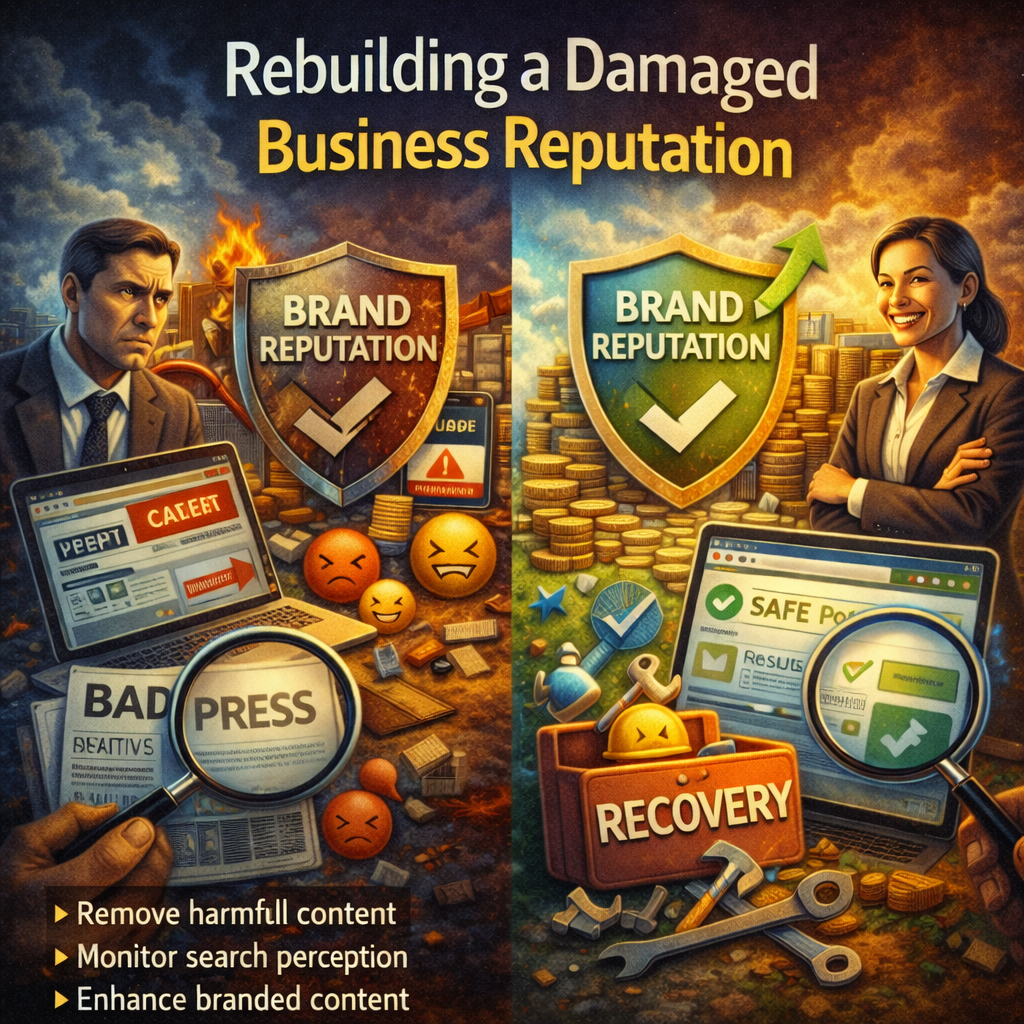
Tag: brand reputation

  • Proven Ways to Maintain a Positive Business Reputation

    Proven Ways to Maintain a Positive Business Reputation

    It’s an essential asset that shapes customer trust, brand perception, and long-term success. A positive reputation gives companies a competitive advantage, enhances customer loyalty, and attracts partnerships that drive growth. Consumers often associate reputation with reliability, ethics, and value—making it a key factor in purchase decisions. Businesses that consistently uphold their promises, deliver exceptional service, and maintain transparent communication naturally create a trustworthy brand identity that endures even in competitive markets.

    Aiplex ORM understands the intricate balance between reputation management and brand authenticity. This blog explores actionable methods to maintain and strengthen a positive business reputation through deliberate practices, data-driven strategies, and proactive communication. By the end, you’ll have a clear understanding of how to protect your brand integrity and how partnering with Aiplex ORM can elevate your company’s credibility and trustworthiness.

    Key Factors to Know Before Building a Strong Reputation

    Establishing and maintaining a business reputation requires more than reactive measures; it starts with foundational awareness. Before focusing on specific techniques, it’s essential to understand the principles that influence how audiences perceive your brand. These include authenticity, consistency, communication transparency, and social responsibility. Each of these elements contributes to how your audience forms opinions about your company’s values and credibility.

    Below, we explore five critical factors that every organization must know before building and maintaining a robust reputation management framework.

    Authenticity Builds Trust and Loyalty

    Authenticity in branding means presenting your business truthfully, not overstating results or exaggerating claims. Customers appreciate honesty and are quick to identify false promises. When a business owns its strengths and admits its limitations, it fosters trust and long-term relationships. Incorporating authenticity into marketing, customer service, and leadership builds emotional connections that reinforce a brand’s reliability.

    Maintaining authenticity also means aligning your actions with your stated values. Whether it’s sustainable sourcing, transparent pricing, or ethical marketing, consistency between words and actions reinforces public confidence. Companies that deliver on their promises not only gain loyal customers but also create advocates who positively influence the brand’s reputation through word-of-mouth and social proof.

    Consistency Strengthens Brand Identity

    Consistency across communication, visuals, and messaging ensures a unified brand experience. When audiences recognize the same values and tone in your website, emails, and social media, it reinforces credibility. Inconsistent messaging, however, can create confusion and reduce trust. A cohesive strategy supported by consistent storytelling enhances both recognition and retention.

    To strengthen reputation through consistency, businesses should establish brand guidelines and communication standards. These help employees and partners represent the brand uniformly. Consistent performance also plays a vital role; delivering quality products and services time after time reassures customers that they can depend on your business.

    Transparency Creates Accountability

    Transparency has become a non-negotiable factor in maintaining a healthy business reputation. Consumers expect brands to be upfront about their policies, operations, and mistakes. A transparent organization shares not only its successes but also how it addresses challenges. This openness encourages engagement and positions the business as trustworthy and approachable.

    Practicing transparency requires proactive communication and a willingness to share information. Responding openly to customer inquiries, publishing clear policies, and acknowledging errors all demonstrate integrity. A transparent reputation encourages constructive feedback, which can be leveraged to improve services and strengthen client relationships.

    Customer Experience Defines Perception

    Customer experience is a cornerstone of reputation. Every interaction, from product discovery to after-sales support, shapes how customers perceive your business. Positive experiences lead to loyalty, while negative ones can quickly spread across social platforms. Ensuring responsiveness, empathy, and reliability in customer interactions reinforces a company’s credibility.

    To elevate customer experience, businesses must listen to feedback and personalize engagement. Using data analytics, they can anticipate needs and resolve issues efficiently. Investing in training and digital tools that enhance communication demonstrates a commitment to client satisfaction, a crucial factor in maintaining a positive reputation.

    Social Responsibility Enhances Brand Value

    Corporate social responsibility (CSR) has evolved into a defining element of reputation. Businesses that actively contribute to social causes, sustainability, and community development earn public respect. CSR initiatives highlight a company’s ethical foundation and demonstrate that profit isn’t its sole priority.

    Incorporating social responsibility into brand strategy helps humanize your business. Donating resources, supporting environmental programs, or offering employee volunteering opportunities build goodwill and reinforce positive associations. When executed authentically, CSR becomes a long-term investment in brand reputation and societal trust.

    Proven Ways to Maintain a Positive Business Reputation

    Once the foundational principles are clear, it’s time to implement actionable strategies that sustain and elevate your reputation. Below are the proven methods that businesses can adopt to continuously build credibility and trust.

    1. Monitor Online Mentions and Feedback Regularly

    Monitoring online mentions helps companies stay informed about what customers are saying across social media, forums, and review platforms. Real-time monitoring tools like Google Alerts or Aiplex ORM’s reputation dashboards enable early detection of potential issues before they escalate. This proactive approach ensures that businesses remain responsive and in control of their narrative.

    Responding to feedback promptly, whether positive or negative, demonstrates professionalism and attentiveness. Even when facing criticism, a well-handled response can transform a negative encounter into a reputation-building opportunity. Monitoring ensures that your business reputation remains protected through transparency and responsiveness.

    2. Encourage and Manage Customer Reviews

    Customer reviews are powerful indicators of trust. Encouraging satisfied customers to share their experiences helps balance occasional negative reviews and boosts credibility. Managed review systems ensure authenticity and fairness, strengthening your digital presence across search results and review platforms.

    Responding to reviews professionally, even when they contain criticism, shows commitment to improvement and customer care. By implementing review management strategies offered by Aiplex ORM, companies can maintain a consistent flow of genuine feedback, which contributes positively to their overall reputation.

    3. Develop a Clear Brand Voice and Messaging Strategy

    A well-defined brand voice ensures consistent communication across all channels. This includes website content, email campaigns, and customer support interactions. When your messaging is clear, values-driven, and customer-oriented, it establishes a cohesive identity that resonates with your target audience.

    To maintain your business reputation, train employees and marketing teams on the brand tone and communication standards. Periodic content audits can help verify whether your messages align with your brand’s values and long-term goals. Consistency in voice not only enhances recognition but also strengthens emotional connection with audiences.

    4. Invest in Employee Advocacy and Culture

    Employees are the most authentic brand ambassadors. When they speak positively about their company, it amplifies credibility. Encouraging a supportive work culture that values transparency, recognition, and growth leads to motivated employees who naturally reflect a strong brand reputation.

    Organizations can implement internal programs to celebrate employee achievements, support mental well-being, and encourage community involvement. Happy and engaged employees contribute to customer satisfaction, reduce turnover, and reinforce the perception of a stable and ethical company.

    5. Leverage Content Marketing for Reputation Building

    High-quality content reinforces authority and trust. Publishing informative blogs, case studies, or expert insights positions a business as an industry leader. Content marketing also enhances visibility across search engines, ensuring potential clients associate your brand with expertise and reliability.

    By integrating SEO practices and customer-focused storytelling, businesses can create value-driven content that resonates with audiences. Aiplex ORM helps brands develop tailored content strategies that highlight strengths, address misconceptions, and reinforce a positive business reputation across digital platforms.

    6. Manage Crises with Professional ORM Strategies

    Even the best companies face crises that threaten their reputation—be it misinformation, negative publicity, or customer backlash. Having a robust crisis management plan ensures quick, strategic responses. Online Reputation Management (ORM) experts, such as those at Aiplex ORM, specialize in mitigating risks through reputation repair, content suppression, and sentiment management.

    Effective crisis management begins with preparation. Companies should identify potential risks, establish communication protocols, and train spokespersons. When handled effectively, a crisis can even strengthen trust as customers see the company’s transparency and accountability in action.

    7. Build Strong Media and Public Relations

    Media visibility plays a crucial role in shaping public perception. Positive press releases, interviews, and thought leadership articles enhance credibility. Building long-term relationships with media professionals ensures that your brand narrative is portrayed accurately and favorably.

    To maintain a balanced reputation, businesses should actively participate in industry discussions, publish expert commentary, and collaborate with credible journalists. Public relations efforts supported by ORM professionals help position a brand as trustworthy and authoritative.

    8. Utilize Data Analytics for Strategic Decision-Making

    Data-driven insights are essential for reputation management. Monitoring customer sentiment, engagement trends, and feedback data provides a clearer picture of how your business is perceived. Analytics tools can uncover patterns and identify areas needing improvement before they impact public opinion.

    Aiplex ORM offers advanced analytics that track sentiment changes across channels, helping brands make informed decisions. Data-backed strategies enhance both proactive and reactive reputation management efforts, ensuring a stable and positive brand image.

    9. Engage in Social Listening and Community Interaction

    Social listening allows businesses to understand customer sentiment and emerging trends by analyzing conversations across platforms. Engaging in these discussions, answering questions, and offering value builds credibility and reinforces community trust.

    Community engagement also includes responding to comments, participating in relevant discussions, and supporting user-generated content. When businesses actively interact with their audiences, they demonstrate attentiveness and transparency—key elements of maintaining a good reputation.

    10. Ensure Cybersecurity and Data Privacy

    Data security directly affects customer trust. Any breach or misuse of data can severely harm a brand’s reputation. Implementing strong cybersecurity measures and transparent privacy policies demonstrates commitment to protecting customer information.

    Regular audits, employee training, and compliance with global data standards enhance credibility. Customers who feel secure while interacting with your brand are more likely to remain loyal, advocate for your services, and associate your business with professionalism and reliability.

    Why Choose Aiplex ORM to Safeguard Your Reputation

    Aiplex ORM is a trusted partner in online reputation management, helping businesses across industries monitor, protect, and enhance their brand image. Their expert team employs advanced analytics, content optimization, and review management techniques to ensure your reputation remains positive and authentic. Whether it’s addressing negative reviews, removing harmful content, or improving brand perception, Aiplex ORM delivers measurable results.

    By partnering with Aiplex ORM, businesses gain access to cutting-edge tools and tailored strategies that align with their unique objectives. The company’s comprehensive ORM services empower brands to take control of their digital footprint, ensuring that every online mention reflects their true value and credibility. Visit Aiplex ORM to learn how their customized solutions can fortify your business reputation.

    Conclusion

    Maintaining a positive business reputation is an ongoing commitment that demands consistency, transparency, and adaptability. Brands that invest in proactive reputation management not only safeguard their public image but also foster customer loyalty and industry recognition. From monitoring feedback to managing crises, every step contributes to a sustainable reputation that drives long-term success.

    Partnering with Aiplex ORM ensures your brand is backed by expertise, innovation, and strategy. With comprehensive ORM solutions, Aiplex helps businesses maintain control over their narratives and build trust with audiences worldwide. A strong reputation isn’t built overnight, but with deliberate effort and professional guidance, it becomes your most valuable business asset.


  • Simple Steps to Improve Reputation Management

    Simple Steps to Improve Reputation Management

    Reputation management is more than just protecting a name—it’s about earning and sustaining trust in a landscape where opinions form in seconds. Businesses, professionals, and even public figures often face the challenge of ensuring that their digital presence reflects authenticity and credibility. A positive reputation doesn’t just attract attention; it sustains long-term loyalty, drives customer retention, and fosters genuine engagement. Understanding how to shape and maintain this reputation strategically can determine whether an organization thrives or struggles to stay relevant.

    Reputation management involves multiple strategies and tools to monitor, improve, and protect how a brand is perceived across platforms. This blog explores clear, actionable steps to strengthen your reputation, enhance audience perception, and ensure long-term credibility. You’ll learn essential concepts, practical techniques, and expert recommendations that can be directly implemented for measurable impact. If you’re ready to establish a robust online presence, explore how Aiplex ORM can help you achieve an impeccable reputation and maintain it consistently.

    Things to Know Before Starting Reputation Management

    Before improving reputation management, it’s essential to understand the underlying concepts, challenges, and goals that define a strong reputation strategy. Reputation management isn’t just about deleting negative comments or publishing positive reviews—it’s a continuous process of shaping perception, building relationships, and aligning brand values with public expectations. Businesses must assess where they stand, identify key reputation drivers, and anticipate how customer sentiment evolves over time.

    Understanding Online Perception

    Online perception refers to how users view a brand across various digital platforms. Whether through social media, news articles, or customer reviews, perceptions are influenced by every interaction and message shared publicly. A single negative comment can create ripples, while consistent positive engagement can enhance credibility. Monitoring mentions and sentiment trends helps brands understand where they stand in the digital ecosystem.

    Perception is not just a reflection of what others think—it’s also shaped by how actively a brand communicates. Transparency, timely responses, and meaningful engagement are all factors that determine public opinion. Companies that prioritize responsiveness demonstrate accountability and gain trust, while neglecting communication can lead to misunderstandings and loss of credibility.

    The Role of Customer Feedback

    Customer feedback serves as the foundation for effective reputation management. Feedback reveals what your customers value, expect, and experience when interacting with your brand. Positive reviews amplify credibility, while constructive criticism highlights opportunities for growth. Both types of feedback should be leveraged strategically to demonstrate that your business listens and acts on input.

    Beyond simply collecting feedback, the response strategy matters equally. Acknowledging reviews—both good and bad—with empathy shows professionalism and care. Publicly addressing negative comments with genuine solutions can transform critics into advocates. In essence, how you handle feedback becomes a public display of your brand’s integrity and commitment.

    Importance of Consistency

    Consistency ensures that every brand message, customer experience, and public statement aligns with the organization’s core values. When a brand’s communication varies across channels, audiences may question its authenticity. Reputation thrives on dependability, and consistent tone, quality, and service reinforce that perception.

    Consistency extends beyond words—it applies to actions too. From timely updates on social media to uniform responses to inquiries, every interaction matters. Maintaining uniformity across digital platforms creates a reliable brand image that users can trust, helping build a stable and lasting reputation over time.

    Social Media Presence and Monitoring

    Social media is a double-edged sword for reputation management. It provides visibility and engagement but also exposes brands to scrutiny. A proactive approach involves consistent monitoring, real-time engagement, and immediate action on trending conversations related to your brand. This not only mitigates potential risks but also builds loyalty among followers.

    Effective social media management involves using analytics tools to track sentiment and performance. By understanding which topics resonate most with your audience, you can refine messaging and target communication more effectively. Staying active and maintaining authenticity are key to creating a social presence that fosters positive brand awareness.

    SEO and Reputation Management

    Search Engine Optimization (SEO) plays a vital role in reputation management. When potential customers search for your business, the results they see form their first impression. By optimizing positive content and pushing down irrelevant or negative mentions, you can control how your brand appears online. Proper keyword use, optimized blogs, and active media presence all contribute to this.

    A sound SEO strategy ensures that trustworthy sources and quality content dominate search results. High-ranking pages create a strong perception of credibility, while suppression of outdated or misleading content helps maintain brand integrity. SEO and reputation management together create a powerful framework for visibility and trust.

    Step 1: Audit Your Current Online Reputation

    Start by conducting a comprehensive audit of your online reputation. Assess how your brand appears across search engines, social media platforms, and review sites. This initial evaluation provides insight into how audiences perceive your brand and where improvements are needed. Use monitoring tools to identify mentions, keywords, and sentiment trends to establish a clear baseline.

    Once you have gathered this data, categorize it by sentiment—positive, neutral, or negative. This allows for precise targeting of issues that need correction or amplification. An audit isn’t a one-time exercise but a recurring process to track changes over time and measure the effectiveness of your ongoing reputation strategies.

    Step 2: Optimize Brand Profiles

    Every online profile, from LinkedIn to business directories, should present consistent information about your brand. Details such as your logo, tagline, contact information, and website links must align across all platforms. This uniform presentation not only enhances professional credibility but also improves discoverability and user trust.

    A well-optimized profile should include relevant keywords, positive testimonials, and clear descriptions of services. Regularly updating these profiles ensures relevance and keeps audiences engaged. It also sends signals to search engines about your brand’s authenticity, contributing positively to both reputation and ranking.

    Step 3: Leverage Positive Reviews and Testimonials

    Encouraging customers to share their experiences builds social proof, one of the strongest trust signals in online environments. Positive reviews on Google, Yelp, or industry-specific platforms enhance credibility and attract new customers. A structured follow-up strategy after a sale or service can effectively encourage satisfied clients to leave reviews.

    However, reputation management doesn’t end with collecting good feedback—it also includes showcasing it strategically. Embed testimonials on your website, share reviews on social media, and feature client stories in marketing materials. Doing so amplifies your reputation while highlighting authentic voices that reflect real experiences.

    Step 4: Manage Negative Publicity Effectively

    Negative publicity can be inevitable, but how a brand responds determines its long-term impact. Swift, transparent communication is key to mitigating damage. Address issues publicly when appropriate, showing accountability and a willingness to correct mistakes. Silence or denial often fuels more speculation and harm.

    Developing a crisis communication plan ensures your team is prepared for potential challenges. Having designated spokespeople and clear protocols prevents misinformation from spreading. The faster you control the narrative, the more likely you are to preserve trust and demonstrate professionalism.

    Step 5: Create High-Quality, Positive Content

    Content creation is a proactive form of reputation management. Publishing insightful blogs, engaging videos, and well-researched articles helps control the narrative about your brand. When audiences consistently encounter valuable content, they associate your name with expertise and reliability.

    Use storytelling, data-driven insights, and consistent branding to reinforce your organization’s values. Positive content not only improves reputation but also boosts SEO performance by increasing visibility and authority. Over time, this builds a reputation rooted in credibility rather than reactive damage control.

    Step 6: Engage Authentically With Your Audience

    Engagement transforms followers into advocates. Authentic conversations with your audience on social platforms, forums, and communities humanize your brand and make interactions more relatable. Responding personally to comments, inquiries, and reviews demonstrates genuine care for your audience.

    Beyond one-time engagement, developing ongoing relationships is critical. Hosting Q&A sessions, webinars, or live chats allows real-time dialogue and transparency. These efforts show that your brand values communication and accountability—two key pillars of successful reputation management.

    Step 7: Monitor and Measure Progress

    Tracking progress ensures that your reputation strategy remains effective and adaptable. Use analytics tools to monitor mentions, traffic sources, sentiment trends, and brand visibility metrics. Regular reporting helps identify what’s working and where refinement is needed.

    By reviewing data periodically, brands can stay proactive rather than reactive. Continuous measurement allows businesses to align tactics with evolving audience expectations, reinforcing a culture of consistency and credibility in every communication channel.

    Why Choose Aiplex ORM for Reputation Management

    Aiplex ORM offers specialized expertise in managing and enhancing online reputations across industries. The company employs data-driven monitoring tools, crisis management strategies, and SEO-based visibility solutions to ensure your brand remains trustworthy and respected. With a team that understands both the technical and emotional sides of reputation, Aiplex ORM provides personalized plans that align with your long-term business goals.

    What sets Aiplex ORM apart is its ability to merge strategy with empathy—understanding that behind every brand lies a story that deserves accurate representation. Whether handling negative press, building brand authority, or monitoring digital footprints, Aiplex ORM ensures that your online identity reflects your true value and professionalism.

    Conclusion

    Strong reputation management begins with understanding perception and ends with consistent action. Every review, comment, or mention contributes to how your audience views you—and each interaction is a chance to strengthen or weaken that trust. Through careful auditing, engagement, and high-quality content creation, brands can build a resilient reputation that withstands scrutiny.

    Partnering with experts like Aiplex ORM ensures that every aspect of your online presence is optimized for credibility and growth. With their strategic support, you can navigate challenges confidently, amplify your brand voice, and sustain a reputation built on authenticity and trust.


  • Brand Monitoring Tips to Protect Your Online Image

    Brand Monitoring Tips to Protect Your Online Image

    Your brand’s online presence shapes how customers, partners, and even competitors perceive your business. A single viral post, review, or comment can influence reputation and consumer trust.

    Businesses that consistently track their mentions across social media, news, and digital forums can respond strategically to protect their credibility. It’s about staying informed and in control of your digital footprint before misinformation or negativity spreads.

    For organizations aiming to maintain a trustworthy image, brand monitoring offers valuable insights into audience sentiment and emerging trends. In this blog, we’ll explore practical tips and methods to strengthen your monitoring strategy and ensure your brand narrative remains positive. Whether you’re a growing enterprise or an established corporation, these approaches will help you safeguard your online identity. Visit Aiplex ORM to learn how our specialized tools and expertise can enhance your digital reputation management.

    Key Aspects to Know Before Starting Brand Monitoring

    Understanding brand monitoring involves more than tracking mentions; it requires a clear structure, tools, and goals. Here’s what you need to know before building your strategy.

    1. Setting Clear Brand Monitoring Objectives

    • Effective brand monitoring begins with defining what you want to achieve. Objectives may include reputation protection, crisis prevention, competitor benchmarking, or audience engagement analysis. Clear goals help you choose the right tools and channels for tracking. Having measurable targets ensures that your monitoring efforts align with business outcomes and communication priorities.
    • Equally important is identifying which digital spaces matter most to your audience, social media platforms, review sites, news portals, or blogs. A focused objective allows you to allocate resources efficiently, ensuring real-time responses to opportunities and risks. It also helps you tailor your response tone to reflect brand values and professionalism consistently.

    2. Identifying Brand Keywords and Mentions

    • Your brand name, product names, and executive mentions form the foundation of your monitoring system. Identifying variations, misspellings, and relevant hashtags helps capture every relevant mention. Including competitor names and industry terms provides context to evaluate sentiment trends effectively.
    • Moreover, advanced monitoring tools can segment mentions by language, region, or platform. This segmentation enhances your understanding of public perception across demographics. It’s vital to continuously refine your keyword list as your brand evolves or new campaigns launch, ensuring full coverage of digital conversations.

    3. Selecting the Right Brand Monitoring Tools

    • Technology determines how accurately and efficiently you monitor your brand. Choose tools that provide real-time alerts, sentiment analysis, and coverage across social media, news, and forums. Automation saves time, but human oversight ensures nuanced interpretation and context.
    • Platforms such as Brandwatch, Mention, or Sprout Social offer sophisticated analytics and visualization dashboards. However, integrating custom ORM services like Aiplex ORM solutions provides added advantages, proactive reputation protection, data-driven reporting, and actionable insights tailored to business needs.

    4. Evaluating Online Sentiment Analysis

    • Monitoring mentions alone isn’t enough; analyzing sentiment helps understand public emotion around your brand. Positive sentiment reflects brand loyalty, while negative or neutral tones highlight potential areas for improvement. Tracking shifts in sentiment over time helps gauge campaign effectiveness and public trust.
    • Modern monitoring platforms use AI-driven sentiment analysis for precision, yet manual reviews remain crucial. Combining automated and human analysis ensures accuracy, particularly in detecting sarcasm or cultural nuances that algorithms may miss.

    5. Responding to Mentions Strategically

    • A proactive response strategy is key to maintaining credibility. Whether feedback is positive or negative, timely engagement shows transparency and accountability. Craft responses that align with brand tone and values, avoiding defensive or dismissive language.
    • For negative mentions, acknowledge issues publicly but resolve them privately when necessary. For positive feedback, express appreciation and reinforce engagement. A structured response plan helps build long-term trust and customer loyalty.

    Essential Brand Monitoring Tips to Strengthen Your Strategy

    1. Track Across Multiple Digital Channels

    • Your audience communicates through multiple touchpoints—social platforms, forums, review sites, and news outlets. Monitoring only one or two channels limits visibility. Comprehensive tracking ensures you capture sentiment across all relevant platforms, enabling a 360-degree understanding of your reputation.
    • Integrating social listening with media tracking tools ensures no mention goes unnoticed. This unified approach allows timely interventions during crises, helping maintain brand consistency across all digital spaces.

    2. Leverage AI and Automation Tools

    • AI-driven analytics enhance efficiency by scanning vast online data in real time. These tools detect patterns, sentiment, and emerging issues before they escalate. Automated alerts allow faster responses to potential crises or misinformation.
    • However, human insight remains indispensable. Combine automation with expert review to ensure accurate context interpretation. With Aiplex ORM technology solutions, brands can integrate AI-driven monitoring with professional ORM analysis for precise and contextual reporting.

    3. Benchmark Competitors’ Online Performance

    • Monitoring competitor mentions provides valuable comparative insights. Understanding what works—or fails—for others in your industry helps refine your strategy. It also reveals new engagement opportunities or market gaps.
    • Competitive benchmarking highlights how your audience perceives your brand versus others. This information guides branding initiatives, content tone, and campaign focus. Using this intelligence, you can enhance your digital footprint strategically.

    4. Build an Internal Escalation Workflow

    • When negative sentiment arises, swift coordination within teams is essential. An escalation workflow outlines how alerts are handled-from identification to resolution. Assign clear responsibilities for communication, PR response, and client support.
    • Such structured workflows prevent panic and ensure consistent messaging. They also enable your brand to address issues quickly, reducing reputational risks. A documented crisis protocol is an invaluable part of professional brand monitoring.

    5. Analyze Periodic Reports and Trends

    • Data without interpretation offers limited value. Regularly reviewing performance reports reveals trends in audience behavior, mention frequency, and sentiment shifts. Consistent analysis ensures that strategies evolve with audience expectations and market dynamics.
    • Reporting also helps leadership make data-backed decisions on marketing, PR, and customer engagement. Aiplex ORM offers customized reporting tools that turn raw data into actionable insights, making continuous improvement a measurable goal.

    Why Choose Aiplex ORM for Your Brand Monitoring Needs

    Aiplex ORM combines intelligent automation with expert-driven analysis to deliver comprehensive online reputation management solutions. With advanced AI tools, real-time alerts, and detailed analytics, the platform ensures your brand stays protected from reputational threats. The company’s ORM specialists not only detect potential risks but also help craft responses that align with your brand’s tone, values, and business goals.

    Choosing Aiplex ORM means partnering with a team that understands the nuances of digital reputation. From sentiment analysis to crisis management and proactive engagement, every feature is designed to empower your brand narrative. Their holistic approach ensures that you stay ahead of online discussions while maintaining transparency and trust with your audience.

    Conclusion

    Brand monitoring isn’t merely about tracking mentions—it’s about shaping perception, enhancing trust, and ensuring brand resilience. A structured approach, supported by technology and expert guidance, can turn challenges into opportunities for growth. The brands that monitor effectively are the ones that engage meaningfully and adapt swiftly to changing digital conversations.

    With Aiplex ORM, your business gains more than just monitoring—it gains a defense system for your online reputation. By combining technology, insights, and expertise, Aiplex ORM ensures your brand remains strong, credible, and respected across every platform. Strengthen your digital identity today with Aiplex ORM.


  • Reputation Management Tips for Small Businesses

    Reputation Management Tips for Small Businesses

    Building and maintaining a strong business reputation can make the difference between steady growth and silent decline for small enterprises. Customers often decide who to trust based on perception, reviews, and social presence. For small businesses, every mention online—whether positive or negative—can shape that perception. This is where mastering business reputation management becomes essential. With the right strategies, small businesses can control their narrative, strengthen credibility, and create loyal customers who advocate for their brand.

    This blog explores practical reputation manag ement tips that help small businesses establish trust and maintain positive public perception. From managing online reviews to maintaining transparency, each section provides actionable steps that any business owner can implement. By the end of this post, you’ll have a clear understanding of how to strengthen your business reputation and where to turn for professional support through Aiplex ORM, experts in comprehensive reputation management solutions.

    Things to Know Before Improving Your Business Reputation

    Before diving into strategies, it’s crucial to understand how reputation functions as a strategic asset. Reputation is not built overnight; it’s the cumulative outcome of consistent actions, customer interactions, and public feedback. Every email reply, social media post, and customer review plays a part. Recognizing this interconnectedness helps business owners make thoughtful decisions that sustain long-term trust.

    Below are key areas to understand before applying active reputation management techniques. Each element supports your ability to manage and protect your public image effectively.

    The Importance of Consistency in Brand Communication

    • Consistency ensures that your brand voice remains recognizable and reliable. Whether through social posts, email campaigns, or press releases, consistent messaging enhances credibility. A small business that communicates in a unified tone across all channels fosters customer trust and builds lasting loyalty.
    • Consistency also applies to visual identity and response tone. Using the same logo versions, brand colors, and tone of voice reinforces recognition. This approach helps small businesses project professionalism and stay memorable in competitive markets.

    Understanding the Role of Customer Experience

    • Customer experience (CX) is a major factor in shaping business reputation. A satisfied customer often becomes a brand advocate who willingly recommends your services to others. Focusing on responsive communication and attentive service shows customers that their opinions are valued.
    • Negative experiences, on the other hand, can spread quickly through reviews and social media. By monitoring CX regularly and addressing issues proactively, small businesses can turn potential crises into opportunities to demonstrate accountability.

    The Power of Transparency and Authenticity

    • Transparency builds trust, especially for small businesses competing with larger brands. Openly addressing customer concerns, clarifying policies, or admitting errors conveys honesty. Authentic brands attract loyal customers who appreciate integrity over perfection.
    • Authenticity also means staying true to your business values. Avoid exaggerations and ensure that your promotional claims align with actual experiences. This reliability contributes to a sustainable and credible business reputation.

    Monitoring Online Presence Effectively

    • Active monitoring helps you identify feedback early—whether it’s on review sites, social media, or forums. Using reputation management tools, businesses can track mentions and sentiment trends to respond promptly. The quicker your responses, the more customers perceive attentiveness.
    • This vigilance also allows for early identification of negative patterns. If recurring complaints appear, you can address root causes before they escalate. Continuous monitoring is key to maintaining a balanced, credible reputation.

    Leveraging Social Proof Strategically

    • Social proof—such as testimonials, reviews, and influencer mentions—plays a powerful role in shaping perceptions. Potential customers often rely on others’ experiences before making a purchase decision. Displaying genuine positive feedback builds confidence among new visitors.
    • Encourage satisfied customers to leave reviews and showcase them on your website and social platforms. This transparency amplifies credibility and demonstrates that your business values feedback and accountability.

    Effective Reputation Management Tips for Small Businesses

    1. Manage Online Reviews Proactively

    • Online reviews serve as public reflections of customer satisfaction. Encouraging happy clients to share feedback helps balance occasional negative remarks. Responding to both positive and negative reviews professionally demonstrates that your business listens and cares.
    • Develop a review management process that includes monitoring major platforms like Google, Yelp, and industry-specific directories. A timely and polite reply can often transform dissatisfied customers into loyal supporters.

    2. Create and Maintain a Strong Social Media Presence

    • Social platforms offer small businesses an opportunity to showcase their personality, values, and service quality. Regular posting and interaction with followers increase visibility and strengthen trust. Choose platforms that align with your target audience for maximum engagement.
    • Social media is also a vital tool for crisis communication. Quick, transparent updates during challenges reinforce reliability. Consistent, valuable content further builds authority and contributes to a resilient business reputation.

    3. Encourage Word-of-Mouth Marketing

    • Word-of-mouth remains one of the most authentic reputation-building tools. Personal recommendations often carry more weight than paid advertisements. Small businesses can nurture this by creating memorable experiences that naturally inspire referrals.
    • Offering referral programs or incentives can further motivate satisfied clients to share your services. Authentic recommendations amplify reach and create organic brand advocates.

    4. Address Negative Feedback Constructively

    • Handling criticism gracefully is essential for protecting business reputation. Avoid defensive replies; instead, acknowledge concerns and offer solutions. This approach reflects professionalism and empathy, both of which strengthen credibility.
    • Follow up with unsatisfied customers privately when possible. Turning negative feedback into an improved experience shows dedication to continuous growth and customer care.

    5. Optimize Your Google Business Profile

    • A well-optimized Google Business Profile increases visibility and encourages trust. Include accurate contact information, current photos, and detailed service descriptions. Regular updates signal reliability to both search engines and users.
    • Collecting and showcasing positive reviews also enhances local SEO, allowing your business to appear higher in search rankings. For small businesses, this online footprint can be a game-changer in attracting new leads.

    6. Maintain Ethical and Transparent Practices

    • Ethical practices serve as the foundation of a sustainable reputation. From truthful advertising to transparent pricing, ethical decisions show customers that your brand stands for integrity. Trust built on ethics endures longer than temporary marketing hype.
    • Transparency also extends to partnerships and supplier relations. Clear communication and fairness reinforce your business’s reliability in every professional interaction.

    7. Invest in Professional Reputation Management Tools

    • While manual monitoring works for small operations, growing businesses benefit from advanced reputation management software. These tools automate sentiment tracking, alerting you to changes in brand perception. They save time and allow proactive management.
    • A professional service provider like Aiplex ORM offers tailored solutions for monitoring, managing crises, and safeguarding brand image. Their expertise ensures that your business reputation remains strong and adaptable in a dynamic environment.

    Why Choose Aiplex ORM for Business Reputation Management

    Aiplex ORM stands out as a trusted partner for businesses aiming to build, protect, and enhance their reputation. With specialized services covering online monitoring, crisis response, and digital PR, Aiplex helps small enterprises maintain credibility in an increasingly competitive market. Their advanced tools and expert guidance empower companies to navigate challenges confidently while highlighting their strengths.

    Small businesses often lack the in-house resources to manage reputation crises effectively. Aiplex ORM provides customized strategies that align with business goals and ensure consistent online representation. From removing misleading content to amplifying positive visibility, their comprehensive approach keeps your business reputation secure and thriving.

    Conclusion

    Your business reputation is one of your most valuable assets, influencing trust, visibility, and long-term success. With strategic effort, consistent communication, and expert support, small businesses can build reputations that withstand challenges and inspire loyalty. Implementing the tips discussed here will position your brand for steady growth and sustained credibility.

    When you’re ready to elevate your brand’s standing and safeguard its image, consider partnering with Aiplex ORM. Their specialized reputation management solutions provide the protection, insight, and strategy small businesses need to thrive in every phase of growth.


  • Build Trust via Reputation Management

    Build Trust via Reputation Management

    Trust is the silent currency that fuels every successful business relationship.

    Whether you’re a small business owner or a global brand, your reputation defines how customers perceive your credibility and reliability. Reputation management is no longer an optional aspect of branding—it’s an essential strategy that determines long-term success. When consumers search for your company online, they should find consistent, positive impressions that inspire confidence. Building this image takes time, strategy, and careful oversight, which is where professional reputation management becomes indispensable.

    This blog will explore the importance of reputation management, its various dimensions, and how it helps organizations foster trust among their audience. You’ll learn about the key factors influencing brand perception, the steps to strengthen online credibility, and how businesses can actively maintain their reputation through proactive measures. By the end, you’ll understand how a structured approach to reputation management can safeguard your brand image and how Aiplex ORM can help you achieve that goal with precision and expertise. Contact Aiplex ORM to start managing your reputation effectively.

    Understanding the Foundation of Reputation Management

    Reputation management is about shaping public perception through strategic communication, consistent engagement, and proactive monitoring. Before diving into specific tactics, it’s important to understand the core components that form its foundation. These elements work together to build a trustworthy brand identity.

    1. Online Visibility and Brand Perception

    • Visibility is the first pillar of a strong reputation. A brand’s presence across search engines, social media, and review platforms significantly affects how it is perceived. When potential customers search for your company, what they find determines their trust level. If positive reviews, authentic stories, and thoughtful engagement dominate search results, it enhances credibility. On the other hand, lack of visibility or negative mentions can erode trust quickly.
    • Maintaining an accurate, consistent, and engaging presence across digital channels ensures that your audience sees your best side. Optimized content, social proof, and customer interaction collectively influence perception. For example, responding professionally to reviews on Google or social media strengthens a brand’s authenticity and transparency—core elements of reputation management.

    2. Monitoring and Responding to Feedback

    • Reputation management thrives on awareness and responsiveness. Monitoring what people say about your brand across digital platforms helps you stay informed and proactive. Feedback—both positive and negative—provides insights into customer expectations. Ignoring it can lead to dissatisfaction and mistrust, while timely, empathetic responses demonstrate accountability.
    • Businesses that acknowledge feedback show they value customer voices. Using online reputation monitoring tools allows organizations to identify emerging issues early and address them before they escalate. Regularly engaging with users on review platforms, social media, or forums strengthens relationships and reflects a brand’s commitment to improvement.

    3. Content Credibility and Consistency

    • Content defines how your brand communicates values and expertise. Every piece of content—from blogs to social media posts—shapes your public image. Credible content demonstrates authority, while inconsistent or misleading messaging damages trust. Maintaining accuracy, tone, and alignment across all communication channels is crucial to sustaining a solid reputation.
    • To reinforce credibility, businesses should prioritize fact-based storytelling, share client success stories, and update content regularly. Transparency in communication builds long-term relationships with audiences. A consistent content voice establishes brand familiarity, making customers more likely to trust the company’s vision and offerings.

    4. Crisis Management and Recovery Strategies

    • Every organization faces challenges at some point, but how it responds defines its reputation. Reputation management includes preparing for and responding to crises strategically. A well-prepared crisis response plan helps mitigate reputational damage and restore public confidence swiftly.
    • By anticipating potential risks and maintaining communication protocols, brands can address issues transparently. Responding promptly, accepting responsibility when needed, and communicating resolutions show leadership and integrity. Partnering with experts like Aiplex ORM ensures that crisis communication remains professional, timely, and consistent, preventing long-term brand erosion.

    5. Building Social Proof and Advocacy

    • Social proof—such as testimonials, reviews, and influencer endorsements—serves as digital word-of-mouth. It reassures potential customers that your brand delivers what it promises. Encouraging satisfied clients to share their experiences amplifies positive narratives online.
    • Reputation management involves nurturing these relationships to create a network of advocates. Highlighting customer success stories and featuring case studies across platforms strengthens credibility. The more authentic voices speak for your brand, the more resilient your reputation becomes.

    Key Components of an Effective Reputation Management Strategy

    Once the foundation is clear, the next step is to implement actionable strategies. A strong reputation management framework includes monitoring, engagement, optimization, and ongoing evaluation—all integrated into a continuous cycle of improvement.

    1. Active Review Management

    • Reviews shape consumer decisions. A proactive approach to review management involves encouraging feedback, addressing concerns, and celebrating positive experiences. Consistent responses demonstrate your commitment to customer satisfaction.
    • Aiplex ORM helps brands maintain balanced review profiles by leveraging technology to monitor mentions and guide appropriate responses. Encouraging authentic feedback while managing criticism professionally strengthens both credibility and trust.

    2. SEO and Content Optimization for Reputation

    • Search engine optimization (SEO) plays a critical role in reputation management. Positive and relevant content needs visibility, and SEO ensures that the right audience finds it. Optimizing web pages, blogs, and social media content enhances ranking and pushes unfavorable results lower.
    • A holistic SEO strategy focuses on publishing high-quality, keyword-optimized content aligned with brand messaging. Integrating the focus keyword ‘reputation management’ in strategic places increases relevance, while backlinks and citations boost authority and visibility.

    3. Transparent Communication and PR Management

    • Effective communication is at the heart of reputation management. Public relations efforts shape narratives and reinforce trust. Transparency, especially during challenging times, helps brands control stories instead of letting rumors spread.
    • PR management includes press releases, interviews, and digital storytelling. Aiplex ORM’s approach integrates modern PR practices with real-time monitoring, ensuring brands project clarity and consistency in every message. Proactive storytelling humanizes brands and fosters stronger emotional connections.

    4. Employee Advocacy and Internal Culture

    • Reputation starts from within. Employees are powerful ambassadors who shape public perception through their interactions, both online and offline. A strong internal culture built on transparency, ethics, and empowerment directly reflects on brand reputation.
    • Encouraging employees to engage positively on social platforms and align with brand values enhances authenticity. Training programs and internal communication strategies ensure consistency. Companies with empowered teams naturally build credibility and attract loyal customers.

    5. Leveraging Technology for Reputation Insights

    • Modern reputation management relies heavily on analytics. Data-driven insights reveal patterns in customer sentiment, engagement, and public perception. Using AI-based monitoring tools helps brands make informed decisions quickly.
    • Aiplex ORM employs advanced reputation intelligence systems that track mentions, analyze sentiment, and forecast reputation trends. These insights enable proactive interventions and better strategy formulation, keeping your brand reputation strong and adaptive.

    Why Choose Aiplex ORM for Reputation Management

    Aiplex ORM stands as a trusted partner for businesses aiming to build and maintain a strong online presence. With a team of experts specializing in reputation monitoring, crisis response, and digital optimization, Aiplex provides comprehensive solutions that safeguard your brand integrity. Their tailored strategies go beyond surface-level management—they are rooted in deep analytics, audience insights, and consistent communication.

    What sets Aiplex ORM apart is its focus on transparency, precision, and results. Whether it’s suppressing negative links, managing reviews, or enhancing brand visibility, Aiplex ensures every action aligns with long-term reputation goals. Partnering with Aiplex ORM empowers your organization to gain control over its narrative, build customer trust, and grow sustainably in an increasingly competitive environment.

    Conclusion

    Reputation management isn’t a one-time effort; it’s an ongoing process that shapes how the world sees your brand. From building credibility to managing crises, every step contributes to the foundation of trust that supports long-term success. Businesses that invest in professional reputation management not only protect their image but also strengthen their market position.

    Aiplex ORM provides the tools, expertise, and strategic guidance needed to manage and enhance your online reputation effectively. By partnering with them, you’re choosing consistency, reliability, and trust—the core elements of sustained growth. Visit Aiplex ORM today to discover how expert reputation management can elevate your brand’s credibility and influence.


  • Brand Monitoring Strategies to Improve Customer Trust

    Brand Monitoring Strategies to Improve Customer Trust

    With the rise of social media, online reviews, and real-time communication, how people perceive your brand can change overnight.

    This is where effective brand monitoring comes into play. From tracking customer sentiment to identifying potential crises before they escalate, brand monitoring helps businesses maintain a positive reputation and ensure their audience remains confident in their values.

    The purpose of this blog is to explore strategic methods and modern tools that enhance brand monitoring efforts to build customer trust. We will discuss the importance of data-driven listening, social media insights, and proactive reputation management practices that enable companies to respond effectively. By the end of this article, you’ll understand how implementing comprehensive monitoring strategies, like those offered by Aiplex ORM, can strengthen your brand credibility and customer loyalty.

    Key Insights Before Implementing Brand Monitoring

    Before diving into the specific strategies, it’s essential to understand the foundational elements of brand monitoring. These factors determine how effectively your brand can observe, analyze, and respond to public sentiment. Knowing these principles ensures that your monitoring system not only collects data but also turns it into meaningful action that fosters trust and transparency.

    Understanding Brand Perception

    Brand perception is how your audience interprets your brand’s message, visuals, and customer interactions. Monitoring online conversations, reviews, and social media mentions provides insights into how your brand is being perceived across different channels. These insights help shape marketing strategies and allow businesses to align their image with customer expectations.

    Additionally, tracking sentiment trends over time can reveal early signs of dissatisfaction or confusion among consumers. By identifying these patterns, companies can address potential issues before they escalate. Platforms like social listening tools and sentiment analytics enable brands to make informed decisions that maintain consistency and trustworthiness.

    Importance of Real-Time Data

    Real-time monitoring ensures that brands can respond quickly to both positive and negative mentions. Immediate engagement demonstrates attentiveness and reinforces customer confidence, showing that the brand values feedback.

    Moreover, timely responses to emerging issues prevent misinformation from damaging your reputation. By integrating tools that provide instant alerts for keyword mentions, companies can stay ahead of potential PR crises. This proactive approach is especially important in maintaining authenticity and reliability in the eyes of customers.

    Identifying Key Channels for Monitoring

    Not all digital platforms influence brand reputation equally. It’s vital to identify which channels; such as social media, review sites, blogs, and news outlets; are most impactful for your industry. For instance, a B2B company may prioritize LinkedIn and niche forums, while consumer brands may focus more on Instagram or Twitter.

    Once these channels are identified, monitoring can be streamlined for maximum efficiency. Consistent observation allows brands to identify which platforms are driving the most engagement and adjust their communication strategies accordingly. This ensures balanced visibility and cohesive brand messaging across touchpoints.

    Integrating AI and Analytics Tools

    Modern brand monitoring heavily relies on artificial intelligence (AI) and data analytics. These tools automate the process of gathering vast amounts of information from various sources. AI-driven sentiment analysis helps brands understand emotional tone, while analytics dashboards visualize patterns in customer behavior and engagement.

    By using predictive analytics, brands can anticipate shifts in customer sentiment or emerging trends. This insight allows teams to prepare more effectively, strengthen customer relationships, and make evidence-based strategic decisions. As a result, companies can maintain their credibility and build long-term trust with their audience.

    Setting Clear Monitoring Objectives

    Every brand monitoring strategy must start with well-defined goals. Whether the objective is to track sentiment, measure campaign impact, or manage online reputation, having a clear focus ensures that monitoring activities are targeted and efficient. Defining KPIs like engagement rate, share of voice, or sentiment score provides measurable outcomes for evaluating success.

    Once objectives are set, brands can establish customized dashboards to visualize their progress. These insights help identify what’s working and where adjustments are needed. A structured monitoring approach enables teams to convert raw data into actionable insights that directly influence customer satisfaction and brand trust.

    Effective Brand Monitoring Strategies

    1. Leverage Social Listening Tools

    Social listening tools are essential for tracking online conversations about your brand. Platforms such as Hootsuite, Brandwatch, and Sprout Social help businesses identify mentions, sentiment shifts, and trending topics related to their brand. By actively engaging with these insights, companies can strengthen customer trust through transparency and responsiveness.

    Furthermore, integrating these tools with CRM systems enhances customer engagement strategies. When brands understand customer concerns and preferences in real time, they can deliver more personalized experiences. This not only improves customer satisfaction but also builds loyalty over the long term.

    2. Monitor Competitors and Industry Trends

    Competitor monitoring is a vital aspect of brand reputation management. Observing competitors’ online presence and customer interactions provides valuable lessons and opportunities for differentiation. By identifying gaps in competitor engagement, brands can develop more effective communication and service strategies.

    Industry trend monitoring, on the other hand, allows businesses to adapt to evolving consumer expectations. Staying updated with trends such as sustainability, innovation, and digital transparency ensures that your brand remains relevant and trustworthy in an ever-changing market.

    3. Engage Actively on Social Media

    Social media is where brands and customers interact most frequently. Active engagement—responding to comments, acknowledging reviews, and sharing user-generated content—shows that the brand listens and cares. Authentic communication fosters community and builds emotional connections that strengthen trust.

    Consistency in tone, responsiveness, and transparency plays a major role in sustaining credibility. Brands that engage thoughtfully rather than reactively are more likely to cultivate advocates who contribute positively to online conversations and defend the brand in times of crisis.

    4. Encourage and Manage Customer Feedback

    Customer feedback, whether positive or negative, provides valuable insights into your brand’s performance. Encouraging customers to share their experiences through surveys, social posts, or reviews shows that their opinions matter. This openness promotes trust and signals that the brand values continuous improvement.

    Effective feedback management involves acknowledging all forms of input and resolving complaints promptly. Automated review tracking tools help ensure that no comment goes unnoticed. This proactive approach transforms potential dissatisfaction into opportunities for service recovery and enhanced trust.

    5. Collaborate with Influencers and Advocates

    Influencers and brand advocates play a crucial role in shaping public opinion. Collaborating with credible individuals who align with your brand’s values amplifies positive sentiment and visibility. Their endorsements act as social proof, making potential customers more likely to trust your brand.

    Maintaining transparency in influencer partnerships is essential. Disclosing collaborations builds authenticity and compliance with advertising guidelines. Influencer monitoring also helps ensure that the messages shared align with your brand’s intended image and ethical standards.

    Why Choose Aiplex ORM for Brand Monitoring

    Aiplex ORM specializes in comprehensive online reputation management and brand monitoring services designed to safeguard and elevate your brand’s credibility. Their advanced technology and expert analysis enable real-time tracking of brand mentions across multiple platforms, helping businesses respond effectively to emerging trends and crises.

    Beyond monitoring, Aiplex ORM offers customized solutions that enhance reputation repair, crisis communication, and strategic brand positioning. By partnering with Aiplex ORM, businesses gain access to cutting-edge analytics, AI-powered sentiment tracking, and proactive brand protection—ensuring that customer trust remains at the core of every digital interaction.

    Conclusion

    Building customer trust in today’s competitive market requires more than just excellent products—it demands consistent engagement, transparency, and adaptability. Through effective brand monitoring, companies can maintain an authentic connection with their audience and address issues before they become crises. This proactive approach strengthens brand reputation, promotes loyalty, and drives long-term success.

    Partnering with a reputable service provider like Aiplex ORM ensures that your brand remains visible, credible, and responsive across all digital touchpoints. With continuous monitoring, intelligent insights, and strategic communication, your brand can confidently foster customer trust and achieve sustainable growth.


  • Building Trust: The Key to a Positive Business Reputation

    Building Trust: The Key to a Positive Business Reputation

    Every interaction, review, and online mention contributes to how customers perceive your brand.

    A positive business reputation builds trust, attracts clients, and sustains long-term growth, while a single negative impression can set back years of effort. Whether you are a startup or an established enterprise, understanding how trust shapes your business reputation is crucial to staying competitive in your industry.

    A strong business reputation is not built overnight—it is nurtured through transparency, authenticity, and consistent performance. This blog explores how organizations can cultivate and maintain a trustworthy image, ensuring that customers see them as reliable and credible. From monitoring feedback to leveraging professional online reputation management services like Aiplex ORM, we’ll explore actionable strategies that can elevate your brand’s reputation. Ready to take control of your narrative? Let’s dive in.

    Things to Know Before Building a Positive Business Reputation

    Before diving into strategies for creating a positive business reputation, it’s important to understand the underlying principles that influence public perception. Building a reputation goes beyond marketing; it’s about creating genuine value and maintaining integrity in every business interaction.

    The Role of Trust in Reputation Building

    Trust forms the foundation of every successful brand. Consumers choose businesses that are transparent, ethical, and consistent in their promises. Establishing trust involves being honest in communications, maintaining product quality, and providing exceptional customer service.

    When trust is breached, rebuilding it takes time and effort. That’s why businesses should proactively manage customer relationships, respond to concerns, and uphold transparency. Trust not only enhances loyalty but also protects your brand during crises.

    The Importance of Online Presence

    In the digital age, your online presence often serves as the first impression for potential customers. A well-optimized website, active social media profiles, and positive reviews all contribute to shaping your online identity.

    Ignoring your digital footprint can harm your credibility. Engaging with your audience through platforms like LinkedIn or responding to customer feedback on Google Reviews demonstrates accountability. Partnering with Aiplex ORM ensures your online presence remains positive and professional.

    Customer Experience as a Reputation Driver

    Customer experience directly impacts brand perception. Each touchpoint—from inquiry to post-purchase support—can either strengthen or weaken your business reputation.

    Businesses that prioritize customer satisfaction through responsive service, empathy, and consistency foster trust naturally. Collecting feedback and implementing changes based on it reinforces that your organization values its clients, further enhancing your public image.

    Transparency and Ethical Practices

    Transparency is vital in building a lasting reputation. Companies that openly share information about their operations, pricing, and values inspire greater trust among stakeholders.

    Ethical practices such as fair treatment of employees, responsible sourcing, and social responsibility initiatives demonstrate integrity. Brands that align actions with their stated values attract positive attention and strengthen credibility.

    The Power of Social Proof

    Social proof—testimonials, case studies, and reviews—plays a crucial role in shaping perceptions. Consumers tend to trust the opinions of others before making a purchase decision.

    Encouraging satisfied customers to share their experiences publicly builds credibility and fosters confidence among potential clients. By leveraging tools like Aiplex ORM’s review management solutions, businesses can amplify their positive reputation and address any negative feedback efficiently.

    Top Strategies for Building a Positive Business Reputation

    Once the fundamentals are understood, it’s time to put them into action. Below are practical and proven strategies to help businesses strengthen their reputation and earn public trust.

    1. Deliver Consistent Quality

    Consistency is the cornerstone of reliability. Delivering high-quality products or services every time ensures that customers know what to expect, reducing uncertainty and fostering loyalty.

    When customers consistently receive value, they naturally become advocates for your brand. Maintaining high standards in every aspect—from production to customer support—demonstrates professionalism and dedication.

    2. Leverage Online Reputation Management

    A professional online reputation management (ORM) service like Aiplex ORM can help monitor and maintain your brand’s image across all digital platforms. ORM ensures that your business narrative remains positive by tracking mentions, responding to reviews, and addressing harmful content proactively.

    ORM experts use data-driven insights to highlight strengths and mitigate risks. By investing in proactive monitoring, businesses can prevent crises before they escalate, ensuring that their digital footprint reflects credibility and trustworthiness.

    3. Encourage Customer Feedback and Engagement

    Engaging customers through surveys, feedback forms, and social media interactions creates a sense of connection and transparency. It also allows you to identify and resolve issues quickly.

    Encouraging open communication not only improves customer relationships but also enhances your reputation for responsiveness. Customers who feel heard are more likely to recommend your brand to others, expanding your reach organically.

    4. Showcase Corporate Social Responsibility (CSR)

    Modern consumers value companies that contribute positively to society. Engaging in CSR initiatives such as sustainability programs, charitable donations, or community engagement builds goodwill and boosts your public image.

    CSR communicates that your organization values more than just profit—it prioritizes ethical growth and societal impact. Highlighting CSR efforts through blogs, press releases, or social media posts reinforces authenticity and integrity.

    5. Train Employees as Brand Ambassadors

    Your employees represent your brand’s values. Training them to communicate effectively, handle customers professionally, and uphold company ethics strengthens your internal and external reputation.

    A motivated and well-trained team naturally enhances customer satisfaction. Empowering employees to act as brand ambassadors helps humanize your business and establishes deeper trust with your audience.

    6. Manage Crises with Transparency and Speed

    Crises are inevitable, but how a company responds defines its reputation. Swift, transparent communication during challenging times demonstrates accountability and leadership.

    Businesses that acknowledge issues, apologize sincerely, and offer solutions are often praised for their integrity. Partnering with a reputation management expert like Aiplex ORM ensures your organization is prepared with crisis communication strategies to handle any situation effectively.

    7. Utilize SEO and Content Marketing

    Content marketing is an essential tool for shaping your online reputation. Publishing valuable blogs, case studies, and thought leadership articles establishes your brand as an authority in the industry.

    By optimizing content for SEO with focus keywords like business reputation, you increase visibility and credibility. Regularly updating your website with informative content signals expertise and commitment to educating your audience.

    Why Choose Aiplex ORM for Building a Strong Business Reputation

    Aiplex ORM specializes in protecting and enhancing digital reputations through comprehensive online reputation management strategies. Whether it’s addressing negative reviews, suppressing harmful content, or promoting positive brand stories, Aiplex ORM provides customized solutions tailored to your business needs.

    Their team of experts employs advanced analytics, AI-driven insights, and real-time monitoring tools to safeguard your brand image. With a client-centric approach and decades of industry experience, Aiplex ORM ensures that your business maintains a trustworthy and credible reputation online.

    By choosing Aiplex ORM, companies gain access to continuous support, strategic consultation, and long-term reputation management solutions. From startups to global enterprises, their services empower brands to build and sustain the trust essential for growth.

    Conclusion

    In the modern digital landscape, building a positive business reputation is not optional—it’s essential. Trust remains the ultimate differentiator between brands that thrive and those that fade. By delivering consistent quality, maintaining transparency, engaging customers, and leveraging professional ORM services, businesses can foster loyalty and ensure sustainable success.

    Aiplex ORM stands as a trusted partner in helping businesses take control of their online narratives. Whether you want to build, protect, or repair your reputation, their expert team provides tailored solutions that drive results. Start investing in your reputation today—because trust is the most valuable currency in business.


  • Brand Monitoring Strategies for Small Businesses

    Brand Monitoring Strategies for Small Businesses

    With social media chatter, online reviews, and digital news spreading faster than ever, keeping a pulse on what’s being said about your brand is no longer optional—it’s essential.

    Effective brand monitoring allows small businesses to track mentions, understand customer sentiment, and address feedback before it escalates. For business owners aiming to stay competitive, implementing structured brand monitoring strategies can safeguard their image while opening doors for better engagement and trust-building opportunities.

    This blog will walk you through the most practical and effective brand monitoring strategies for small businesses. You’ll learn how to leverage technology, choose the right tools, and interpret insights to enhance your brand’s online presence. By the end, you’ll know exactly how to maintain a strong, positive image that reflects your company’s values. If you’re ready to strengthen your digital reputation and make smarter brand decisions, Aiplex ORM can help you monitor, manage, and protect your online identity with precision-driven solutions.

    Things to Know Before Implementing Brand Monitoring

    Before diving into tools and strategies, it’s important to understand what brand monitoring truly entails. This section outlines the foundational aspects every small business owner should be aware of when developing their brand monitoring plan. Understanding these elements ensures you build a process that is not just reactive, but proactive and sustainable.

    1. Understanding Brand Monitoring and Its Importance

    • Brand monitoring is the practice of tracking and analyzing online conversations about your business, products, or competitors. It provides insight into customer perceptions, brand sentiment, and emerging issues that may affect your reputation. For small businesses, this means you can identify potential PR crises early and make informed decisions that align with audience expectations.
    • Beyond protecting your image, brand monitoring supports customer relationship management. By identifying common praise or complaints, you can improve services and communication. This proactive approach enhances trust and fosters loyalty, which is vital for growth in competitive industries.

    2. Choosing the Right Metrics for Brand Tracking

    • Not all mentions are created equal. Setting clear metrics—like sentiment, share of voice, engagement rate, and keyword frequency—helps small businesses measure brand performance effectively. These metrics provide a quantifiable way to track reputation trends and identify which marketing efforts yield the best results.
    • Tracking metrics over time also helps establish benchmarks for success. When you can see what’s improving or declining, it becomes easier to refine campaigns and prioritize issues. Aiplex ORM offers advanced analytics tools that simplify data collection and visualization, giving small businesses real-time insights into their brand health.

    3. Identifying the Right Platforms to Monitor

    • Your customers talk about your brand across multiple channels—from Google reviews to Instagram stories. Knowing which platforms matter most for your business helps you focus efforts where they count. For B2B companies, LinkedIn might be key, while B2C brands benefit from tracking Twitter, Facebook, and Reddit.
    • Monitoring the right platforms ensures no conversation slips through the cracks. Integrating all these sources into one dashboard simplifies management and ensures timely responses. Partnering with experts like Aiplex ORM ensures that even niche platforms or emerging channels are covered efficiently.

    4. Understanding Competitor Monitoring

    • Competitor monitoring is an extension of brand monitoring that provides context to your performance. By tracking competitors’ mentions, campaigns, and customer sentiment, you can uncover market gaps and identify opportunities for differentiation. This comparative insight helps shape marketing and communication strategies that resonate better with audiences.
    • Competitor monitoring also helps anticipate potential threats. Observing negative feedback directed at competitors can highlight what to avoid, while positive mentions reveal successful tactics. Aiplex ORM offers customizable competitor tracking tools that simplify this process for small business owners.

    5. Setting Up Alerts and Automated Reports

    • Manual monitoring is time-consuming and inefficient. Setting up automated alerts for mentions and sentiment changes ensures you never miss important developments. With real-time notifications, small businesses can respond promptly to customer feedback or potential PR issues.
    • Automated reports also streamline internal communication. Team members receive consistent updates about brand performance, making decision-making data-driven and timely. Aiplex ORM’s intelligent monitoring systems can automate alerts and compile detailed brand health summaries for businesses of all sizes.

    Effective Brand Monitoring Strategies for Small Businesses

    Once you understand the core principles, it’s time to implement actionable strategies. The following sections outline methods small businesses can use to strengthen their brand monitoring efforts and protect their digital presence.

    1. Leverage Social Media Listening Tools

    • Social media listening tools like Hootsuite, Brandwatch, and Sprout Social enable small businesses to track brand mentions, hashtags, and engagement. They help businesses gauge sentiment, identify trends, and engage with audiences more effectively. With AI-driven analytics, these tools offer a deeper understanding of what people are saying and why.
    • By integrating listening tools into daily operations, small businesses can enhance customer responsiveness and reputation management. Aiplex ORM’s social media monitoring services combine data from multiple platforms to deliver insights that help brands stay proactive rather than reactive.

    2. Monitor Online Reviews and Feedback Platforms

    • Customer reviews on platforms like Google, Yelp, and Trustpilot play a crucial role in shaping brand perception. Monitoring these platforms allows businesses to address negative feedback swiftly and highlight positive testimonials. Regularly responding to reviews demonstrates transparency and customer care.
    • Incorporating review monitoring into your strategy also reveals patterns in customer satisfaction and pain points. By addressing recurring issues, businesses can improve both product quality and customer service. Aiplex ORM offers integrated solutions that track, respond, and analyze reviews efficiently.

    3. Track Brand Mentions Across the Web

    • Web monitoring tools like Google Alerts and Mention track your brand’s appearance in blogs, forums, and media articles. They ensure that no conversation about your brand goes unnoticed. This helps small businesses identify both risks and PR opportunities as soon as they arise.
    • Tracking brand mentions also provides valuable insights into how your content and PR efforts perform. By analyzing where and how your brand is mentioned, you can refine your outreach strategy. Aiplex ORM offers web-wide brand mention tracking with AI categorization for enhanced accuracy.

    4. Analyze Customer Sentiment Data

    • Sentiment analysis tools use AI to determine whether mentions of your brand are positive, negative, or neutral. This provides a clearer picture of public perception and helps businesses adjust messaging accordingly. For small businesses, this data is crucial for improving engagement and preventing reputation damage.
    • Consistent sentiment tracking also aids in identifying campaign impact. For instance, a spike in positive sentiment after a product launch confirms its success. Aiplex ORM uses natural language processing (NLP) algorithms to offer precise sentiment insights tailored for small enterprises.

    5. Collaborate with Influencers and Brand Advocates

    • Influencers and loyal customers can amplify your brand’s message and strengthen credibility. Monitoring influencer content ensures alignment with brand values and messaging consistency. Identifying and engaging with brand advocates can also enhance your reputation organically.
    • Collaborating with influencers strategically can lead to long-term partnerships that build community trust. Aiplex ORM’s influencer monitoring tools help brands assess influencer impact, engagement authenticity, and overall brand alignment.

    Why Choose Aiplex ORM for Brand Monitoring

    • Aiplex ORM specializes in comprehensive online reputation management tailored for small and medium-sized enterprises. Their brand monitoring solutions leverage AI-driven analytics, automated tracking, and expert human insight to ensure that no mention goes unnoticed. From social media tracking to sentiment analysis, Aiplex ORM empowers businesses to maintain a positive online presence and respond to potential crises before they escalate.
    • By partnering with Aiplex ORM, small businesses can focus on growth while professionals handle the complex task of brand reputation management. Whether it’s improving customer trust, enhancing brand visibility, or neutralizing negative publicity, Aiplex ORM provides all-in-one solutions designed to protect and strengthen your digital identity.

    Conclusion

    Effective brand monitoring is not just about knowing what people say—it’s about understanding how those conversations shape your business. Small businesses that invest in consistent brand monitoring gain a competitive edge, build stronger relationships, and prevent crises before they occur. With the right tools, strategies, and expertise, you can turn brand monitoring into a powerful driver for growth and credibility.

    Aiplex ORM offers expert solutions to help small businesses navigate this dynamic digital environment. From automated tracking systems to personalized reputation strategies, Aiplex ORM ensures that your brand’s online presence remains strong, respected, and trusted. Start protecting your brand today and ensure your business thrives in every digital conversation.


  • How to Build a Strong Business Reputation Online

    How to Build a Strong Business Reputation Online

    In today’s digital-first world, your business reputation defines how customers perceive your brand long before they interact with it. Imagine a potential client searching for your company and finding negative reviews or outdated information—chances are, they’ll move on to a competitor. Building a strong online reputation isn’t just about damage control; it’s about proactively establishing credibility, trust, and visibility. Every post, review, and digital interaction contributes to the narrative surrounding your brand, influencing customer behavior and loyalty in powerful ways.

    In this comprehensive guide, we’ll explore proven strategies to help you build and maintain a strong business reputation online. From leveraging social media and managing online reviews to using digital PR and monitoring tools, you’ll discover practical ways to control your digital narrative. Whether you’re a startup or an established brand, these techniques will help you build authority, attract customers, and maintain a consistent brand image. To explore how Aiplex ORM can help enhance your online reputation, visit our Online Reputation Management page today.

    Things to Know Before Building a Business Reputation Online

    • Building a business reputation is not a one-time task—it’s an ongoing process that requires strategic planning and consistent effort. Before diving into specific tactics, it’s crucial to understand the fundamentals that underpin a successful reputation management strategy. Factors like transparency, authenticity, and responsiveness determine how customers and partners view your brand online. Understanding these elements lays the foundation for sustainable growth and customer loyalty.
    • Below are the essential aspects to consider before you start strengthening your business reputation. Each plays a unique role in how your brand is perceived and remembered by audiences across platforms.

    Understanding Brand Perception

    • Brand perception refers to how your target audience views your business based on their experiences, beliefs, and interactions. A positive brand perception comes from consistent messaging, quality products, and strong customer engagement. Every marketing message, response to feedback, or media appearance shapes this perception in the public eye.
    • To strengthen your online reputation, continuously monitor how your brand is discussed across digital platforms. Tools like Google Alerts or Brand24 can help you track mentions, while regular social listening ensures you stay connected with audience sentiment. A deep understanding of your brand perception helps you make informed decisions that enhance trust and brand value.

    The Importance of Consistency Across Platforms

    • Maintaining consistent branding across multiple online platforms builds familiarity and reliability. Customers trust businesses that communicate a unified message, whether through their website, social media profiles, or press releases. Consistency in tone, visuals, and customer service reinforces brand identity and fosters trust.
    • When managing your business reputation, align your messaging with your core values across every channel. From the logo on your website to the responses on social media, every element should reflect your mission and professionalism. A consistent digital presence not only boosts brand recall but also strengthens long-term customer relationships.

    Building Credibility Through Transparency

    • Transparency plays a pivotal role in building credibility online. Today’s consumers expect honesty about company policies, product sourcing, and how businesses handle customer concerns. Being transparent about your operations and acknowledging mistakes openly can turn potential crises into opportunities for trust-building.
    • For effective reputation management, adopt transparent communication strategies—address negative feedback publicly, share authentic content, and provide factual information about your services. This approach showcases integrity and fosters a trustworthy connection with customers, enhancing your business’s reputation in competitive markets.

    The Role of Customer Engagement

    • Customer engagement is more than responding to comments; it’s about creating meaningful interactions that reflect your brand’s values. Engaging customers through social media conversations, personalized emails, and interactive content builds emotional connections that strengthen loyalty.
    • Active engagement also encourages satisfied customers to become brand advocates. When they share positive experiences, it boosts your business reputation organically. Consistent engagement demonstrates attentiveness and authenticity, reinforcing your commitment to delivering exceptional customer experiences.

    Utilizing Data and Analytics

    • In the digital era, data is the foundation for every strategic decision. Analyzing online engagement metrics, review trends, and audience behavior helps businesses understand what influences their reputation. Using data-driven insights ensures that your efforts are measurable and impactful.
    • Monitoring online performance through analytics tools such as Google Analytics and social listening dashboards provides clarity on audience sentiment. Businesses that make data-backed adjustments to their content and communication strategies are better positioned to maintain a strong online reputation and long-term credibility.

    Effective Strategies to Build a Strong Business Reputation Online

    Once you understand the basics, implementing actionable strategies becomes the next step in shaping your brand’s online image. The following sections outline practical approaches that will help your business establish a lasting reputation built on trust and visibility.

    1. Optimize Your Online Presence

    • An optimized online presence ensures your brand is easily discoverable and appealing. This includes having a professional website, active social media profiles, and accurate business listings. A well-optimized presence not only attracts visitors but also builds authority in your industry.
    • Ensure your website has updated information, responsive design, and SEO-optimized content using the business reputation keyword naturally. Regularly update your profiles with relevant content, high-quality visuals, and industry insights. A cohesive and optimized online identity leaves a lasting impression on potential customers.

    2. Leverage Social Media for Brand Awareness

    • Social media is one of the most influential tools for reputation building. Platforms like LinkedIn, Facebook, and Instagram allow businesses to connect directly with their audience, share updates, and showcase expertise. Consistent posting and engagement humanize your brand and make it more relatable.
    • To strengthen your online business reputation, share valuable content such as thought leadership articles, success stories, and client testimonials. Use analytics to track engagement and identify what resonates most with your followers. Strategic use of social media amplifies visibility and reinforces your credibility.

    3. Encourage and Manage Customer Reviews

    • Customer reviews significantly impact public perception. Positive reviews boost confidence, while negative ones can deter potential customers. Encouraging satisfied clients to share their experiences helps balance feedback and strengthens your brand credibility.
    • For effective online reputation management, respond to reviews promptly and professionally—both positive and negative. Showing appreciation for feedback and addressing concerns transparently demonstrates accountability. Partnering with Aiplex ORM can help you monitor and manage reviews efficiently to maintain a positive online image.

    4. Publish High-Quality Content Regularly

    • Content is the backbone of your online presence. High-quality blogs, videos, and infographics not only attract traffic but also establish authority. Sharing insights on industry trends and best practices positions your brand as a thought leader.
    • A consistent content strategy enhances your business reputation by showcasing expertise and reliability. Focus on creating informative and SEO-friendly content that aligns with your audience’s needs. Quality content drives engagement and strengthens your reputation as a credible source in your industry.

    5. Engage in Digital PR and Thought Leadership

    • Digital PR extends your reach and credibility through collaborations, guest articles, and media coverage. Appearing in trusted publications enhances your authority and boosts search engine rankings. Thought leadership, meanwhile, builds recognition as a voice of authority.
    • To improve your business reputation, share expert opinions through webinars, interviews, or LinkedIn articles. Partner with digital PR experts like Aiplex ORM to gain visibility across trusted platforms. Such exposure elevates brand credibility and sets you apart from competitors.

    6. Implement Effective Crisis Management

    • Even the most reputable companies face occasional setbacks. A well-prepared crisis management strategy ensures you respond effectively to mitigate damage. Quick, transparent communication is key to preserving trust during challenging times.
    • Aiplex ORM provides advanced crisis management solutions that help detect and address reputation risks in real-time. By taking swift corrective action and maintaining open communication, your business can turn challenges into opportunities to reinforce its commitment to integrity and professionalism.

    7. Build Strategic Partnerships and Collaborations

    • Partnering with reputable brands and influencers enhances your own credibility. These collaborations expand your reach and foster positive associations that strengthen your online presence.
    • To elevate your business reputation, align with partners that share similar values and audience demographics. Joint campaigns, endorsements, or webinars create mutual benefits and reinforce authority within your niche. Strategic partnerships are a long-term investment in brand trust and visibility.

    Why Choose Aiplex ORM for Business Reputation Management

    Building and maintaining a powerful online presence requires expertise, technology, and consistency—qualities Aiplex ORM embodies. With years of experience in Online Reputation Management, Aiplex helps businesses monitor, protect, and enhance their brand image across digital platforms. Their team employs advanced analytics, AI-driven tools, and strategic planning to ensure your brand’s online narrative remains positive and influential.

    Aiplex ORM doesn’t just focus on damage control; it focuses on proactive reputation building. From handling negative reviews and boosting search visibility to content optimization and crisis response, Aiplex ensures every aspect of your brand’s digital reputation is managed with precision. Partnering with Aiplex ORM means choosing reliability, innovation, and results-driven online reputation management solutions.

    Conclusion

    Your business reputation is one of your most valuable assets in the digital world. Building and maintaining it requires commitment, strategy, and transparency. By understanding your audience, leveraging data, and adopting consistent engagement practices, you can shape how the world perceives your brand. Each effort you invest today contributes to long-term trust and credibility.

    A strong business reputation attracts customers, fosters loyalty, and sustains growth even in competitive markets. Partnering with a reputable ORM expert like Aiplex ensures you stay ahead of challenges while focusing on your core business. To take control of your brand’s online narrative and strengthen its digital presence, connect with Aiplex ORM today and transform your reputation into a powerful asset for growth.