
Tag: digital reputation tools

  • Reputation Monitoring Tools for Real-Time Brand Control

    Reputation Monitoring Tools for Real-Time Brand Control

    Brand perception rarely changes in dramatic announcements; it shifts quietly through comments, reviews, mentions, and conversations happening across multiple digital touchpoints. A marketing head noticing a sudden drop in trust, a founder tracking investor sentiment, or a customer success team responding to unexpected feedback often realize that visibility is the real challenge. Reputation Monitoring Tools exist to give that visibility structure, accuracy, and speed. They allow businesses to observe how their brand is discussed, interpreted, and evaluated in real time, rather than reacting after damage has already been done.

    This blog is designed to give a complete, information-focused breakdown of Reputation Monitoring Tools, how they function, and what factors matter before selecting one. Instead of positioning reputation management as a reactive measure, the sections below explain how monitoring supports proactive brand control, data-backed decisions, and long-term credibility. You will also understand how modern AI-driven monitoring aligns with business intelligence, and how platforms like Aiplexorm help brands centralize insights, automate analysis, and convert reputation data into strategic action.

    Key Factors to Understand Before Using Reputation Monitoring Tools

    Before evaluating tools or platforms, it is important to understand the core elements that influence how reputation monitoring works in practice. These factors determine accuracy, usefulness, and long-term value.

    Coverage Across Digital Channels and Media Sources

    Effective Reputation Monitoring Tools must extend beyond surface-level social media tracking. Brands are discussed across review platforms, forums, blogs, news publications, video comments, and emerging community spaces. A tool with limited channel coverage creates blind spots that distort overall sentiment analysis. Businesses evaluating coverage should consider whether the platform monitors global and regional sources, multilingual content, and both structured and unstructured data streams.

    Channel diversity also affects strategic planning. For example, customer sentiment on review platforms may differ from discussions on professional networks or niche forums. Reputation monitoring that captures this contrast allows brands to respond with targeted messaging instead of generic reputation repair. Broad coverage ensures that decision-makers see patterns early rather than discovering issues after public escalation.

    Real-Time Data Collection and Alerting Capabilities

    Timing plays a decisive role in brand control. Real-time monitoring allows organizations to respond while conversations are still forming, not after narratives have settled. Tools that refresh data periodically instead of continuously may miss rapid sentiment shifts caused by viral posts, breaking news, or influencer activity. Real-time alerting ensures stakeholders are informed the moment brand-related activity crosses predefined thresholds.

    Alert configuration is equally important. High-quality Reputation Monitoring Tools allow alerts based on sentiment polarity, volume spikes, keyword combinations, or source credibility. This precision prevents alert fatigue while ensuring that critical issues reach the right teams immediately. Real-time responsiveness transforms monitoring from passive observation into an active brand defense system.

    Sentiment Analysis Accuracy and Context Awareness

    Not all sentiment analysis delivers meaningful insight. Basic keyword-based systems often misinterpret sarcasm, cultural references, or industry-specific language. Advanced Reputation Monitoring Tools use natural language processing and contextual modeling to interpret tone, intent, and emotional nuance more accurately. This reduces false positives and improves decision reliability.

    Context awareness also enables segmentation by audience type, platform behavior, or geographic relevance. A neutral mention in one market may carry negative implications in another. Accurate sentiment modeling ensures leadership teams rely on insight rather than assumptions. Without contextual accuracy, monitoring data becomes noise rather than intelligence.

    Data Visualization and Reporting Structure

    Raw data alone does not drive action. Visualization transforms monitoring output into decision-ready insight. Dashboards, trend lines, comparative charts, and historical sentiment mapping help teams understand direction rather than isolated data points. Strong visualization allows non-technical stakeholders to interpret reputation performance quickly.

    Reporting flexibility matters for cross-functional alignment. Marketing, PR, compliance, and executive teams often require different reporting formats. Reputation Monitoring Tools should support customized reports, exportable insights, and automated summaries. This ensures monitoring outcomes integrate seamlessly into broader business reviews and planning cycles.

    Integration With Business Intelligence and CRM Systems

    Reputation data becomes exponentially more valuable when connected to internal systems. Integration with CRM platforms, customer support tools, and business intelligence software allows organizations to correlate sentiment with customer behavior, churn, conversion rates, and revenue trends. Monitoring tools that operate in isolation limit strategic impact.

    Integrated ecosystems support closed-loop feedback. Negative sentiment can trigger support workflows, while positive mentions inform marketing amplification strategies. When reputation monitoring aligns with internal data streams, brand perception evolves from a marketing metric into a core business performance indicator.

    Types of Reputation Monitoring Tools Businesses Commonly Use

    Different business goals require different monitoring approaches. Understanding tool categories helps organizations select platforms aligned with scale, complexity, and industry needs.

    Social Media Reputation Monitoring Tools

    Social media-focused tools track mentions, hashtags, comments, and engagement across platforms such as LinkedIn, X, Instagram, and Facebook. These tools are valuable for monitoring real-time conversations, influencer discussions, and campaign performance. They provide immediate visibility into audience response and emerging narratives.

    However, social-only tools may overlook long-form discussions, reviews, or media coverage. Businesses relying solely on social monitoring risk overestimating short-term sentiment while missing deeper credibility signals. Social monitoring is most effective when combined with broader reputation intelligence systems.

    Online Review and Feedback Monitoring Tools

    Review monitoring tools focus on platforms where customers leave direct feedback, including app stores, industry directories, and product review sites. These tools help brands track satisfaction trends, identify recurring complaints, and benchmark performance against competitors.

    Review sentiment often reflects post-purchase experience, making it highly valuable for product and service improvement. Effective tools categorize feedback themes and quantify impact over time. This transforms reviews from reactive responses into structured improvement roadmaps.

    Media and News Monitoring Tools

    Media monitoring tools scan digital publications, press releases, blogs, and news outlets for brand mentions. These tools are essential for public relations teams managing brand narrative, crisis exposure, and executive visibility. They help assess how brand positioning evolves across authoritative sources.

    News sentiment carries reputational weight beyond volume. One negative article in a high-credibility publication may outweigh hundreds of neutral mentions elsewhere. Media-focused Reputation Monitoring Tools prioritize source authority, reach, and narrative framing.

    Search Engine Reputation Monitoring Tools

    Search monitoring tools track how brand-related keywords appear in search results, featured snippets, and trending queries. These tools are critical for understanding first-impression reputation, especially for prospects researching a brand for the first time.

    Search-based monitoring reveals how SEO, content strategy, and public perception intersect. It also identifies negative results that may require content optimization or reputation repair strategies. Search visibility directly influences trust and conversion.

    AI-Powered Unified Reputation Monitoring Platforms

    Unified platforms combine social, review, media, and search monitoring into a single intelligence layer. AI-driven systems analyze patterns, predict risk, and recommend actions rather than simply reporting data. These platforms are designed for scalable brand governance.

    AI-powered Reputation Monitoring Tools reduce manual effort while improving insight depth. They support executive-level oversight, cross-market consistency, and proactive reputation strategy. For growing brands, unified platforms provide long-term control rather than fragmented visibility.

    How Reputation Monitoring Tools Support Real-Time Brand Control

    Monitoring alone does not guarantee control. The value lies in how insights are applied across operations, communication, and strategy.

    Early Detection of Reputation Risks

    Real-time monitoring enables early identification of negative sentiment trends before they escalate. Small clusters of criticism, if detected early, can be addressed through targeted engagement or clarification. This prevents isolated issues from becoming public crises.

    Early detection also supports internal accountability. Operational issues surfaced through monitoring can be resolved at the root rather than masked through messaging. This strengthens long-term brand trust and resilience.

    Data-Driven Communication Strategies

    Reputation Monitoring Tools inform communication decisions with evidence rather than instinct. Messaging tone, timing, and channel selection become data-backed choices. This reduces the risk of misaligned responses that intensify negative sentiment.

    Data-driven communication also enhances consistency. Brands operating across regions or teams maintain unified messaging aligned with real sentiment insights. Monitoring ensures communication reflects audience reality rather than internal assumptions.

    Competitive Reputation Benchmarking

    Monitoring tools provide visibility into how competitors are perceived across the same channels. Benchmarking sentiment, share of voice, and narrative positioning helps brands identify differentiation opportunities and gaps.

    Competitive insights support strategic planning. Understanding why competitors receive positive or negative attention informs product development, pricing strategies, and customer experience design. Reputation data becomes a strategic advantage rather than a defensive measure.

    Executive-Level Reputation Intelligence

    Leadership teams require concise, actionable insight rather than granular data. Advanced monitoring platforms translate complex reputation metrics into executive-ready intelligence. This supports informed decision-making at the highest level.

    Executive visibility ensures reputation is treated as a governance priority. When leadership understands sentiment trends, reputation strategy aligns with growth, investment, and risk management objectives.

    Why Choose Aiplexorm for Reputation Monitoring Tools

    Aiplexorm offers an AI-driven approach to reputation monitoring designed for real-time accuracy, scalability, and strategic clarity. Instead of fragmented tracking, the platform unifies sentiment data across digital channels into a single intelligence framework. This allows businesses to observe reputation dynamics holistically rather than reacting to isolated signals.

    The platform emphasizes contextual sentiment analysis, predictive insights, and seamless integration with business systems. By combining automation with interpretive intelligence, Aiplexorm helps organizations move from passive monitoring to active brand control. Its dashboards, alerts, and reporting structures are built to support marketing teams, executives, and compliance stakeholders simultaneously.

    Conclusion

    Reputation Monitoring Tools have evolved from basic listening utilities into strategic intelligence systems. They enable brands to see how perception forms, shifts, and influences behavior in real time. Businesses that invest in structured monitoring gain the ability to respond with precision, communicate with confidence, and build trust through transparency.

    As digital conversations continue to shape brand value, real-time monitoring is no longer optional. Platforms like Aiplexorm demonstrate how AI-powered reputation intelligence supports sustainable growth, informed leadership, and long-term credibility. Choosing the right monitoring solution ensures brand control is proactive, data-driven, and aligned with business outcomes.

  • How ORM Enhances Digital Marketing Results

    How ORM Enhances Digital Marketing Results

    Online Reputation Management (ORM) in digital marketing ensures that when people look up your business, they encounter positive, accurate, and credible information.

    Whether it’s through search results, social media conversations, or online reviews, ORM builds a lasting digital image that influences buying decisions and strengthens customer loyalty.This blog explores how ORM complements and amplifies core digital marketing strategies, helping brands stay resilient in an environment driven by public opinion. You’ll learn how ORM impacts SEO, social media, and content marketing, and how specialized services like those offered by AiPlex ORM can elevate your brand’s visibility and integrity. Let’s uncover how proactive reputation management translates to measurable marketing growth.

    Key Insights Before Exploring ORM’s Role in Digital Marketing

    Before diving into the benefits of ORM, it’s essential to understand the underlying factors that make it a critical part of digital marketing. ORM influences brand trust, search visibility, audience engagement, and even conversion rates. The following insights will help you see how ORM operates as a foundation for every marketing initiative.

    The Essence of Online Reputation Management

    • Online Reputation Management is about shaping how your brand is perceived across all digital platforms. It goes beyond damage control—it builds long-term credibility by ensuring consistent, positive brand perception. ORM aligns with content, SEO, and PR strategies to create a cohesive narrative that reinforces digital trust.
    • In digital marketing, ORM becomes an ongoing process of monitoring, responding, and improving. A well-managed reputation not only defends your brand during challenges but also enhances every promotional effort, making campaigns more effective because they come from a trusted source.

    ORM and Consumer Behavior

    • Modern consumers rely on peer feedback and brand interactions before making decisions. ORM influences consumer behavior by ensuring that every digital touchpoint—from reviews to comments—reflects trustworthiness and authenticity. This alignment between perception and reality builds confidence and reduces hesitation in conversions.
    • Brands that prioritize ORM often see stronger engagement and customer loyalty. Managing how audiences perceive and talk about your brand fosters social proof, which remains one of the most powerful motivators in online purchasing behavior.

    Impact of ORM on SEO Rankings

    • Reputation directly affects search rankings. Google favors brands with consistent, credible mentions and strong user feedback. ORM enhances SEO by promoting positive content, optimizing brand mentions, and addressing negative press swiftly. As a result, your brand maintains control over the top search results associated with its name.
    • Moreover, ORM contributes to off-page SEO through quality backlinks and earned media. When trusted websites reference your brand positively, it strengthens both your authority and your search visibility—a combination that multiplies marketing ROI.

    ORM in Social Media Strategy

    • Social media is where public perception evolves fastest. Integrating ORM into your social media strategy ensures that brand conversations stay positive and authentic. Regular monitoring helps detect negative sentiment early, allowing for timely and thoughtful engagement that reinforces your values.
    • An effective ORM strategy encourages user-generated content, positive testimonials, and active interaction. These activities boost engagement metrics, attract new followers, and strengthen community trust—all of which enhance your overall digital marketing outcomes.

    ORM and Crisis Communication

    • Every brand faces moments of scrutiny. ORM in crisis communication helps manage these challenges without compromising reputation. It focuses on transparency, empathy, and swift response—key principles that restore public trust after a setback.
    • Incorporating ORM during crises allows brands to control narratives, reduce misinformation, and protect long-term credibility. When aligned with digital marketing, it ensures that recovery efforts are visible, consistent, and strategically reinforced through content and communication channels.

    How ORM Enhances Core Areas of Digital Marketing

    ORM doesn’t function in isolation; it complements every component of digital marketing. From content creation to paid campaigns, ORM improves outcomes by adding authenticity and stability to brand communication.

    ORM and Content Marketing Alignment

    • Content marketing thrives on credibility. ORM ensures that every article, video, or post supports a trusted brand image. By integrating reputation goals into content strategy, brands can create materials that resonate emotionally while maintaining consistency across all platforms.
    • Positive stories, testimonials, and case studies serve as powerful ORM tools within content marketing. They humanize the brand and provide proof of excellence, resulting in higher engagement and stronger lead nurturing potential.

    ORM and Influencer Partnerships

    • Influencer collaborations can amplify brand awareness—but only if aligned with ORM principles. Choosing influencers who share your brand’s values safeguards authenticity and mitigates reputational risk. ORM evaluates potential partners for credibility, audience sentiment, and alignment before engagement.
    • When influencer campaigns integrate ORM insights, brands gain more genuine interactions and sustained engagement. Monitoring mentions and reactions ensures that every collaboration enhances rather than endangers brand perception.

    ORM in Paid Advertising Campaigns

    • Paid ads succeed when audiences trust the brand behind them. ORM strengthens ad performance by ensuring that prospective customers who research your business encounter positive feedback and consistent messaging. This harmony between reputation and advertising maximizes conversion efficiency.
    • ORM also supports remarketing by refining how users perceive ads after interaction. Through proactive reputation monitoring, brands can adjust ad content and audience targeting to better reflect their credibility and customer satisfaction.

    ORM and Analytics: Measuring Reputation Impact

    • Reputation metrics are vital for data-driven marketing decisions. ORM tools analyze sentiment, review scores, and brand mentions across digital platforms. These insights help marketers understand how reputation influences campaign performance and customer retention.
    • By integrating ORM analytics into marketing dashboards, brands can connect perception data with ROI. This synergy creates a continuous improvement loop, where reputation feedback directly informs strategic adjustments in real-time.

    ORM for Brand Storytelling and Trust Building

    • A compelling brand story is only as strong as its credibility. ORM ensures that brand storytelling remains authentic and relatable. It verifies that every message, whether from the company or customers, supports a unified narrative of reliability and excellence.
    • Consistent storytelling, supported by ORM, builds emotional bonds with audiences. It converts casual followers into advocates who share your values—turning trust into a measurable marketing advantage.

    ORM in Review and Feedback Management

    • Customer reviews are the most visible form of brand reputation. ORM systems manage, respond, and leverage feedback to maintain positive public sentiment. Acknowledging reviews promptly and resolving concerns enhances credibility and shows commitment to customer satisfaction.
    • Proactive review management also increases opportunities for keyword-rich user content that supports SEO, Positive reviews improve local search rankings and encourage potential customers to engage confidently with your brand.

    Why Choose AiPlex ORM for Digital Marketing Success

    AiPlex ORM stands out for its data-driven, proactive approach to online reputation management. With years of experience helping global brands protect and enhance their digital image, AiPlex combines technology, strategy, and human insight to deliver measurable outcomes. Their team monitors every aspect of your digital footprint—from media mentions to review sites—ensuring that your reputation remains consistent and positive across all channels.

    What sets AiPlex ORM apart is its ability to integrate seamlessly with your digital marketing goals, Whether it’s improving search visibility, managing social sentiment, or handling PR challenges, AiPlex ensures that every effort contributes to sustainable brand growth, Partnering with AiPlex means investing in both trust and performance—the twin pillars of modern marketing success.

    Conclusion and Summary

    Online Reputation Management in digital marketing is not just a defensive measure—it is a strategic enabler of growth. By controlling how audiences perceive your brand, ORM amplifies the effectiveness of every digital channel. It strengthens SEO, supports authentic engagement, and nurtures customer relationships built on transparency and trust.

    For businesses that aim to grow sustainably and maintain authority in competitive markets, ORM is indispensable. AiPlex ORM offers the tools, expertise, and precision required to transform reputation into a measurable marketing asset. Choosing AiPlex ensures your brand is not only visible but respected a vital combination for achieving long-term digital success.


  • Top Tools for Online Reputation Management

    Top Tools for Online Reputation Management

    Introduction

    In today’s digital landscape, businesses and individuals rely heavily on how they are perceived online. Whether it’s through search engines, social media, or review platforms, your digital presence speaks louder than any advertisement. Online reputation management has become essential, and to achieve it effectively, you need the right set of tools. From monitoring mentions to managing reviews and improving search visibility, online reputation management tools can streamline the process and help you maintain a positive image effortlessly.

    This blog will introduce you to the top tools for online reputation management that can help businesses build credibility, monitor their brand, and protect against negative publicity. We’ll explore what makes these tools effective, their key features, and how they contribute to improving your online presence. By the end of this guide, you’ll understand which tools can best serve your needs and how a professional service like Aiplex ORM can integrate them into a customized strategy for optimal results.

    Things You Must Know Before Using ORM Tools

    Before diving into specific tools, it’s important to understand what makes online reputation management tools effective. Knowing how they work, their core functionalities, and the benefits they bring will help you make better decisions. Let’s break this down into key considerations that will shape your ORM strategy.

    Why Monitoring Mentions Matters

    Every online mention of your brand contributes to your digital footprint. Monitoring tools track mentions across news sites, social media, forums, and blogs to give you a clear picture of public sentiment. This allows you to respond quickly to negative comments and amplify positive ones, ensuring your audience sees an accurate and favorable representation of your brand.

    With secondary keywords like “brand monitoring” and “real-time alerts,” these tools become essential for maintaining control over your narrative. Without proper monitoring, harmful content could spread unnoticed, leading to lasting damage to your brand image.

    The Role of Review Management Tools

    Online reviews are a major factor in consumer decision-making. Review management tools help you collect, analyze, and respond to reviews on platforms like Google, Yelp, and Trustpilot. They centralize feedback so you can easily address customer concerns while encouraging satisfied clients to share positive experiences.

    Using secondary keywords like “customer feedback” and “review analysis,” these tools improve transparency and trust. They also provide valuable insights into customer preferences, helping you improve products or services based on real feedback.

    SEO and Content Optimization Tools

    Reputation management isn’t just about responding to feedback—it’s also about controlling what people find online. SEO and content optimization tools help push positive content higher in search results, suppressing outdated or harmful information. This is crucial for maintaining a strong online image.

    Tools with keywords like “search ranking” and “content visibility” help businesses dominate their niche online. They ensure that when someone searches for your brand, they find relevant, positive, and authoritative content.

    Social Media Management Platforms

    Social media can make or break your reputation. Management platforms allow you to schedule posts, monitor engagement, and track brand sentiment across multiple channels. These tools are vital for maintaining a consistent and responsive social media presence.

    Secondary keywords like “social engagement” and “platform analytics” show how these tools go beyond posting—they help you actively shape public perception. Without social media tools, keeping up with the fast-paced nature of online interactions becomes nearly impossible.

    Crisis Management and Reporting Tools

    Sometimes, a reputation crisis can’t be avoided. Crisis management tools help you identify emerging issues quickly and take action before they escalate. Detailed reporting features also allow you to track ORM efforts over time, ensuring your strategies are effective.

    Keywords like “crisis response” and “ORM reporting” highlight the importance of these tools in maintaining brand stability. They provide the data needed to refine your approach and safeguard your online reputation.

    Top Tools for Online Reputation Management

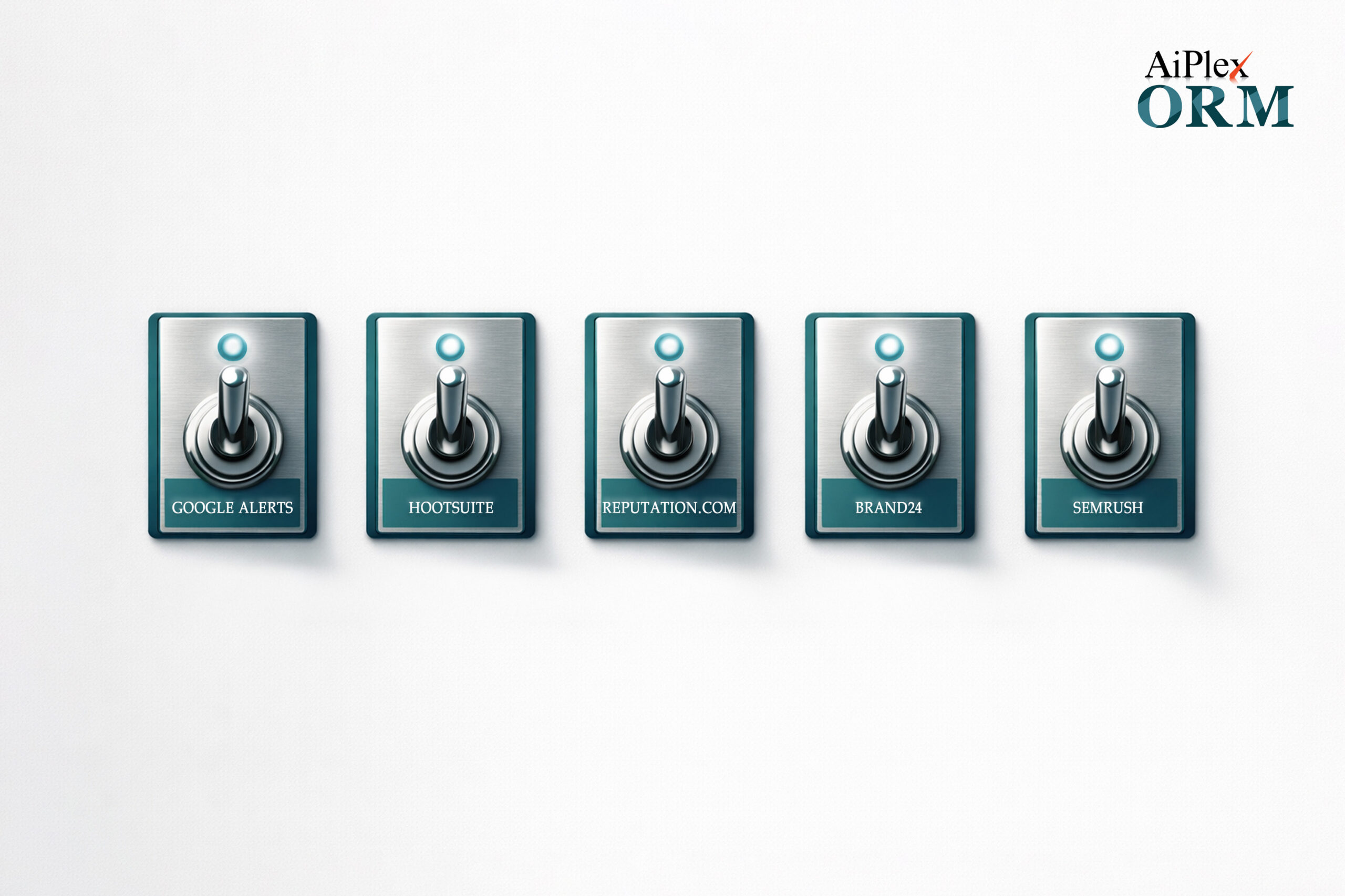
    Now that you understand what to look for in ORM tools, let’s explore some of the best options available. Each tool serves a unique purpose, and together they can create a robust online reputation management system.

    Google Alerts

    Google Alerts is a free tool that notifies you whenever your brand is mentioned online. It’s simple yet effective for basic brand monitoring. By setting up alerts for your brand name, products, or key executives, you stay informed about what’s being said in real-time.

    This tool is especially useful for small businesses looking to start ORM without heavy investment. Secondary keywords like “brand alerts” and “real-time notifications” highlight its value in proactive monitoring.

    Hootsuite

    Hootsuite is a comprehensive social media management platform that allows you to monitor, schedule, and engage with your audience across multiple networks. It also provides analytics on brand sentiment and engagement, making it a valuable ORM asset.

    With keywords like “social scheduling” and “sentiment analysis,” Hootsuite helps maintain a consistent online voice. It ensures you never miss important social interactions that could affect your reputation.

    Brand24

    Brand24 is a powerful mention-tracking tool that monitors online conversations about your brand. It analyzes sentiment and identifies influential mentions, helping you prioritize responses effectively.

    Secondary keywords like “online listening” and “brand insights” emphasize its role in understanding public perception. Brand24 helps you stay ahead of potential issues before they escalate.

    Reputation.com

    Reputation.com is a premium ORM platform designed for businesses that need an all-in-one solution. It offers review management, social monitoring, business listing optimization, and analytics. It’s ideal for enterprises with a large digital footprint.

    Keywords like “review aggregation” and “business listing management” showcase its versatility. Reputation.com helps businesses maintain a unified and positive online presence.

    SEMrush

    SEMrush is a leading SEO tool that also plays a crucial role in ORM. It helps improve search visibility by optimizing content, tracking keywords, and analyzing competitors. By pushing positive content higher in search rankings, SEMrush helps suppress negative results.

    With secondary keywords like “keyword tracking” and “competitive analysis,” SEMrush ensures your brand dominates relevant searches. It’s a must-have for long-term ORM strategies.

    Why Choose Aiplex ORM for Managing These Tools

    While these tools are powerful individually, they are most effective when integrated into a comprehensive strategy. Aiplex ORM specializes in using these tools together to deliver seamless online reputation management. They handle everything from monitoring and content creation to crisis response and long-term brand building.

    By choosing Aiplex ORM, you save time and resources while benefiting from expert-driven ORM solutions. Their team knows how to leverage these tools for maximum impact, ensuring your brand always shines online. Learn more about Aiplex ORM services here.

    Conclusion

    Online reputation management tools are essential for monitoring, improving, and protecting your digital presence. From free solutions like Google Alerts to advanced platforms like Reputation.com and SEMrush, each tool plays a vital role in shaping public perception. However, the real power lies in integrating these tools into a strategic ORM plan.

    Working with experts like Aiplex ORM ensures these tools are used effectively to safeguard your reputation, build trust, and drive long-term success. If you want to take control of your brand’s online image, now is the time to invest in professional ORM solutions.

    FAQs

    1. What are online reputation management tools?
      These are digital solutions that monitor, analyze, and improve your brand’s online presence across search engines, social media, and review platforms. 
    2. Why do businesses need ORM tools?
      ORM tools help track mentions, manage reviews, and optimize search visibility, ensuring a positive online image. 
    3. Are there free ORM tools available?
      Yes, tools like Google Alerts offer basic monitoring for free, while paid tools provide advanced features. 
    4. Can ORM tools remove negative content?
      While they can’t delete legitimate content, ORM tools help suppress negative results by promoting positive ones. 
    5. Which tool is best for social media monitoring?
      Platforms like Hootsuite and Brand24 are highly effective for tracking social interactions and sentiment. 
    6. Do ORM tools improve SEO?
      Yes, tools like SEMrush help optimize content and boost search rankings, indirectly improving your online reputation. 
    7. How do ORM tools handle reviews?
      They centralize feedback, making it easier to respond promptly and encourage positive customer experiences. 
    8. What’s the difference between ORM tools and PR tools?
      ORM tools focus on digital monitoring and management, while PR tools handle broader media outreach and campaigns. 
    9. Can small businesses use ORM tools?
      Absolutely. Many ORM tools are scalable and suitable for small businesses looking to manage their online presence. 
    10. How does Aiplex ORM integrate these tools?
      Aiplex ORM combines multiple tools into a cohesive strategy tailored to your brand’s specific needs for maximum impact.