
Tag: reputationprotection

  • Legal Guide to Court-Ordered Removal of Defamatory Content

    Legal Guide to Court-Ordered Removal of Defamatory Content

    Securing a court order to remove defamatory content online is often the only step that forces a platform to act. Grievance forms get ignored. Anonymous accounts keep posting. A judicial order changes that, because it converts a request into a binding obligation.

    This guide explains how the process works in India, what evidence you need, and where the limits lie on foreign platforms.

    Please note: this article provides general legal information, not legal advice. Defamation outcomes turn heavily on specific facts, so consult a qualified advocate before acting.

    Why a Court Order Carries Legal Force

    The Safe Harbour Rule Under Section 79

    Indian law gives intermediaries such as social platforms, hosting providers, and search engines conditional immunity for user generated content. Section 79 of the Information Technology Act, 2000 grants that safe harbour, provided the intermediary acts once it receives actual knowledge of unlawful content.

    What Shreya Singhal Changed

    The Supreme Court settled the meaning of “actual knowledge” in Shreya Singhal v. Union of India (2015), reading down Section 79(3)(b) to hold that an intermediary must remove content only on receiving a court order or a government notification.

    Key Takeaways for Complainants

    A private complaint alone does not trigger a platform’s removal duty, so platforms refusing informal requests are protecting their safe harbour rather than being obstructive. A court order to remove defamatory content online is therefore not merely persuasive. It is the mechanism the law itself points to.

    When You Need to Go to Court

    Situations That Justify Litigation

    Escalate once the platform has rejected or ignored your complaint, or where the author is anonymous. Court action also becomes necessary when content reappears faster than you can report it, when you need removal from search results, or when you intend to claim damages.

    Situations Better Handled Without Court

    Where the post violates the platform’s community standards, the internal route usually works, and intimate imagery and impersonation carry a 24 hour removal duty on complaint alone. Conversely, if the statement is opinion rather than a false assertion of fact, a court is unlikely to help.

    How Indian Law Defines Defamation

    Criminal Defamation Under BNS Section 356

    Criminal defamation is now governed by Section 356 of the Bharatiya Nyaya Sanhita, 2023, which replaced Section 499 of the Indian Penal Code when the new criminal codes came into force.

    Punishment and Scope

    The provision covers words, signs, and visible representations, wide enough to include digital posts, videos, and images. Punishment extends to simple imprisonment for up to two years, a fine, both, or community service. Importantly, it reaches imputations concerning a company, which matters for corporate cases.

    Statutory Exceptions

    The exceptions are broad and defeat many claims at the outset. Truth published for the public good is protected, as is fair comment on the public conduct of public servants.

    Civil Defamation and the Tort Route

    Remedies and Limitation

    The civil route offers an injunction directing removal, plus damages. The injunction is the real prize, because money awarded three years from now does not undo the damage a viral post causes this quarter. Civil actions generally carry a one year limitation, while criminal complaints carry three.

    The Rules That Force Platforms to Comply

    Rule 3(1)(d) and the 36 Hour Window

    The Information Technology (Intermediary Guidelines and Digital Media Ethics Code) Rules, 2021 require an intermediary to disable access to unlawful information within 36 hours of receiving a court order. That is the clock your order starts.

    Grievance Officers and Appellate Committees

    Every intermediary must appoint a Grievance Officer who acknowledges a complaint within 24 hours and disposes of it within 15 days. If rejected, you may appeal to a Grievance Appellate Committee within 30 days. Skipping this is a mistake, because a documented rejection strengthens the case for judicial intervention.

    Larger platforms must also appoint a Chief Compliance Officer and a Nodal Contact Person, and serving the correct officer affects response speed. Review the current rules through the Ministry of Electronics and Information Technology.

    Current Legal Churn: Sahyog and the Supreme Court

    The government takedown route is unsettled. A 2025 amendment to Rule 3(1)(d) and the Sahyog portal were upheld by the Karnataka High Court in X Corp v. Union of India in September 2025, and in July 2026 the Supreme Court stayed the resulting High Court appeals.

    However, none of this disturbs the judicial route. Whatever the Supreme Court decides about executive powers, a court order remains the most stable basis for removal.

    Step by Step Process to Obtain a Court Order

    Step 1: Preserve Evidence

    Content disappears the moment the poster senses trouble. Record the complete URL of every post, full page screenshots showing the URL bar and system clock, screen recordings for video, and the account handle. Then archive copies through a recognised web archiving service.

    The Section 63 BSA Certificate

    Obtain a certificate under Section 63 of the Bharatiya Sakshya Adhiniyam, 2023, which replaced the Section 65B certificate under the Indian Evidence Act. Electronic evidence tendered without one is routinely rejected, and strong cases collapse at exactly this point.

    Step 2: Issue a Legal Notice

    A well drafted notice identifies each offending statement, explains why it is false rather than merely unflattering, and demands removal and an apology. Notices resolve many cases, and an ignored notice becomes useful evidence of the defendant’s conduct.

    Step 3: Exhaust the Platform Grievance Route

    File a formal complaint, record the acknowledgement, wait out the 15 day window, and appeal if rejected. Courts respond well to plaintiffs who tried the statutory route first.

    Step 4: Choose Civil, Criminal, or Both

    The civil suit delivers injunctive relief and damages, and produces the interim order that removes content. A criminal complaint under Section 356 pressures the author but does not compel a platform to act. Impersonation and extortion cases also justify a complaint through the National Cyber Crime Reporting Portal.

    Step 5: File the Suit and Seek an Interim Injunction

    Alongside the suit, file an application under Order 39 Rules 1 and 2 of the Code of Civil Procedure.

    Jurisdiction and Anonymous Defendants

    Courts have accepted jurisdiction where the plaintiff resides or carries on business, and where the content caused harm. Where the poster cannot be identified, seek an order naming unknown persons, known in Indian practice as an Ashok Kumar order, directing platforms to disclose subscriber details and preserve IP logs.

    Drafting the Prayer

    List every offending URL in a schedule. Avoid vague requests to remove “all defamatory content”, because courts refuse relief they cannot supervise. Seek removal from search results as a separate head of relief. In urgent matters, courts can grant ex parte and interim relief within days.

    Step 6: Serve the Order Correctly

    Serve certified copies on the Grievance Officer and Nodal Contact Person of each intermediary with the schedule of URLs attached. Use the platform’s designated legal channel rather than a support inbox, and record the exact time of service, since the 36 hour window runs from it.

    Step 7: Verify Compliance and Enforce

    Check each URL yourself rather than relying on the platform’s confirmation, then check cached versions, mirrors, and republications. If an intermediary fails to comply, pursue contempt proceedings and argue forfeiture of safe harbour under Section 79.

    Dynamic Injunctions

    Indian courts, particularly the Delhi High Court, have developed the dynamic injunction so plaintiffs can extend an order to new URLs hosting the same material without a fresh suit. Ask for it expressly if the content is being mirrored.

    What Courts Will and Will Not Order

    Judicial Reluctance to Restrain Speech

    Indian courts hold that an interim injunction should not issue where the defendant intends to prove the statement is true. If justification is credibly pleaded, many courts let the matter proceed to trial rather than order interim removal.

    Defences That Defeat a Claim

    Truth published for the public good is a complete defence, as is fair comment on a matter of public interest. Criticism of public figures enjoys wider latitude, since Article 19(1)(a) weighs heavily against reputation claims there.

    Global Removal Versus Geoblocking

    In Swami Ramdev v. Facebook Inc. (2019), the Delhi High Court held that Indian courts can direct global takedown of content uploaded from India, while content uploaded abroad may be geoblocked within India.

    The Cross Border Reality

    The SPEECH Act Problem

    The SPEECH Act of 2010 bars United States courts from enforcing foreign defamation judgments unless the foreign proceeding offered speech protection equivalent to the First Amendment. Since Indian law places a lighter burden on plaintiffs, many Indian decrees are unenforceable there. In practice, platforms often comply through geoblocking to preserve their Indian safe harbour while resisting worldwide removal. The European Union’s Digital Services Act and the United Kingdom’s Defamation Act 2013 offer separate routes.

    Timelines and Costs

    Evidence preservation and a legal notice typically take one to three weeks, and the grievance stage adds three to six weeks. Filing to an ex parte interim order runs from several days to a few weeks in urgent matters, after which the platform must comply within 36 hours. A full trial commonly takes two to five years.

    A straightforward interim injunction before a district court may run into the low lakhs, while a High Court matter against multiple intermediaries costs considerably more.

    Mistakes That Weaken Strong Cases

    Waiting undermines the urgency argument interim relief depends on, and skipping the Section 63 certificate causes cases to fail on a technicality rather than on merits. Replying publicly amplifies the content and hands the defendant fresh material.

    Suing over opinion wastes time, because harsh criticism and negative reviews are frequently protected. Drafting vague prayers produces orders no platform can implement, and targeting only the platform leaves the author free to migrate the content. Finally, underestimating the Streisand effect can backfire, since litigation sometimes attracts more attention than the post ever did.

    A Court Order Is One Tool, Not the Whole Strategy

    Even a perfect order removes specific URLs. It does not remove circulating screenshots, aggregator republications, or the search visibility that built up while the content was live.

    Effective recovery therefore runs several workstreams together. Monitoring catches reappearance early, removal requests clear search caches, and authoritative owned content suppresses residual results. A structured defamatory content removal service handles those in parallel rather than sequentially, which usually determines how quickly search results recover.

    Frequently Asked Questions

    How long does it take to get a court order to remove defamatory content online?

    An ex parte ad interim injunction can be obtained within days to a few weeks of filing in urgent matters. Once served properly, the intermediary must disable access within 36 hours.

    Can a platform be forced to reveal an anonymous poster’s identity?

    Yes. Courts can direct intermediaries to disclose subscriber information, IP logs, and registration details, usually as part of an Ashok Kumar order.

    Will an Indian court order work against a foreign website?

    Sometimes. Major platforms usually comply through geoblocking within India to protect their safe harbour, but global enforcement is harder against United States entities because of the SPEECH Act.

    Is a negative review defamatory?

    Usually not. A genuine customer opinion, even a harsh one, is protected. It becomes actionable when it asserts false facts, or when it is fabricated by someone who was never a customer.

    Do I have to file a criminal case as well?

    No. The proceedings are independent, and many complainants pursue only the civil route because it delivers the injunction that removes the content.

    What if the content reappears after removal?

    Apply for a dynamic injunction, which extends the existing order to fresh URLs carrying the same material without a new suit.
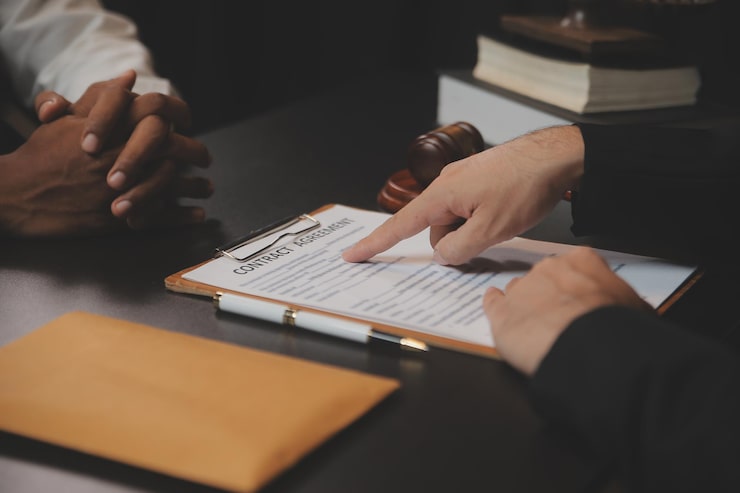
  • How Defamation Court Orders Can Protect Your Online Reputation

    How Defamation Court Orders Can Protect Your Online Reputation

    A single false review, a malicious blog post, or an anonymous social media allegation can now reach millions of people within hours. In a world where a person’s or brand’s first impression is formed on a search engine results page, online defamation is no longer a nuisance to be ignored. It is a direct threat to livelihoods, revenues, partnerships and personal dignity. When polite takedown requests fail and harmful content refuses to disappear, one of the most powerful remedies available is a defamation court order. Understanding how these orders work, and how professional Defamation Court Order Assistance can put them to use, is essential for anyone serious about protecting their reputation online.

    Understanding Online Defamation and Why It Spreads So Fast

    Defamation, in simple terms, is the act of communicating a false statement of fact that injures another person’s or organisation’s reputation. Online, this takes many forms: fabricated reviews designed to sabotage a competitor, defamatory articles planted to damage a public figure, doctored screenshots shared to mislead, impersonation accounts spreading lies, or coordinated smear campaigns launched by disgruntled individuals. What separates online defamation from its offline cousin is speed and permanence. A defamatory statement published on the internet can be indexed by search engines, copied across dozens of websites, cached, and resurfaced years later. It does not fade with time; it accumulates.

    Defamation vs. Legitimate Criticism

    It is important to distinguish defamation from legitimate criticism or honest opinion. Customers are entitled to share genuine experiences, and freedom of expression is a protected right. Defamation law does not exist to silence fair comment. It exists to address falsehoods presented as fact that cause real harm. This distinction matters enormously, because a court will only intervene where the content crosses from opinion into demonstrably false and damaging assertion. Recognising that line is the first step in deciding whether a court order is the right tool, and it is a judgment that benefits from experienced legal and reputation expertise rather than a rushed reaction.

    What Exactly Is a Defamation Court Order?

    A defamation court order is a formal directive issued by a court that compels a party to take a specific action in relation to defamatory content. In the context of online reputation, the most valuable of these is the injunction, an order that requires the removal of the offending material or restrains its further publication. Beyond ordering the original poster to take content down, a court order can also direct intermediaries, the platforms, hosting providers and search engines that carry or surface the content, to remove or de-index it. This is what makes a court order so effective: it turns a request that can be refused into an instruction that must be obeyed.

    Types of Court Orders That Protect Reputation

    Not all court orders serve the same purpose or arrive at the same stage of a case. Two forms of injunction are especially relevant to protecting an online reputation, and understanding the difference helps set realistic expectations about how quickly relief can be achieved and how durable it will be.

    Interim Injunctions

    An interim injunction is granted early in proceedings, often before a case is fully decided, to stop ongoing harm while the matter is heard. Because defamatory content causes damage every day it stays visible, interim relief is frequently the most urgent priority. A well-argued application for an interim injunction can secure the removal or restraint of harmful material in a comparatively short time, halting the bleeding while the fuller legal process continues.

    Permanent Injunctions

    A permanent injunction is issued once the court has determined the matter, formally establishing that the content is defamatory and ordering its lasting removal or restraint. This provides the strongest long-term protection, because it settles the question definitively and makes any repetition of the same content a breach of a standing court order.

    How Court Orders Protect Your Online Reputation in Practice

    The protective power of a defamation court order operates through several complementary mechanisms. Each addresses a different obstacle that reputation victims commonly face, and together they form a comprehensive shield rather than a single point of relief.

    Content Removal at the Source

    The most direct protection is removal at the source. Once a court has determined that specific material is defamatory, an order can require it to be deleted from the website or platform where it originated, wiping it out entirely. Source removal is the cleanest outcome because it eliminates the content itself rather than merely hiding it, leaving nothing to resurface or be re-shared.

    De-Indexing from Search Results

    When removal at the source is not possible, because the site is non-compliant, hosted abroad, or deliberately evasive, de-indexing becomes the key remedy. A court can direct search engines to remove the offending URLs from their results, so that even if the content technically still exists somewhere, it no longer appears when someone searches your name or brand. Since most reputational damage happens on the first page of search results, de-indexing can neutralise the harm almost as effectively as deletion.

    Orders Against Anonymous Offenders

    A great deal of online defamation is committed from behind fake profiles and untraceable handles. Court orders are powerful precisely because they do not depend on knowing who the wrongdoer is; they can be aimed at the content and the platforms carrying it.

    John Doe / Ashok Kumar Orders Explained

    Where the person spreading defamation cannot be identified, courts can issue what are commonly known as John Doe or Ashok Kumar orders, injunctions granted against unknown or unnamed defendants. These allow relief to be obtained and enforced against the offending content and the intermediaries hosting it, even when the author’s identity is a mystery. In some cases, courts can also direct platforms to disclose information that helps identify the person responsible, opening the door to further action.

    Deterrence Against Re-Uploads

    Finally, court orders act as a powerful deterrent. Once a court has formally recognised that content is defamatory and ordered its removal, re-uploading the same material becomes contempt of court, exposing the offender to serious consequences. This discourages the common tactic of taking content down only to repost it elsewhere, and it transforms a one-time victory into ongoing protection.

    The Legal Framework Behind Online Content Removal in India

    In India, the remedy for defamation sits at the intersection of two bodies of law, and understanding how they work together explains why court-backed takedowns succeed where informal requests fail.

    Defamation as a Civil and Criminal Matter

    Defamation in India is recognised as both a civil wrong and a criminal offence, giving affected parties more than one route to seek relief. On the civil side, a defamation suit can be filed seeking injunctions and damages, and it is through these suits that removal and de-indexing orders are typically obtained. The availability of both civil and criminal avenues means the strategy can be tailored to the severity of the harm and the outcome the affected party most needs.

    The IT Act and Intermediary Obligations

    Alongside defamation law sits the framework governing the internet itself. The Information Technology Act and the intermediary guidelines made under it place obligations on online platforms, hosting providers and search engines, generally requiring them to act upon a valid court order or the direction of an appropriate authority to remove or disable access to unlawful content. Major platforms have well-established processes for honouring valid Indian court orders, so a properly drafted order that clearly identifies the offending content and the legal basis for its removal is far more likely to secure swift compliance. Because this article offers general information rather than legal advice, the specific provisions and procedures that apply to any situation should always be assessed by qualified professionals in light of the facts.

    The Journey from Harmful Content to Court-Backed Removal

    Securing a defamation court order is a structured process, and understanding its broad shape helps set realistic expectations about effort, timing and outcomes.

    Evidence Preservation

    Before anything can be removed, the defamatory content must be captured, dated and archived in a way that will hold up in court, because offenders frequently delete or alter posts once they sense legal action is coming. This preserved evidence forms the backbone of any claim and often determines how strong the case will be.

    Legal Assessment

    The next step is a careful evaluation of whether the content is genuinely defamatory rather than protected opinion, and which legal route offers the strongest and fastest relief. A sound assessment prevents wasted effort on content that a court is unlikely to act against and focuses resources where they will have real impact.

    Filing and Interim Relief

    A case is then prepared and filed, and an application is made for interim relief to stop the harm while proceedings continue. If the court is persuaded, it issues an order directing removal, de-indexing, or both, ideally halting the damage at the earliest possible stage.

    Serving and Enforcing the Order

    Obtaining the order is only half the battle. The final and often most demanding stage is enforcement: serving the order on the relevant platforms, hosts and search engines, following up to ensure compliance, and returning to court if any party drags its feet. Content that spans multiple websites and jurisdictions can require the order to be enforced against many parties at once, each with its own process.

    Why Enforcement Matters as Much as Procurement

    It is a common and costly misconception that winning a court order is the end of the story. In reality, an order is only as valuable as the removal it actually produces. Defamatory content has a habit of migrating, appearing on mirror sites, being syndicated across scraper networks, resurfacing under slightly altered URLs, or reappearing after a platform’s initial compliance. Effective protection therefore depends on relentless enforcement and ongoing monitoring. The parties best equipped to protect a reputation are those who combine legal authority with technical reach, who not only hold the order but also know exactly which platforms to approach, how to escalate non-compliance, and how to detect re-uploads the moment they appear. This is where the marriage of legal expertise and reputation-management technology becomes decisive.

    When a Court Order Is the Right Move

    A court order is a powerful instrument, but it is not always the first or only step. For genuine negative reviews or unflattering but lawful opinion, suppression strategies, publishing and optimising positive content to push harmful results down, are often more appropriate than legal action. Court orders come into their own when content is clearly false and damaging, when the material is illegal or malicious, when platforms have refused reasonable removal requests, and when the reputational or financial stakes are high enough to justify formal proceedings. The most effective reputation strategies blend these approaches, using legal remedies for the content that warrants them and search and content strategies for the rest. Knowing which lever to pull, and when, is itself a form of expertise.

    How AiPlex ORM Provides Defamation Court Order Assistance

    This is precisely the space in which AiPlex ORM operates, bringing together the two very different disciplines that court-backed reputation protection demands.

    A Techno-Legal Approach

    As one of India’s most established online reputation management firms, working with brands, corporate houses, public figures and celebrities since 2003, AiPlex is built as a techno-legal organisation, combining a dedicated team of ORM, intellectual property and legal experts who work around the clock. This blend matters because a remedy that is perfect on paper but vague about URLs, or that misidentifies the correct intermediary, can stall at the enforcement stage. Pairing legal strategy with deep platform knowledge is what keeps an order moving from courtroom to actual removal.

    Procurement and Enforcement Under One Roof

    AiPlex’s Court Order Procurement and Enforcement service is designed to carry a matter through every stage described above, from preserving evidence and assessing the legal position to procuring the order and, crucially, enforcing it across the hundreds of platforms and hosting providers where harmful content can live. With moderator-level privileges across a large number of hosting platforms, a very high deletion-compliance rate, and a track record that includes removing vast numbers of fake listings and malicious brand presences worldwide, all delivered through ethical, white-hat methods with strict confidentiality, AiPlex turns a court order from a piece of paper into a genuinely restored reputation. You can learn more about this service at Aiplexorm.

    Frequently Asked Questions

    What Is Defamation Court Order Assistance?

    Defamation Court Order Assistance is professional support that helps individuals and businesses obtain and enforce court orders to remove or de-index defamatory online content. It covers evidence preservation, legal assessment, filing and, importantly, ensuring platforms and search engines actually comply with the order once it is granted.

    Can a Court Order Remove Content If the Poster Is Anonymous?

    Yes. Courts can issue orders against unknown defendants and, more importantly, against the platforms and search engines that host or display the content. This means action can be taken even when the original author cannot be identified, because the order targets the parties that control the content’s visibility.

    Is a Court Order the Only Way to Deal with Negative Content?

    No. Genuine reviews and lawful opinions are usually better addressed through suppression and positive content strategies rather than legal action. Court orders are most appropriate for content that is false, malicious or illegal and that platforms have refused to remove voluntarily.

    How Long Does It Take to See Results?

    Timelines vary widely depending on the complexity of the case, the number of platforms involved and how quickly interim relief is granted. Some harmful content can be addressed relatively quickly through interim orders, while fuller resolution may take longer, which is why continuous enforcement is essential.

    Does Obtaining an Order Guarantee the Content Stays Down?

    An order significantly strengthens your position, and re-uploading court-declared defamatory content can amount to contempt. However, because content can migrate or reappear, ongoing monitoring and enforcement are what keep a reputation protected over the long term.

    Protecting Your Reputation Before It Is Too Late

    Online defamation thrives on inaction. Every day a false statement remains visible, it is being read, shared, cached and believed, quietly shaping how customers, employers, investors and the public perceive you. A defamation court order is one of the few tools capable of decisively removing that content at the source and clearing it from search results, and when it is procured and enforced by a team that understands both the law and the platforms, it can restore not just your search results but your credibility. If false or malicious content is damaging your name or your brand, expert Defamation Court Order Assistance offers a clear, lawful and lasting path back to control. Speaking to specialists like AiPlex ORM early, before the damage compounds, is the surest way to protect what you have worked so hard to build.