

Category: Aiplex ORM

  • Technoviti & Finnoviti 2026: Fraud Prevention, Digital Trust and the Brands Behind Them

    Technoviti & Finnoviti 2026: Fraud Prevention, Digital Trust and the Brands Behind Them

    Technoviti & Finnoviti 2026
    Aiplex ORM in Technoviti & Finnoviti 2026

    Every year a few industry gatherings manage to surface what a sector is genuinely worried about — not the topics printed on the agenda, but the ones that fill the space between sessions. Technoviti 2026 and Finnoviti 2026, organised by Banking Frontiers, was one of those. In the presence Arjun Bhaskaran Prasanna Lohar Prashanth Pereira Babu Nair Manoj Agrawal – in Quest of Clarity Kailash Purohit Wilhelm Singh Pritesh Priyanka Stalin Saldhana Pramoud P Jadhao Santosh B. Anmol Raina the event resulted in highly informative & insightful discussion.

    AiPlex participated as an Exhibition Sponsor, and across the event our team spoke with leaders from banks, NBFCs, fintechs, regulators, technology partners and the wider BFSI ecosystem. The platform brought together conversations on innovation, cybersecurity, fraud prevention, digital trust and the future of financial services. One thread ran through more of those conversations than any other: fraud — not as an abstract risk category owned by a compliance function, but as an immediate, fast-moving, brand-damaging operational problem.

    Institutions are no longer asking whether they will be impersonated online. They are asking how quickly they can find out, and how quickly they can make it stop.

    The conversation that dominated the floor

    Technoviti & Innoviti 2026; Fraud Prevention
    Technoviti & Innoviti 2026; Fraud Prevention

    What made this year’s edition distinct was a shift in framing.

    Fraud prevention has traditionally been discussed as a transaction-layer problem — anomaly detection on payments, rules engines on card activity, velocity checks on account openings. Those conversations still happened, and they remain essential. But running alongside them was a second, newer discussion: fraud that never touches a bank’s systems at all.

    A cloned website. A fake mobile application. A social media account carrying a bank’s logo. A messaging group promising loan approvals in the name of an NBFC that has no idea the group exists. None of these breaches a firewall. None triggers a transaction alert. And yet all of them cost institutions money, customers, and — most durably — trust.

    That gap between where fraud now originates and where most fraud controls are pointed was the through-line of the event.

    About Technoviti and Finnoviti
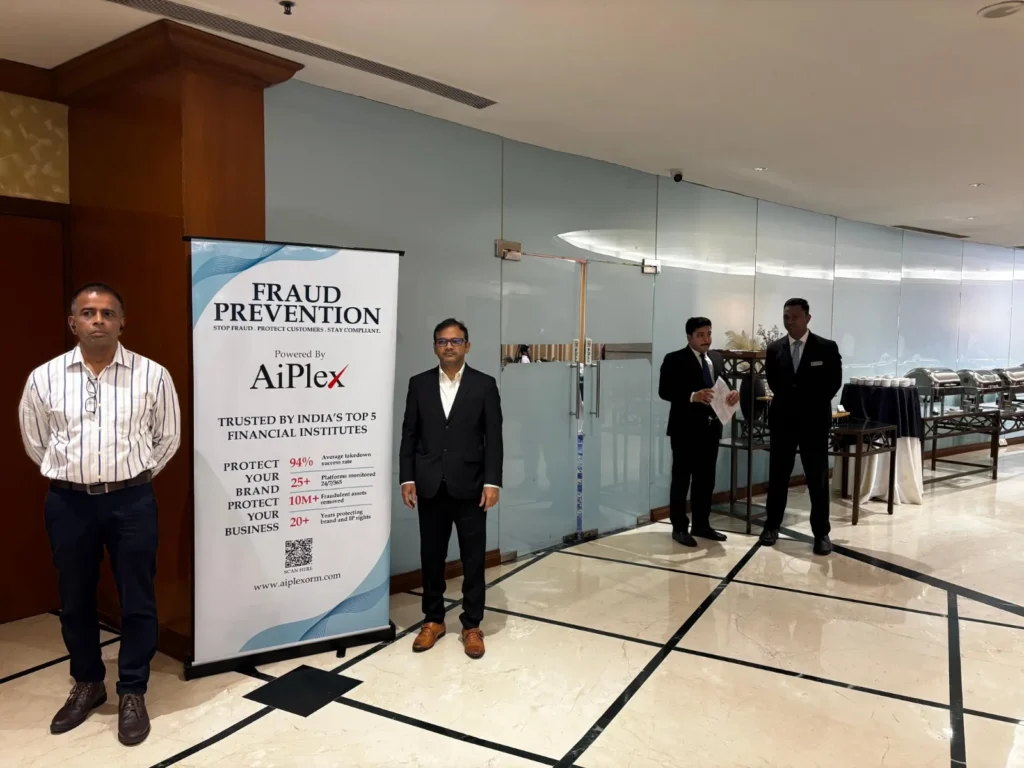
    Technoviti & Innoviti 2026
    Aiplex ORM in Technoviti & Innoviti 2026

    Banking Frontiers has spent years building a media and engagement ecosystem around Indian financial services, and its event properties reflect that positioning. Technoviti and Finnoviti are innovation-recognition platforms. They exist to identify and celebrate what institutions are actually building, rather than to serve as another stop on a general conference circuit.

    That distinction shapes the quality of the room. An awards-anchored event attracts the people who own the projects, not only the people who market them. Conversations at exhibitor booths reflect it: fewer general enquiries, more specific problems, and a noticeably higher tolerance for technical detail.

    The attendee mix matters too, and it explains why the fraud conversation went where it did. With banks, NBFCs, fintechs, regulators and technology partners in the same space, a single discussion could move from a regulatory expectation, to an operational constraint at a mid-sized NBFC, to a technical detection method from a technology vendor — without anyone having to leave the room.

    That cross-section is rarer than it sounds. Fraud prevention suffers when it is discussed only among security teams, or only among compliance teams, or only among vendors. Here, all three were within a few metres of each other.

    Recognising innovation in BFSI

    The awards component is central to both properties rather than an evening add-on. Technoviti and Finnoviti recognise institutions and teams that have deployed genuine innovation in financial services — implementations and product thinking that produced measurable outcomes rather than press releases.

    For an exhibitor, the awards serve a practical function beyond ceremony. The categories drawing the most entries in a given year tend to predict the following year’s operational priorities. Congratulations to every award winner recognised at Technoviti 2026 and Finnoviti 2026 for their achievements and their contributions to the sector.

    Fraud in Indian banking: the 2026 landscape

    India’s financial services sector has completed one of the fastest digital transitions of any major economy. Account opening moved to mobile. Payments moved to UPI. Lending moved to app-based journeys with minute-level disbursal. Customer service moved to chat interfaces and social channels.

    Each of those transitions delivered real gains in reach and cost-to-serve. Each also created new surface area for fraud.

    The critical structural change is this: a financial institution’s brand now lives in places the institution does not control. A customer’s relationship with their bank is mediated through app stores, search results, social platforms, messaging apps and advertising networks. A fraudster does not need to compromise the bank to exploit that relationship. They only need to occupy one of those unowned surfaces convincingly enough.

    The layer that never gets reported

    Fraud statistics across Indian financial services show growth in both incident volume and sophistication, with digital channels accounting for a rising share of cases. But what the reported numbers consistently understate is the layer beneath them.

    When a customer is defrauded by a fake application carrying a bank’s logo, the incident may never enter that bank’s fraud reporting at all. The money moved through a channel the institution never touched. No system of theirs was compromised. No transaction of theirs was anomalous. The institution frequently learns about the incident only when the customer complains publicly — which is the point at which it becomes a reputation event as well as a fraud event.

    This is a measurement problem with operational consequences. Institutions allocate fraud-prevention resources against the incidents they can see. The category they cannot see is the one growing fastest.

    Where traditional controls fall short

    Conventional fraud infrastructure is built on a reasonable assumption: that fraud involves the institution’s own systems and can therefore be detected within them. Transaction monitoring, device fingerprinting, behavioural biometrics and rules engines are all designed to catch anomalies inside the perimeter. Against the threats they were built for, they work.

    Impersonation fraud defeats this design not by evading the controls but by operating entirely outside their field of view. There is no anomalous transaction to flag when a victim voluntarily transfers money to someone they believe is their bank. There is no unusual device signature when the fraudulent application is not the bank’s application at all. The authentication was never bypassed, because it was never invoked.

    Detection for this category has to sit outside the institution — monitoring the open web, app ecosystems, social platforms and messaging channels for abuse of the brand itself. That is a fundamentally different capability from anything in the traditional fraud stack, and it is one most institutions have not historically owned.

    Where fraud prevention meets brand reputation
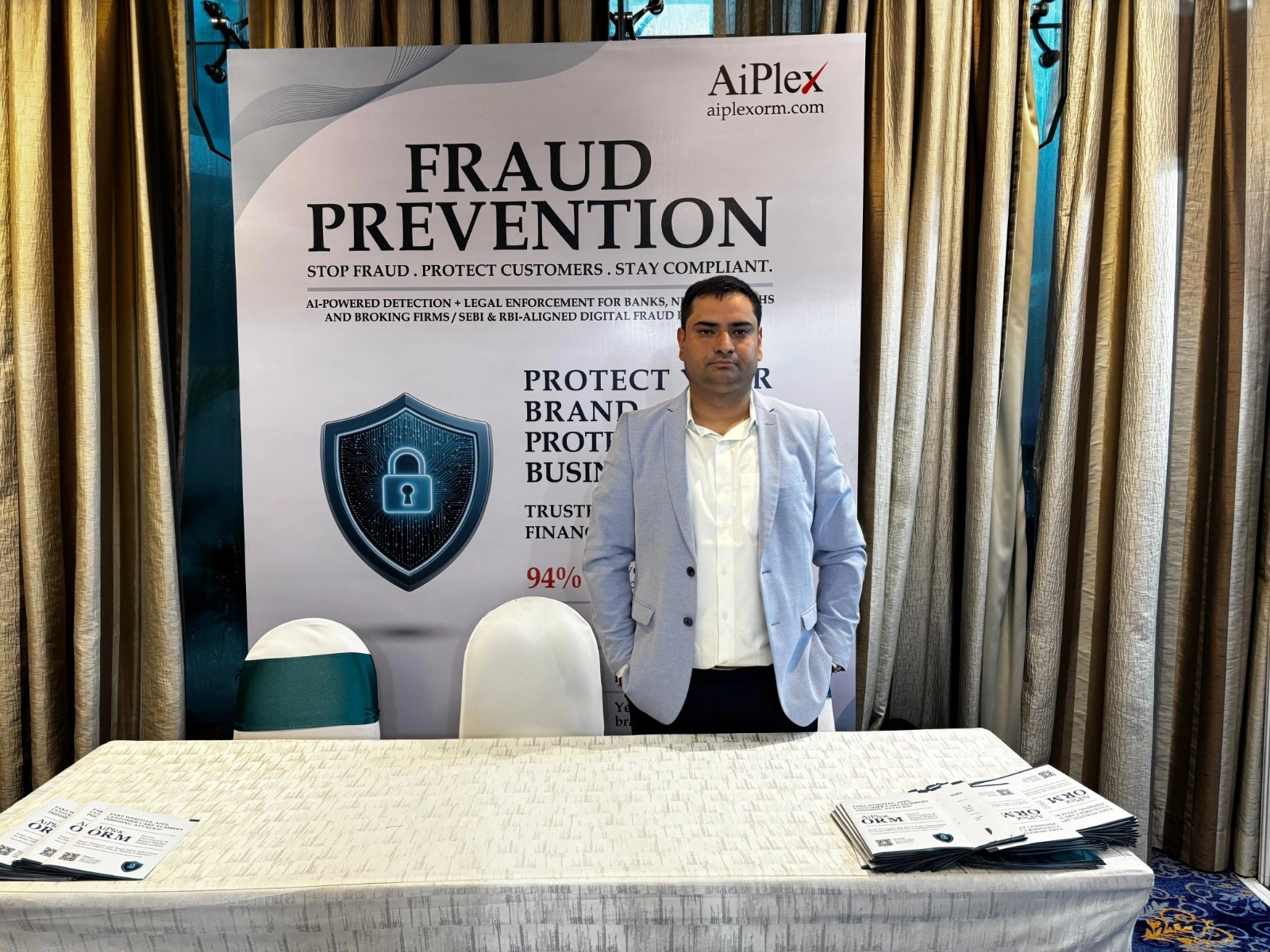
    Fraud Prevention by Team Aiplex ORM
    Fraud Prevention by Team Aiplex ORM

    This is the connection that generated the most engaged conversations at our booth, and it is the one AiPlex’s BFSI practice is built around.

    Every fraud incident is also a trust incident

    Institutions typically route fraud and reputation into separate functions. Fraud sits with risk, security or operations. Reputation sits with marketing or corporate communications. The two teams often use different tools, report through different lines, and meet properly only during a crisis.

    Impersonation fraud does not respect that boundary. A fake banking application is simultaneously a fraud vector and a brand event. A deepfaked executive endorsement is simultaneously a scam enabler and a communications crisis. Handling them through separate workflows produces one of two predictable failures: the fraud team removes the immediate threat while narrative damage continues unmanaged, or the communications team responds publicly while the fraudulent asset remains live — occasionally driving additional traffic to it.

    The damage starts before the first victim

    There is a window — often days, sometimes weeks — between a fraudulent asset appearing and a victim reporting it. During that window, the asset accumulates search visibility, social engagement and apparent legitimacy.

    The institution’s brand is being degraded throughout this period, silently. Customers who encounter the fake and correctly identify it as fraudulent still adjust their perception of the institution’s competence. Search engines index the fraudulent domain against the brand name. Social platforms surface the fake profile alongside the real one, sometimes in the same results.

    By the time the first victim reports a loss, the reputational damage is already substantially done. The fraud response begins at the point where the reputation problem is already mature.

    Why speed is the whole game

    Every additional day a fraudulent asset stays live compounds three costs: more victims, deeper search and social entrenchment, and more remediation work downstream.

    Speed is therefore the single most important variable in this category — more important than detection sophistication, and considerably more important than post-incident communications. An institution that detects a cloned site in six hours and removes it within a day faces a fundamentally different problem from one that detects it in three weeks. The second institution is not doing a worse job of the same task. It is doing a different, much harder task.

    The regulatory lens

    India’s regulatory framework has tightened steadily around fraud reporting timelines, customer liability and grievance redressal. The direction of travel is consistent: shorter reporting windows, clearer institutional accountability, and greater protection for customers who acted in good faith.

    That trajectory has an operational consequence not always fully appreciated. When customer liability depends partly on how quickly an institution responded, response time stops being a service-quality metric and becomes a financial and compliance exposure.

    An institution that cannot demonstrate active monitoring for brand abuse, and cannot show a documented enforcement process with measurable turnaround times, carries a risk that is increasingly difficult to defend — to regulators, and in customer disputes where the question of what the institution knew and when will be asked directly.

    AiPlex at Technoviti and Finnoviti

    Aiplex at Technoviti & Innoviti 2026
    Aiplex at Technoviti & Innoviti 2026

    AiPlex’s work sits precisely at the junction the event kept returning to. We are not a transaction-monitoring vendor and we do not compete with core fraud infrastructure. We address the layer outside the institutional perimeter — where a brand is used, misused and impersonated across the open web, app ecosystems, social platforms and messaging channels.

    Technoviti and Finnoviti brought together exactly the decision-makers who own that problem, frequently without owning a dedicated capability for it. That made it the right room.

    Our booth focused on the three capabilities that define our BFSI practice — AI-powered monitoring, techno-legal enforcement and rapid digital risk mitigation — presented as a connected workflow from detection through to removal, rather than as separate products.

    The questions that came up most

    Certain questions recurred often enough to be worth recording, because they map the sector’s current gaps better than any survey.

    “How do we find out about a fake app or site before a customer tells us?” The most common question by a wide margin, and a direct acknowledgment that most institutions are operating reactively.

    “How long does a takedown actually take?” Usually asked with visible scepticism, and usually by teams who have submitted platform reports and watched them sit unresolved for weeks.

    “Who owns this internally?” Often asked rhetorically, and often answered with a pause. At many institutions the honest answer is that nobody owns it entirely.

    “Does this cover regional languages and regional platforms?” A pointed and important question. Fraud targeting Indian financial customers frequently operates in regional languages on regional platforms. Monitoring that covers only English-language content on major global platforms will miss a substantial share of it, while producing reports that look reassuringly complete.

    How AiPlex helps financial institutions fight fraud

    Aiplex ORM & Fraud Prevention
    Aiplex ORM & Fraud Prevention

    AI-powered monitoring

    The detection problem is fundamentally a scale problem. The surfaces requiring continuous observation — domains, app stores, social platforms, marketplaces, messaging channels, search results, paid advertising — generate volumes no manual team can cover.

    AiPlex applies AI-driven detection across those surfaces, identifying unauthorised use of an institution’s brand assets, names, logos and identity markers. The objective is compressing time-to-detection from weeks to hours, because everything downstream depends on it. An excellent enforcement capability attached to slow detection still produces a slow outcome.

    Coverage must extend to regional languages and regional platforms. Fraud aimed at Indian financial customers does not operate exclusively in English on global platforms, and monitoring built on the assumption that it does will systematically under-report while appearing thorough.

    Techno-legal enforcement

    Detection without enforcement is an alerting system, not a solution. This is where most institutional efforts stall.

    Platform reporting mechanisms are inconsistent. A report filed through a standard channel may be actioned within hours or ignored indefinitely, and the difference frequently has less to do with the severity of the abuse than with how the report was constructed. Different platforms require different evidence, different legal grounding and different escalation paths. Hosting providers, domain registrars, app stores and social networks all operate distinct processes with distinct standards.

    AiPlex’s techno-legal enforcement combines technical evidence-gathering with legal process — building the documentation each platform or intermediary requires, filing through the correct channel with the correct grounding, and escalating where a first-line report fails. The distinction is not cosmetic: a properly constructed enforcement action gets resolved, while a generic report frequently does not.

    Enforcement also has to account for recurrence. Operators who are removed typically return, often within days, under slightly altered identities and domains. Effective enforcement anticipates this and treats each removal as part of a continuing process rather than a closed ticket.

    Rapid digital risk mitigation

    Between detection and successful takedown, an institution remains exposed. Mitigation is what happens inside that window: suppressing the fraudulent asset’s visibility, limiting its reach, and coordinating with the institution’s communications function on customer-facing response.

    This is where the fraud–reputation link becomes operational rather than theoretical. Effective mitigation requires the enforcement action and the communications response to be coordinated, because they are addressing the same incident from two directions. Uncoordinated, they interfere with each other.

    Online reputation management

    Underlying all of it is the reputation layer. Fraud incidents leave residue — search results, social conversations, forum threads and coverage that persist long after the fraudulent asset itself is gone.

    AiPlex’s ORM practice addresses that persistent layer, managing search visibility, sentiment and narrative around a financial institution’s brand so that a resolved fraud incident does not remain the most prominent thing about the institution’s name six months later.

    The fraud vectors BFSI leaders are watching
    Fraud Prevention by Aplex ORM
    Fraud Prevention by Aplex ORM

    Five categories came up repeatedly in conversations at our booth.

    Deepfakes and synthetic identity fraud

    Synthetic media has moved from novelty to operational threat, and two applications concern financial institutions most.

    The first is identity-layer: synthetic faces and voices used to defeat video KYC and voice authentication. This is the version that gets the most attention, and institutions are actively investing in liveness detection and related countermeasures.

    The second is brand-layer, and it is increasingly the more damaging: fabricated video or audio of an institution’s senior executives endorsing an investment scheme, announcing a product, or making statements they never made.

    The second category is harder to defend against, because the target is not the institution’s authentication system — it is the customer’s trust in a familiar face. No security control the institution owns sits between a fabricated executive endorsement and the customer who sees it. By the time such a video is circulating, the damage mechanism is entirely reputational and the remedy is entirely a detection-and-takedown problem.

    Fake apps, cloned websites and phishing domains

    This remains the highest-volume vector, and the economics explain why.

    A cloned banking website costs almost nothing to build and can be indistinguishable from the original to a non-technical customer. Fraudulent applications appear on third-party app stores and, occasionally, on official ones. Lookalike domains proliferate faster than most institutions can register defensive variants — a single brand name can generate hundreds of plausible misspellings, homoglyph substitutions and alternative extensions.

    The asymmetry is brutal. The fraudster’s cost per attempt approaches zero. The institution’s cost per incident includes customer remediation, regulatory reporting, and brand repair that outlasts both.

    Impersonation on social platforms

    Fraudulent profiles using an institution’s name, logo and visual identity are now a persistent problem across every major platform. They operate in several modes: fake customer support handles that intercept complaints and harvest credentials, fake executive profiles that lend authority to investment scams, and fake official pages announcing offers that do not exist.

    The customer-support variant is particularly effective because it exploits a genuine service gap. A frustrated customer posting a complaint publicly is actively looking for someone to respond. A fraudulent handle that replies within minutes will often be trusted over an official one that replies in a day. The fraudster is, in a narrow and uncomfortable sense, providing better service.

    Investment and loan scams run under a brand name

    Loan-approval scams and investment schemes conducted in an institution’s name — over messaging platforms and, increasingly, through paid social advertising — have become a major source of customer harm. The institution is entirely uninvolved in the transaction and frequently unaware of the campaign until victims begin surfacing.

    For NBFCs this has become especially acute. Their brands carry enough recognition to lend credibility to a scam, while their monitoring capabilities are often lighter than those of large banks. The combination is precisely what a fraudster selects for.

    Payments-layer social engineering

    UPI’s scale and speed represent a genuine achievement and a genuine exposure. Social-engineering-led payment fraud — collect-request manipulation, QR code substitution, fraudulent merchant identities — continues to evolve in response to each countermeasure deployed against it.

    The distinguishing feature of most of this fraud is that the transaction itself is legitimate from the system’s perspective: an authenticated user authorised a transfer. The fraud occurred in the persuasion that preceded it. That makes it a communications problem more than a payments-systems problem, which is uncomfortable for institutions whose fraud capabilities are concentrated in payments systems.

    What this looks like in practice

    The following is an illustrative scenario, constructed to show how the workflow fits together.

    Consider a mid-sized NBFC with a consumer lending product and strong regional brand recognition.

    A fraudulent operation registers a lookalike domain — the institution’s name with a minor spelling variation — hosting a convincing replica of the loan application journey. Simultaneously, a fraudulent Android application appears on third-party app stores using the institution’s logo and colour scheme. Paid social advertising in two regional languages drives traffic to both, promising rapid loan approval against an advance processing fee.

    Detection. Monitoring flags the lookalike domain within hours of registration, and identifies the fraudulent application and the associated regional-language advertising campaign — the component most likely to be missed by English-only monitoring.

    Evidence. Enforcement teams document the infringement: captures of the cloned interface, the trademark and brand asset misuse, hosting and registrar records, app store listing details, and the advertising campaign’s targeting parameters.

    Enforcement. Actions proceed in parallel rather than sequentially — registrar and hosting provider action against the domain, app store takedown requests, and platform enforcement against the advertising campaign and its associated accounts. Sequential enforcement wastes the window; parallel enforcement closes it.

    Mitigation. While enforcement runs, mitigation limits exposure — suppressing the fraudulent domain’s visibility against brand search terms, and coordinating with the institution’s communications team on a customer advisory issued through official channels.

    Recurrence management. Monitoring continues against the operator’s identified patterns, on the working assumption that they will attempt to return under a variation.

    Under this workflow, the exposure window is measured in days. Without it, the realistic alternative is that the institution learns of the operation when defrauded customers begin complaining — typically several weeks in. By then the fraudulent domain has search visibility against the brand name, the advertising campaign has run to completion, victim numbers are substantially higher, and the institution is simultaneously managing a fraud response, a regulatory reporting obligation and a public reputation event.

    The difference between those two outcomes is not primarily technology. It is time-to-detection and enforcement capability.

    A readiness checklist

    Drawn from the gaps that surfaced most often in conversations across the event:

    Establish clear internal ownership. Determine which function owns brand-impersonation fraud. If the honest answer is that it is split between security and marketing with no defined handoff, closing that gap is the first task.

    Audit current visibility. Assess what proportion of your brand’s external surface is genuinely monitored — including regional languages, regional platforms, third-party app stores and messaging channels.

    Measure enforcement turnaround. Take a known past incident and calculate the elapsed time from first appearance to full removal. That number is your current exposure window, and it is probably longer than expected.

    Connect fraud and communications workflows. Ensure a detected impersonation incident triggers both an enforcement action and a communications assessment through a defined process, rather than an ad-hoc phone call.

    Plan for recurrence. Treat takedowns as ongoing enforcement rather than closed tickets, and monitor for the return of known operators.

    Document everything. Maintain records of monitoring coverage, detection times and enforcement actions. This matters increasingly for regulatory expectations and for customer dispute resolution.

    Building digital trust in the AI era
    Building Trust In AI ERA

    The clearest takeaway from Technoviti 2026 and Finnoviti 2026 was a shift in how the sector frames the problem. The question is moving away from “how do we stop fraudulent transactions” and toward “how do we protect the trust our customers place in our brand, across surfaces we do not own.”

    That is a harder question, and it does not resolve within the traditional fraud stack. It requires visibility outside the institutional perimeter, enforcement capability across platforms and jurisdictions, and an operational connection between fraud response and reputation management that most institutions have not yet built.

    The institutions that navigate the next few years well will be those that treat their digital brand presence as infrastructure to be actively defended, rather than as a marketing asset that occasionally comes under attack.

    Our sincere appreciation to the entire Banking Frontiers team, the organisers, speakers, jury members, partners, sponsors, exhibitors, delegates, and every visitor who stopped by our booth. Special thanks to Arjun Bhaskaran, Prasanna Lohar, Prashanth Pereira, Babu Nair, Manoj Agrawal, Kailash Purohit, Wilhelm Singh, Pritesh Priyanka, Stalin Saldhana, Pramoud P Jadhao, Santosh B. and Anmol Raina. Your conversations, insights and encouragement made the event genuinely memorable, and they continue to shape how we approach our work.

    We look forward to continuing our mission of helping financial institutions strengthen fraud prevention and online reputation management through AI-powered monitoring, techno-legal enforcement and rapid digital risk mitigation.

    Frequently asked questions

    What are Technoviti and Finnoviti?

    Technoviti and Finnoviti are innovation-recognition events organised by Banking Frontiers for India’s financial services sector. They bring together banks, NBFCs, fintechs, regulators and technology partners, and recognise institutions and teams that have deployed meaningful innovation in BFSI.

    Who attended Technoviti 2026 and Finnoviti 2026?

    The events drew leaders from across the BFSI ecosystem — banks, NBFCs, fintechs, regulators, technology partners, speakers, jury members, exhibitors and delegates. AiPlex participated as an Exhibition Sponsor.

    What is techno-legal enforcement in fraud prevention?

    Techno-legal enforcement combines technical evidence-gathering with legal process to remove fraudulent digital assets. Rather than filing a generic platform report, it involves documenting the infringement to the evidentiary standard each platform, registrar, hosting provider or app store requires, filing through the correct channel with appropriate legal grounding, and escalating where first-line reports fail. This produces substantially higher takedown success rates than standard reporting.

    How does AI-powered monitoring detect banking fraud?

    AI-powered monitoring continuously scans external surfaces — domains, app stores, social platforms, marketplaces, messaging channels, search results and advertising networks — for unauthorised use of an institution’s brand assets, names, logos and identity markers. Because these surfaces generate volumes no manual team can cover continuously, AI-driven detection is what makes comprehensive coverage practical. For Indian financial institutions, effective monitoring must include regional languages and regional platforms.

    How does fraud prevention connect to online reputation management?

    Brand-impersonation fraud is simultaneously a fraud event and a reputation event. A cloned website or fraudulent application harms customers financially while degrading trust in the institution’s brand. Handling these through separate workflows means either the fraudulent asset is removed while narrative damage continues unmanaged, or a public response is issued while the asset remains live. Integrated fraud prevention and ORM addresses both dimensions of the same incident.

    How can a bank or NBFC get started with AiPlex?

    AiPlex works with financial institutions on AI-powered monitoring, techno-legal enforcement, rapid digital risk mitigation and online reputation management. Engagements typically begin with an assessment of current brand exposure across external digital surfaces.


    Protect your institution’s brand and your customers’ trust. AiPlex helps banks, NBFCs and fintechs detect brand impersonation early, enforce takedowns that hold, and manage reputation across the digital surfaces that matter most.


  • Techno-Legal ORM Services India for Complete Brand Protection

    Techno-Legal ORM Services India for Complete Brand Protection

    When a false review or a defamatory blog post starts ranking on Google, businesses quickly realise that deleting content is not as simple as clicking a button. This is where techno-legal ORM services India come into play, blending technical takedown expertise with legal muscle. In our experience working with brands across sectors, the companies that recover fastest are the ones treating reputation damage as both a technology problem and a legal one. This article breaks down how a combined approach protects your brand, when to use it, and what actually works in the Indian context.

    Why Legal Online Reputation Management India Needs a Dual Approach

    Most reputation firms handle only one side of the equation. They either push positive content to bury negatives, or they file legal notices and hope the content disappears. Neither alone is enough.

    Legal online reputation management India works because it attacks the root, not just the symptom. A technical team can request removal through platform policies, deindex harmful URLs, and suppress damaging results. But when a website owner refuses to cooperate, only a legal remedy forces action.

    We’ve seen cases where a single anonymous review site hosted dozens of fake complaints against a healthcare brand. Suppression alone kept failing because the site kept republishing. It took a legal takedown notice under the IT Rules, combined with a de-indexing request to Google, to finally clear the results.

    The Technical Side of Brand Protection

    The technical layer involves monitoring, SEO suppression, and platform-level removals. Automated tools track brand mentions across search engines, social platforms, and forums in real time.

    When negative content surfaces, the team assesses whether it violates the hosting platform’s guidelines. Content that breaches terms of service can often be removed quickly without any court involvement, which saves both time and money.

    The Legal Side That Makes It Enforceable

    Indian law offers real tools here. Under the Information Technology Act and the 2021 IT Rules, intermediaries must act on valid takedown requests. A well-drafted legal notice citing defamation, privacy violation, or trademark infringement carries weight that a polite email never will.

    This is why techno-legal online reputation management services in India outperform pure-tech agencies. The legal notices come backed by actual grounds, not empty threats.

    How Reputation Protection Services India Handle Real Threats

    Every brand faces different attacks. A restaurant might battle fake one-star reviews from a competitor. A listed company might face a coordinated smear campaign before an important announcement. A doctor might find an old, resolved complaint haunting the first page of search.

    Reputation protection services India tailor the response to the threat. There is no single template that works everywhere, and any firm promising a fixed formula is overselling.

    Most clients ask us the same question early on: can you guarantee removal? The honest answer is that guarantees are rare in this field, because outcomes depend on the platform, the content, and the legal grounds available. What a serious firm can promise is a structured, persistent strategy that improves results steadily.

    Prioritising What to Fix First

    Not all negative content deserves equal attention. A buried complaint on page five rarely hurts you. A defamatory article ranking second for your brand name demands immediate action.

    We usually map the damage by search visibility and revenue impact. The items that customers actually see during their buying journey get fixed first. This keeps budgets focused where they matter.

    Online Defamation Management India: When Content Crosses the Line

    Not every bad review is defamation. A customer voicing a genuine complaint is protected speech, and trying to remove honest feedback usually backfires. Online defamation management India begins with a clear assessment of whether the content is legally actionable.

    Defamation in India requires a false statement of fact presented as truth that damages reputation. Opinions, fair criticism, and truthful statements generally do not qualify. A good techno-legal team knows this distinction cold and will not waste your money chasing content that no court will touch.

    Consider a manufacturing client we assisted. A former employee posted fabricated claims about product safety on multiple forums. Because the statements were factual assertions and demonstrably false, they met the defamation threshold. Legal notices went out, platforms complied, and the harmful posts came down within weeks.

    Compare that to a genuine customer who complained about slow delivery. That review stayed up, and rightly so. Instead, we helped the client respond publicly and outrank the complaint with stronger positive content.

    Choosing the Best Techno-Legal ORM Services for Businesses in India

    The market is crowded, and quality varies wildly. Some firms are glorified SEO shops with no legal capability. Others are law firms with no technical understanding of how search engines actually rank content.

    The best techno-legal ORM services for businesses in India combine both under one roof. When your technical and legal teams sit together, strategies get executed faster and mistakes get caught earlier.

    When you evaluate a provider, look for proven experience with Indian platforms, courts, and the specific quirks of the IT Rules. Insist on transparent reporting that shows exactly what was removed, suppressed, or filed. Watch out for firms promising overnight miracles instead of realistic timelines, and confirm the pricing is clear rather than loaded with hidden per-removal charges that balloon later.

    Where a Tech-Only Agency Falls Short

    A pure-tech agency can suppress content and file basic platform complaints, and for mild cases that may be enough. The trouble starts when a website ignores those requests, because suppression alone rarely buries a determined attacker permanently.

    In our experience, this is exactly the point where clients who started with a cheaper SEO-only firm come to us frustrated. The negative content kept resurfacing because there was no legal pressure forcing a permanent takedown. A techno-legal firm escalates instead of running out of options.

    Why the Combined Model Wins

    When the same team handles both suppression and legal enforcement, nothing falls between the cracks. The technical side identifies harmful URLs and gathers evidence, while the legal side converts that evidence into enforceable notices under the IT Rules.

    This coordination matters more than most brands expect. We’ve seen removal requests fail simply because the legal notice missed a technical detail about how the content was hosted. With one integrated team, that gap closes and results hold up over the long term rather than resurfacing months later.

    What Results Look Like Over Time

    Reputation repair is rarely instant. Simple platform removals can happen in days. Suppression campaigns take weeks to months as fresh positive content earns authority and climbs.

    Legal takedowns fall somewhere in between, depending on how quickly intermediaries respond and whether court intervention becomes necessary. Setting the right expectation early prevents frustration later, and any firm serious about its work will walk you through these timelines honestly before taking your money.

    Frequently Asked Questions

    What makes techno-legal ORM different from regular ORM? Regular ORM relies only on SEO and content suppression. Techno-legal ORM adds enforceable legal action, giving you options when platforms refuse to cooperate.

    Can you remove genuine negative reviews? Honest reviews are protected and generally cannot be removed. We focus on false, defamatory, or policy-violating content and help you outrank fair criticism instead.

    How long does reputation repair usually take? Simple takedowns take days, while suppression campaigns run for weeks to months. Timelines depend on the platform, content type, and available legal grounds.

    Is legal action always necessary? Not at all. Many issues resolve through platform policies alone. Legal remedies come in only when a website or user refuses to remove clearly unlawful content.

    Do these services work for individuals too? Yes. Professionals, executives, and public figures use these services just as businesses do, especially when defamation affects their personal or career reputation.

    Final Thoughts

    Protecting your brand in today’s search-driven world takes more than good SEO or a stern legal notice. It takes both, working in sync. Techno-legal ORM services India give you that complete coverage, combining technical precision with legal authority to clear harmful content and keep it gone.

    If false reviews, defamatory articles, or a coordinated smear campaign are damaging your name, the sooner you act, the easier the fix. Reach out to the team at AiPlex ORM for a clear assessment and a strategy built around your specific situation. Your reputation is worth defending properly.

  • What Is Social Listening in ORM and How It Helps Brands

    What Is Social Listening in ORM and How It Helps Brands

    Understanding how brands are perceived online has become a central concern for businesses aiming to stay relevant and competitive. When customers share opinions across platforms, those conversations shape public perception in real time. This is where the concept of what is social listening ORM becomes crucial, as it allows brands to monitor, interpret, and respond to these ongoing discussions. Whether it is feedback, complaints, or praise, every interaction contributes to a brand’s image, making it essential to track and analyze these signals consistently.

    This blog explores what is social listening ORM and how it supports brands in building a strong, reliable presence across digital platforms. From understanding audience sentiment to improving engagement strategies, social listening provides actionable insights that go beyond surface-level monitoring. Businesses looking to strengthen their online reputation can benefit from structured ORM approaches offered by Aiplexorm, ensuring that every digital interaction contributes positively to brand perception and long-term growth.

    Key Things to Understand Before Exploring Social Listening in ORM

    Before diving deeper into the practical applications, it is important to understand the foundational elements that shape how social listening works within ORM. These elements determine how effectively brands can capture, analyze, and act on data from various online sources. Without clarity on these aspects, businesses may struggle to interpret insights correctly or miss opportunities to improve their reputation strategy.

    Understanding Online Conversations and Brand Mentions

    Online conversations happen across multiple platforms, including social media, forums, blogs, and review sites, making it essential for brands to track mentions wherever they occur. These mentions may not always tag the brand directly, but they still influence perception. Social listening tools help identify both direct and indirect references, enabling brands to stay informed about how they are being discussed.

    By analyzing these conversations, brands can uncover patterns in customer sentiment, identify recurring issues, and recognize positive feedback trends. This deeper understanding allows businesses to respond strategically rather than reactively. It also helps in identifying influencers, loyal customers, and potential risks that may impact the brand’s reputation if not addressed promptly.

    The Difference Between Monitoring and Listening

    Many businesses confuse social media monitoring with social listening, but the two serve different purposes. Monitoring focuses on tracking specific mentions, keywords, or metrics, while social listening goes further by analyzing the context and sentiment behind those mentions. This distinction is critical for building a proactive ORM strategy.

    Social listening enables brands to interpret the meaning behind customer interactions, helping them understand why people feel a certain way. This insight allows companies to refine their messaging, improve products or services, and address concerns more effectively. It shifts the approach from simple observation to meaningful engagement.

    Importance of Sentiment Analysis in ORM

    Sentiment analysis plays a key role in determining whether online conversations are positive, negative, or neutral. This process helps brands measure public perception at scale, providing a clear overview of how audiences feel about their products, services, or campaigns. Without sentiment analysis, interpreting large volumes of data becomes challenging.

    By leveraging sentiment insights, brands can prioritize responses, address negative feedback quickly, and amplify positive experiences. It also helps in tracking changes in perception over time, enabling businesses to evaluate the effectiveness of their ORM strategies and make necessary adjustments.

    Role of Data Aggregation Across Platforms

    Social listening involves collecting data from multiple sources to create a unified view of brand perception. This includes social media platforms, search engines, forums, and review websites. Aggregating data ensures that no critical information is missed, allowing for a comprehensive understanding of audience behavior.

    With centralized data, brands can identify trends, compare performance across platforms, and make informed decisions. It also simplifies reporting and helps teams collaborate more effectively, ensuring that insights are translated into actionable strategies that enhance overall reputation management.

    Real-Time Insights and Their Impact

    One of the most significant advantages of social listening is the ability to access real-time insights. This allows brands to respond quickly to emerging trends, customer concerns, or potential crises. Timely responses can prevent minor issues from escalating into major reputation challenges.

    Real-time insights also enable brands to participate in relevant conversations, improving engagement and visibility. By staying active and responsive, businesses can build stronger relationships with their audience and demonstrate their commitment to customer satisfaction.

    How Social Listening Strengthens ORM Strategies

    Social listening is not just about collecting data; it is about transforming that data into meaningful strategies that enhance a brand’s online reputation. When integrated effectively, it becomes a powerful tool for improving communication, identifying opportunities, and managing risks.

    Enhancing Customer Engagement Through Insights

    Social listening provides valuable insights into customer preferences, expectations, and concerns. By understanding what audiences are discussing, brands can tailor their communication strategies to align with customer needs. This leads to more relevant and engaging interactions.

    Engaging with customers based on real insights builds trust and loyalty. It shows that the brand values feedback and is willing to act on it. Over time, this approach strengthens relationships and encourages positive word-of-mouth, contributing to a stronger online reputation.

    Identifying and Managing Reputation Risks Early

    Negative feedback or emerging issues can spread quickly if not addressed in time. Social listening helps brands detect potential risks early, allowing them to take proactive measures before situations escalate. This early detection is critical for maintaining a positive brand image.

    By addressing concerns promptly, brands can demonstrate accountability and transparency. This not only resolves the issue at hand but also reassures other customers who may be observing the situation. Effective risk management through social listening can significantly reduce the impact of negative publicity.

    Improving Content and Communication Strategies

    Insights gathered from social listening can inform content creation and communication strategies. By understanding what resonates with audiences, brands can create content that is more relevant, engaging, and impactful. This improves overall brand visibility and engagement.

    Additionally, social listening helps identify gaps in communication, allowing brands to refine their messaging. It ensures that content aligns with audience expectations and addresses their needs effectively, leading to better outcomes in marketing and reputation management efforts.

    Gaining Competitive Insights

    Social listening is not limited to analyzing one’s own brand; it also provides insights into competitors. By monitoring competitor conversations, brands can identify strengths, weaknesses, and opportunities within the market. This information can be used to refine strategies and gain a competitive edge.

    Understanding competitor performance helps businesses position themselves more effectively. It also enables them to learn from industry trends and adapt quickly to changing market dynamics, ensuring sustained growth and relevance.

    Supporting Data-Driven Decision Making

    Decisions based on data are more reliable and effective than those based on assumptions. Social listening provides a wealth of data that can guide strategic planning, marketing campaigns, and customer engagement initiatives. This data-driven approach enhances overall business performance.

    By continuously analyzing insights, brands can refine their strategies and measure the impact of their actions. This ensures that resources are used efficiently and that efforts are aligned with business objectives, resulting in better outcomes and improved reputation management.

    Why Social Listening is Essential for Modern Brands

    As digital interactions continue to shape brand perception, social listening has become an essential component of ORM. It enables businesses to stay connected with their audience, understand their needs, and respond effectively to changing expectations.

    Building Stronger Customer Relationships

    Social listening allows brands to engage with customers in a meaningful way by understanding their preferences and concerns. This leads to more personalized interactions and stronger relationships. Customers are more likely to trust brands that listen and respond to their feedback.

    Over time, these relationships contribute to increased loyalty and advocacy. Satisfied customers are more likely to recommend the brand to others, enhancing its reputation and expanding its reach organically.

    Increasing Brand Awareness and Visibility

    By participating in relevant conversations, brands can increase their visibility and reach a wider audience. Social listening helps identify trending topics and opportunities for engagement, allowing brands to stay relevant and visible.

    Consistent engagement also reinforces brand presence, making it more recognizable and memorable. This increased visibility contributes to stronger brand awareness and a more positive perception among audiences.

    Driving Innovation and Improvement

    Customer feedback gathered through social listening can provide valuable insights for innovation. Brands can identify areas for improvement, develop new products or services, and enhance existing offerings based on real customer needs.

    This continuous improvement process ensures that the brand remains competitive and responsive to market demands. It also demonstrates a commitment to delivering value, which strengthens customer trust and satisfaction.

    Strengthening Crisis Management Capabilities

    In times of crisis, timely and effective communication is critical. Social listening enables brands to monitor situations closely and respond بسرعة. This helps in managing crises more effectively and minimizing potential damage to the brand’s reputation.

    By staying informed and proactive, brands can navigate challenges with confidence. It also allows them to learn from past experiences and improve their crisis management strategies for the future.

    Enhancing Overall Brand Strategy

    Social listening provides a comprehensive view of audience behavior, preferences, and sentiment. This information can be used to refine overall brand strategy, ensuring that all efforts are aligned with customer expectations.

    A well-informed strategy leads to better decision-making, improved performance, and a stronger brand presence. It ensures that the brand remains relevant, competitive, and trusted in the long term.

    Why Choose Aiplexorm for Social Listening in ORM

    Aiplexorm offers structured and data-driven ORM solutions that integrate social listening to deliver meaningful insights and measurable results. By combining advanced tools with strategic expertise, Aiplexorm helps brands monitor their online presence, analyze audience sentiment, and respond effectively to digital conversations.

    With a focus on accuracy and efficiency, Aiplexorm ensures that businesses can identify opportunities, manage risks, and improve engagement. Their approach is designed to align with business goals, providing customized solutions that enhance brand reputation and support long-term growth.

    Conclusion

    Understanding what social listening ORM is essential for brands aiming to build a strong and reliable online presence. By capturing and analyzing digital conversations, businesses can gain valuable insights into customer sentiment, improve engagement, and manage their reputation effectively. Social listening transforms data into actionable strategies, enabling brands to stay responsive and competitive in a constantly evolving digital landscape.

    Partnering with Aiplexorm allows businesses to leverage advanced social listening capabilities and structured ORM strategies. This ensures that every interaction contributes positively to brand perception, helping organizations achieve sustainable growth and long-term success.

  • ORM Link Cleanup for Search Reputation Repair

    ORM Link Cleanup for Search Reputation Repair

    Managing online search results has become an essential part of protecting brand credibility and personal identity. A single outdated article, misleading forum thread, or harmful backlink can appear prominently in search results and influence how people perceive a business or individual. When negative or irrelevant links dominate search visibility, organizations often look for structured strategies to regain control. One of the most practical strategies used in online reputation management is ORM Link Cleanup, which focuses on identifying and neutralizing harmful links affecting search visibility and digital reputation.

    ORM Link Cleanup works as a structured process that analyzes search results, detects problematic backlinks or indexed URLs, and implements methods to remove, suppress, or replace them with more positive content. Companies seeking reputation repair often use professional services to handle these processes carefully and ethically. In this guide, we will explore how ORM Link Cleanup supports search reputation repair, what factors organizations should understand before implementing it, and the strategies professionals use to rebuild positive search presence. Understanding these elements will help businesses make informed decisions when restoring their online reputation.

    Important Factors to Understand Before ORM Link Cleanup

    Before starting ORM Link Cleanup, it is important to understand the key factors that influence how search engines display links and how reputation management strategies operate. Online reputation repair is not simply about removing content; it involves analyzing link authority, understanding search algorithms, and strategically replacing negative visibility with credible and trustworthy digital assets. Organizations that understand these elements can approach reputation management with clarity and realistic expectations.

    Understanding Search Result Influence

    Search engines prioritize content based on relevance, authority, and engagement signals. When a negative link ranks highly, it often means that the page has strong authority or significant engagement. ORM Link Cleanup involves identifying these factors and determining whether a link should be removed, deindexed, suppressed, or countered with stronger positive content.

    A strategic understanding of how links gain visibility helps reputation specialists decide which actions will be effective. Rather than randomly attempting removals, professionals evaluate domain authority, backlink patterns, and content context before implementing cleanup strategies. This analytical approach ensures that reputation repair efforts are focused and sustainable.

    Identifying Harmful or Misleading Links

    Not every unfavorable search result requires removal. Some links may simply provide outdated information, while others may contain misleading or defamatory statements. ORM Link Cleanup begins with identifying which links genuinely harm credibility and which can be addressed through content balancing.

    Professional evaluation often involves reviewing the source website, the intent of the content, and the influence the link has on search rankings. By identifying the exact nature of harmful links, reputation management teams can prioritize the most impactful cleanup actions.

    The Role of Backlink Analysis

    Backlinks strongly influence how search engines rank pages. A harmful article that receives numerous backlinks may remain visible even if it contains inaccurate or outdated information. ORM Link Cleanup involves analyzing backlink networks to understand why a link remains prominent.

    Through backlink audits, professionals can determine whether links originate from authoritative publications, spam networks, or user-generated platforms. This information helps define the most effective strategy for suppressing or removing negative visibility.

    Content Replacement Strategies

    Removing links is not always possible, especially when the content exists on external websites or news platforms. In these situations, ORM Link Cleanup focuses on content replacement strategies. This involves publishing credible content that gradually replaces negative links in search rankings.

    High-quality articles, brand profiles, thought leadership posts, and verified media mentions are commonly used to strengthen positive visibility. Over time, these assets can push harmful results lower in search rankings.

    Ethical Reputation Management Practices

    Reputation repair must follow ethical and legal guidelines. Ethical ORM Link Cleanup focuses on transparency, accurate information, and legitimate optimization techniques rather than manipulative practices.

    Organizations that prioritize ethical reputation management protect their credibility while ensuring that search visibility reflects truthful and balanced information. This approach also prevents potential penalties from search engines or regulatory concerns.

    Link Audit and Detection

    Link audit and detection represent the foundation of ORM Link Cleanup. This stage focuses on identifying all links that influence search visibility for a brand, executive, or organization. Professionals conduct extensive scans of search results, backlinks, indexed pages, and social platforms to detect links that may affect reputation perception.

    Through this analysis, specialists categorize links based on risk level, authority, and visibility impact. High-risk links may include defamatory articles, outdated reports, misleading directories, or harmful forum discussions. By creating a clear map of problematic links, reputation management teams can prioritize cleanup strategies efficiently.

    Link Removal Outreach

    Link removal outreach is often the first action taken after identifying harmful links. This process involves contacting website administrators, publishers, or platform moderators to request removal or modification of problematic content. Professional communication and documented requests increase the chances of successful removal.

    Outreach strategies typically include explaining inaccuracies, presenting supporting evidence, or requesting updates to outdated information. While not all websites agree to remove content, many publishers respond positively when requests are professional and justified.

    Search Result Suppression

    Search result suppression is used when harmful links cannot be removed. In this strategy, positive and authoritative content is created to outrank the negative link in search results. ORM Link Cleanup uses SEO techniques to ensure new content receives stronger visibility signals.

    Articles, profiles, interviews, and optimized website pages can gradually occupy higher search positions. As stronger content gains authority, negative links move further down the search results where they receive significantly less attention from users.

    Reputation Content Development

    Reputation content development focuses on building credible digital assets that reinforce a positive brand narrative. These assets may include thought leadership articles, industry insights, interviews, and brand storytelling pieces that highlight expertise and achievements.

    When these assets are optimized properly, they strengthen search visibility and provide users with trustworthy information about the brand or individual. Over time, consistent reputation content development helps stabilize search results.

    Monitoring and Maintenance

    Reputation repair does not end after initial cleanup. Continuous monitoring ensures that new harmful links or misinformation do not gain visibility. ORM Link Cleanup programs typically include ongoing tracking of search results, backlinks, and online discussions.

    Monitoring tools and periodic audits help organizations detect new risks early. By responding quickly, reputation teams can prevent harmful content from gaining traction and maintain stable search visibility.

    Why Choose Aiplexorm for Reputation Management

    Aiplexorm provides specialized services focused on protecting digital reputation and improving search visibility for businesses and individuals. Their expertise in link analysis, search suppression, and ethical reputation management allows clients to address complex online visibility challenges with structured strategies.

    With a research-driven approach, Aiplexorm evaluates each reputation case individually and designs customized ORM Link Cleanup processes based on the nature of harmful links and the goals of the client. This tailored methodology ensures that reputation repair efforts are both effective and sustainable.

    Conclusion

    Search reputation plays a significant role in how audiences evaluate businesses, professionals, and organizations. When negative or misleading links dominate search results, structured cleanup strategies become necessary to restore credibility and balance digital visibility. ORM Link Cleanup provides a systematic process that analyzes harmful links, implements removal or suppression strategies, and strengthens positive content presence.

    By understanding the factors behind search rankings and adopting ethical reputation management practices, organizations can regain control over how they appear online. With professional support and continuous monitoring, search results can gradually reflect a more accurate and positive representation of a brand’s identity and achievements.

  • Reputation Protection for Personal Online Presence

    Reputation Protection for Personal Online Presence

    A single search result can influence how you are perceived before you ever speak a word. Whether you are a business professional, entrepreneur, student, or public figure, your name carries weight online. People routinely look up individuals before partnerships, hiring decisions, interviews, or collaborations. Reputation Protection is no longer reserved for corporations or celebrities; it has become essential for anyone who values their credibility. If you have ever searched your own name and felt uncertain about what appears, you already understand why managing your digital footprint matters.

    This guide provides a clear and structured overview of how to approach Reputation Protection for your personal online presence. You will learn what shapes your digital identity, the types of content that influence perception, and the structured steps required to maintain authority and trust. By the end, you will understand how to take control of your online narrative with confidence and consistency. If you are ready to proactively manage how you appear in search results and across platforms, now is the time to take deliberate action.

    Key Factors That Shape Your Online Presence

    Before exploring specific strategies, it is important to understand what defines your digital identity. Your online presence is not limited to social media posts or professional profiles. It includes search engine results, archived content, tagged photos, comments, public records, and third-party mentions. Each of these elements contributes to how others interpret your credibility, expertise, and character. Understanding the structure of your digital footprint allows you to manage it systematically rather than reactively.

    Reputation Protection begins with awareness. When you understand which digital assets are visible and how they rank in search results, you gain control over perception management. Every piece of content connected to your name forms part of a broader narrative. Some elements are directly controlled by you, while others may be influenced or managed strategically. The following sections outline the core components that shape your personal online presence.

    Search Engine Visibility

    Search engines act as the primary gateway to your online identity. When someone types your name into a search bar, the results displayed create an immediate impression. These results may include social profiles, news mentions, blog posts, images, or unrelated individuals with similar names. The order in which these results appear significantly influences perception, as users rarely move beyond the first page. Understanding how search rankings function is essential to maintaining control over visibility.

    Managing search engine visibility requires consistent monitoring and optimization. By strengthening positive assets such as professional profiles and authoritative content, you can influence what appears at the top of results. At the same time, identifying outdated or misleading information allows you to address it strategically. Effective Reputation Protection ensures that when someone searches your name, the most accurate and credible representation appears first.

    Social Media Footprint

    Social media platforms play a defining role in shaping public perception. Personal posts, comments, tagged images, and shared opinions all contribute to a digital narrative that others can access instantly. Even content shared years ago can resurface and influence how you are perceived today. Privacy settings provide some control, but public-facing elements remain highly visible and searchable.

    A structured review of your social media footprint is essential for long-term credibility. Evaluating tone, consistency, and alignment with your professional goals allows you to refine your online persona. Removing or archiving content that no longer reflects your current standards strengthens trust. Reputation Protection within social media is not about limiting authenticity; it is about ensuring that authenticity aligns with your long-term objectives.

    Online Mentions and Third-Party Content

    Not all content about you originates from your own accounts. Mentions in blogs, forums, reviews, or media articles can shape perception independently of your direct involvement. Third-party content often carries additional weight because it appears more objective to readers. Even a single negative reference can influence how others interpret your credibility.

    Monitoring online mentions allows you to respond proactively rather than reactively. Setting up alerts and conducting periodic searches ensures you remain aware of new content associated with your name. Where appropriate, engaging constructively or requesting corrections can prevent misinformation from spreading. Reputation Protection requires vigilance, particularly when your name appears on platforms you do not control.

    Professional Profiles and Credentials

    Professional directories, portfolio sites, and networking platforms often rank highly in search results. These profiles serve as structured summaries of your experience, achievements, and qualifications. Incomplete or outdated information can create confusion or diminish credibility. Conversely, well-maintained profiles reinforce authority and professionalism.

    Regular updates to professional profiles ensure consistency across platforms. Aligning job titles, accomplishments, and contact details reduces discrepancies that may raise questions. Adding thought leadership content or verified achievements further strengthens perception. Reputation Protection in this context focuses on presenting a cohesive and accurate representation of your expertise.

    Digital Content You Create

    Articles, videos, podcasts, and public commentary contribute positively when managed intentionally. Content creation allows you to define your narrative rather than leaving it to external sources. Publishing insights, sharing expertise, and participating in discussions build authority over time. However, inconsistent messaging or controversial statements can create long-term challenges.

    Developing a clear content strategy ensures alignment with your professional identity. Consistency in tone and subject matter builds recognition and trust. Reviewing past content periodically helps maintain relevance and coherence. Reputation Protection through content creation transforms your digital presence from reactive to proactive, positioning you as a credible voice within your field.

    Core Strategies for Reputation Protection

    Understanding the foundational elements of your online presence provides clarity, but effective management requires structured action. Reputation Protection is built on deliberate steps that strengthen positive visibility while reducing potential risks. The following strategies outline how individuals can maintain control, credibility, and authority in a measurable way.

    Each strategy focuses on proactive management rather than crisis response. Waiting until an issue arises often limits available options and increases stress. By implementing consistent monitoring, optimization, and refinement processes, you establish a stable digital foundation. The sections below explain practical methods for safeguarding your personal online presence.

    Conducting a Comprehensive Audit

    A comprehensive audit is the starting point for structured online management. This process involves searching your name across multiple search engines, reviewing image results, analyzing social profiles, and identifying archived content. The objective is to create a complete inventory of publicly accessible information associated with your identity. Without this clarity, it is impossible to measure progress or prioritize improvements.

    Documenting findings in an organized manner allows you to categorize content as positive, neutral, or potentially harmful. This classification helps determine which areas require immediate attention and which simply need optimization. Reputation Protection begins with visibility into your current standing, ensuring that every strategic action is based on informed assessment rather than assumption.

    Strengthening Positive Assets

    Once an audit is complete, the next step involves reinforcing high-quality digital assets. This may include optimizing professional profiles, publishing expert commentary, or creating personal websites that rank well in search results. Strengthening these assets increases the likelihood that accurate and credible information appears prominently.

    Consistency across platforms enhances reliability. Aligning profile photos, biographies, and messaging creates a cohesive narrative that search engines recognize as authoritative. Reputation Protection relies on amplifying verified and trustworthy information so that it outweighs outdated or irrelevant material in search visibility.

    Managing Negative or Misleading Content

    Occasionally, individuals encounter inaccurate or damaging information online. Addressing such content requires a strategic approach rather than emotional reaction. Options may include requesting removal, publishing clarifications, or strengthening competing positive content to shift visibility. Each situation demands careful evaluation.

    Maintaining professionalism throughout this process preserves credibility. Engaging respectfully and documenting communications ensures clarity. Reputation Protection does not always involve eliminating content entirely; sometimes it involves repositioning accurate information so that it becomes more visible and influential in search results.

    Monitoring and Ongoing Maintenance

    Digital environments evolve constantly, with new content appearing regularly. Ongoing monitoring ensures that changes do not go unnoticed. Setting periodic review schedules allows you to identify new mentions, updates, or shifts in search rankings before they escalate into larger concerns.

    Establishing long-term maintenance routines strengthens stability. Updating profiles quarterly, reviewing privacy settings, and refreshing published content keeps your digital presence aligned with your evolving goals. Reputation Protection is not a one-time task; it is an ongoing commitment to maintaining control and clarity.

    Building Authority Through Thought Leadership

    Publishing informed insights establishes you as a knowledgeable and credible professional. Articles, interviews, and expert commentary signal expertise and strengthen your online identity. By contributing valuable perspectives within your field, you create assets that search engines recognize as authoritative and trustworthy.

    Strategic thought leadership also reduces vulnerability to misinformation. When accurate, high-quality content about you exists in multiple reputable locations, it becomes more difficult for misleading narratives to dominate search results. Reputation Protection benefits significantly from consistent and meaningful contributions to your professional community.

    Why Choose Aiplexorm for Reputation Protection

    Managing your personal online presence requires technical expertise, strategic planning, and consistent monitoring. Aiplexorm specializes in structured digital reputation management designed to protect credibility and maintain control. Their approach combines analysis, optimization, and ongoing support to ensure that your online identity reflects accuracy and professionalism.

    With dedicated monitoring systems and tailored strategies, Aiplexorm helps individuals strengthen positive visibility while addressing complex challenges methodically. Their expertise in digital reputation management ensures that every action is aligned with long-term objectives rather than short-term fixes. Choosing professional guidance provides clarity, efficiency, and measurable results in safeguarding your personal online presence.

    Conclusion

    Your online presence influences opportunities, relationships, and professional growth in measurable ways. Taking ownership of how you appear in search results and across platforms strengthens credibility and trust. Reputation Protection is a structured and ongoing process that combines awareness, strategy, and consistent refinement. By conducting audits, optimizing assets, monitoring mentions, and building authority, you shape a digital narrative that reflects your true capabilities and values.

    Proactive management ensures that your name communicates professionalism and reliability whenever it is searched. With the right framework and expert support, maintaining control over your digital identity becomes a manageable and empowering process. Investing in structured Reputation Protection today secures your credibility for the future and positions you for sustained success.

  • Online Reputation Management for Professionals

    Online Reputation Management for Professionals

    A single search result can influence a career decision, a partnership opportunity, or a client’s trust within seconds. Professionals across industries are increasingly aware that their names, credentials, and achievements are being evaluated long before the first meeting ever takes place. Online Reputation for Professionals is no longer a background concern handled occasionally; it is a visible, measurable factor that shapes credibility and authority. Whether you are a consultant, doctor, executive, lawyer, or entrepreneur, your digital footprint communicates your expertise, values, and reliability to anyone who searches for you.

    This blog explores the essential elements that define Online Reputation for Professionals and outlines the most important factors you must evaluate before strengthening your digital presence. You will gain clarity on how search visibility, reviews, media mentions, and social proof contribute to your professional image. More importantly, you will understand the structured approaches that protect and elevate your credibility. If you are serious about building a resilient digital identity and positioning yourself as a trusted authority, the insights below will guide your next steps with confidence.

    Key Factors to Evaluate Before Managing Your Reputation

    Before implementing any strategy, professionals must understand what truly shapes their digital perception. Reputation is not formed by one review or one article; it is built through patterns of information that appear consistently across search engines, professional networks, and media platforms. Evaluating your current visibility, content distribution, and public sentiment allows you to identify strengths and vulnerabilities. Without this clarity, even well‑intended efforts may fail to deliver measurable improvements in credibility and authority.

    A structured evaluation also ensures that your efforts remain aligned with your long‑term professional goals. A senior executive may prioritize thought leadership visibility, while a medical practitioner may focus on review accuracy and patient trust. By assessing the current narrative surrounding your name, identifying high‑ranking search results, and understanding audience perception, you create a data‑driven foundation for improvement. This preliminary analysis prevents reactive decision‑making and establishes a strategic roadmap for sustainable growth.

    Search Engine Visibility and Name Authority

    Search engine visibility determines what appears when someone types your name into a browser. The first page of results typically shapes perception more strongly than any personal introduction. If outdated articles, irrelevant mentions, or incomplete profiles dominate that space, they influence how you are evaluated. Professionals must assess whether their achievements, qualifications, and media features are accurately represented. Controlling the narrative begins with understanding what search engines currently prioritize and why.

    Name authority is built through consistent, high‑quality digital signals. Verified profiles, credible publications, and optimized professional listings contribute to stronger positioning. When authoritative content ranks prominently, it reinforces expertise and reliability. On the other hand, weak or fragmented content can dilute professional credibility. Evaluating your digital footprint with a focus on authority indicators helps you determine whether your name is associated with leadership, trust, and accomplishment or lost among inconsistent references.

    Online Reviews and Public Feedback

    Public reviews significantly influence trust, particularly for service‑based professionals. Clients and partners often rely on shared experiences before making decisions. A balanced assessment of review platforms reveals patterns in feedback, response quality, and overall sentiment. Ignoring reviews allows narratives to form without your participation. Professionals must understand not only their rating averages but also the themes that appear repeatedly in client feedback.

    Strategic engagement with reviews strengthens perception. Thoughtful responses to positive and critical feedback demonstrate accountability and professionalism. Analyzing public sentiment also provides insight into service gaps or communication issues that may need refinement. Rather than viewing reviews as isolated comments, professionals should treat them as measurable reputation indicators. This analytical approach transforms feedback into an asset for continuous improvement and enhanced credibility.

    Media Mentions and Thought Leadership Presence

    Media visibility adds significant weight to professional reputation. Articles, interviews, and expert quotes establish authority beyond personal marketing efforts. Evaluating your presence in industry publications helps determine whether your expertise is recognized publicly. Even a few well‑placed features in respected outlets can elevate credibility, while the absence of authoritative mentions may limit perceived influence.

    Thought leadership presence extends beyond traditional media into webinars, podcasts, and professional blogs. Consistency in publishing insights reinforces expertise and positions you as a reliable source of knowledge. Professionals should assess whether their public contributions align with their niche and long‑term goals. When media narratives and personal branding work together, they strengthen reputation stability and amplify trust across audiences.

    Social Media Consistency and Professional Branding

    Social media platforms often serve as informal background checks. Inconsistent messaging, inactive profiles, or contradictory statements can create confusion. Professionals must evaluate whether their social presence aligns with their values, expertise, and industry positioning. A cohesive brand voice across platforms signals authenticity and reliability, while fragmented messaging weakens authority.

    Consistency does not require constant posting but demands intentional communication. Profile descriptions, shared content, and engagement style should reflect professionalism. Reviewing privacy settings and removing outdated content further protects your image. When social media branding aligns with your professional narrative, it reinforces trust and supports broader reputation management objectives.

    Data Accuracy and Information Control

    Incorrect information online can undermine credibility quickly. Outdated contact details, incorrect credentials, or duplicate profiles create confusion and weaken trust. Professionals must audit digital listings to ensure accuracy across directories, networking platforms, and public databases. Even minor inconsistencies can affect search rankings and professional perception.

    Information control involves more than corrections; it includes proactively publishing accurate, structured content. Verified profiles and updated biographies strengthen clarity and authority. By maintaining consistent and precise information, professionals reduce ambiguity and enhance reliability. This disciplined approach ensures that anyone researching your background encounters accurate, credible details rather than fragmented or misleading data.

    Strategic Content Development for Authority Building

    Content development plays a central role in shaping Online Reputation for Professionals. Publishing insightful articles, expert commentary, and educational resources establishes a visible record of expertise. High‑quality content not only improves search engine positioning but also demonstrates depth of knowledge. When audiences repeatedly encounter valuable insights associated with your name, credibility becomes reinforced naturally.

    A strategic content plan focuses on relevance and consistency rather than volume. Professionals should align topics with their specialization and audience interests. Publishing through reputable platforms strengthens trust signals and increases discoverability. Over time, this structured visibility builds authority that supports career growth, partnership opportunities, and long‑term professional recognition.

    Review Management and Trust Reinforcement

    Proactive review management ensures that client experiences are accurately represented online. Encouraging satisfied clients to share feedback creates balance and prevents isolated negative comments from dominating perception. Structured review acquisition strategies contribute to stronger ratings and enhanced visibility across platforms that influence decision‑making.

    Responding to reviews with professionalism demonstrates accountability. Clear, respectful communication signals that you value client perspectives and are committed to excellence. Over time, consistent engagement transforms review platforms into powerful trust‑building channels rather than unpredictable risk factors.

    Monitoring and Digital Risk Assessment

    Continuous monitoring is essential for maintaining Online Reputation for Professionals. Digital narratives can change quickly due to new content, public commentary, or algorithm updates. Regular tracking of search results, mentions, and social discussions allows professionals to respond promptly to emerging issues.

    Risk assessment involves identifying vulnerabilities before they escalate. By analyzing trends and sentiment patterns, professionals can implement preventive measures. This proactive approach reduces exposure to misinformation, reputational attacks, or negative publicity. Ongoing monitoring ensures that your professional image remains stable and protected.

    Personal Branding and Executive Positioning

    Strong personal branding differentiates professionals within competitive industries. A clearly defined value proposition, supported by consistent messaging, enhances memorability. Executive positioning focuses on highlighting achievements, leadership qualities, and measurable impact. When branding reflects genuine expertise, it fosters long‑term trust.

    Positioning also involves aligning public content with career aspirations. Professionals seeking board roles, speaking engagements, or advisory opportunities must ensure that their digital narrative supports those ambitions. Strategic branding transforms reputation management from defensive maintenance into proactive career advancement.

    Why Choose Aiplexorm for Professional Reputation Management

    Managing Online Reputation for Professionals requires technical expertise, analytical precision, and strategic insight. Aiplexorm combines advanced monitoring capabilities with structured content strategies to strengthen digital authority. By evaluating search landscapes, identifying vulnerabilities, and implementing measurable improvements, the team ensures that professional narratives remain accurate and credible.

    With a data‑driven approach and a focus on long‑term sustainability, Aiplexorm supports professionals across industries in building resilient reputations. From review management to executive positioning, every initiative is aligned with measurable outcomes. Choosing a specialized partner ensures that your digital presence reflects your expertise and achievements with clarity and confidence.

    Conclusion

    Online Reputation for Professionals is a measurable asset that influences trust, opportunities, and long‑term credibility. By evaluating search visibility, reviews, media presence, branding consistency, and data accuracy, professionals gain clarity about how they are perceived. Structured strategies built on this foundation strengthen authority and reduce reputational risk.

    Sustainable reputation management is not a one‑time effort but a continuous process of monitoring, refinement, and strategic positioning. Professionals who invest in proactive visibility and credibility building are better positioned for leadership opportunities and lasting recognition within their industries.

    Summary

    Throughout this guide, we examined the key elements that define Online Reputation for Professionals, from search engine authority to review engagement and thought leadership visibility. Each component contributes to a comprehensive digital identity that influences how clients, partners, and industry peers evaluate your expertise.

    By partnering with Aiplexorm, professionals gain structured strategies, analytical clarity, and consistent monitoring that transform digital presence into a competitive advantage. A well‑managed reputation strengthens credibility, supports career growth, and ensures that your professional story is represented with accuracy and authority.

  • Individual ORM Services for Personal Reputation

    Individual ORM Services for Personal Reputation

    Your name is often the first result people see before they meet you, hire you, invest in you, or collaborate with you. A single search can reveal interviews, social media posts, reviews, news mentions, and sometimes misleading or outdated content that no longer represents who you are. This is where Individual ORM Services become essential for professionals, entrepreneurs, executives, and public figures who understand that perception directly influences opportunity. When your digital presence shapes first impressions, managing it strategically is not optional; it is a decisive advantage.

    This blog explores the most important aspects of Individual ORM Services, outlining what you should evaluate before choosing a provider and detailing the core services included in a comprehensive personal reputation strategy. You will gain clarity on audits, content positioning, search engine control, review management, social monitoring, and crisis handling. By the end, you will understand how a structured approach strengthens authority, credibility, and long-term visibility, while positioning you to make an informed decision about partnering with Aiplexorm for professional reputation management.

    Key Considerations Before Choosing Individual ORM Services

    Selecting a reputation management partner requires more than comparing packages or pricing. You need to evaluate methodology, transparency, compliance standards, reporting structures, and long-term strategy alignment. Personal reputation is not a short campaign; it is an ongoing digital asset that requires consistent monitoring and optimization. Before committing to a service provider, it is important to understand how they assess risk, identify harmful content, and build positive authority across search engines and social platforms.

    Equally important is the ethical framework guiding the service. Effective reputation management does not rely on shortcuts or manipulative tactics that could trigger penalties or credibility loss. Instead, it focuses on sustainable digital positioning through data analysis, high-quality content development, and proactive brand narrative control. When you understand these foundational factors, you are better equipped to choose a service that protects your name while strengthening your professional identity over time.

    Reputation Audit and Digital Footprint Analysis

    A professional reputation strategy begins with a comprehensive audit of your digital footprint. This includes analyzing search engine results, image listings, news mentions, archived content, social media activity, forum discussions, and review platforms. The purpose is to identify positive assets, neutral mentions, and potentially damaging material that may influence perception. Without this foundational assessment, any action taken would lack direction and measurable benchmarks.

    A detailed audit also evaluates search result positioning, keyword associations with your name, and content authority metrics. This process highlights visibility gaps and opportunities for improvement. By understanding what currently defines your online identity, a service provider can design a structured roadmap that prioritizes high-impact actions. The audit is not simply about identifying problems; it establishes a strategic baseline for building long-term credibility and digital authority.

    Transparency in Strategy and Reporting

    Clear communication and measurable reporting are essential when selecting a reputation management partner. You should expect detailed action plans, defined timelines, and realistic outcome projections. Reputation improvement requires consistent effort, and transparency ensures you understand how progress is tracked and evaluated. Without structured reporting, it becomes difficult to determine whether strategic initiatives are producing meaningful results.

    Reliable providers offer periodic performance reports that include search ranking changes, content placements, engagement metrics, and sentiment analysis. These reports help you see how your digital presence evolves over time. Transparency builds trust and accountability, ensuring that strategies remain aligned with your professional goals. When service providers clearly explain processes and outcomes, you gain confidence in the long-term effectiveness of your investment.

    Ethical Content Development Practices

    Content plays a central role in shaping perception, but it must be created responsibly. Ethical content development focuses on authenticity, accuracy, and compliance with digital platform guidelines. Rather than fabricating narratives, reputable providers highlight genuine achievements, professional milestones, community contributions, and thought leadership insights. This approach ensures credibility while reinforcing your expertise.

    High-quality content includes articles, interviews, press features, professional bios, and authoritative profiles published on trusted platforms. When executed strategically, this content outranks negative or irrelevant material in search results. Ethical practices protect you from penalties while building sustainable authority. Over time, consistent and authentic storytelling strengthens recognition and ensures your digital presence reflects your real accomplishments.

    Long-Term Monitoring and Maintenance

    Reputation management is not a one-time correction; it is an ongoing process. Search algorithms evolve, new content appears daily, and public conversations shift quickly. Continuous monitoring ensures that emerging risks are detected early and addressed before they escalate. Without proactive oversight, even well-managed reputations can face unexpected vulnerabilities.

    Long-term maintenance includes tracking brand mentions, monitoring search fluctuations, and updating content assets regularly. It also involves adapting strategies to reflect career developments or industry transitions. By maintaining consistent oversight, service providers safeguard your name against reputational threats while strengthening positive positioning. Ongoing vigilance ensures your digital identity remains accurate, authoritative, and resilient.

    Customization Based on Professional Goals

    Every individual has distinct professional objectives, whether securing board positions, attracting investors, building media credibility, or enhancing employability. A standardized approach cannot address these varied ambitions effectively. Customized strategies align reputation initiatives with your specific career direction and audience expectations.

    Personalized plans may emphasize media placements for executives, thought leadership content for consultants, or social profile optimization for entrepreneurs. By tailoring the approach, reputation management becomes a growth accelerator rather than merely a defensive measure. Customization ensures that every action contributes directly to strengthening your professional standing and advancing your long-term aspirations.

    Online Reputation Audit Services

    Online reputation audit services form the strategic backbone of a personal branding initiative. This service evaluates existing search results, domain authority scores, backlink profiles, social platform visibility, and content sentiment. The objective is to uncover both strengths and weaknesses in your digital presence, allowing for precise strategic planning. Without accurate diagnostics, improvement efforts may lack focus and measurable progress.

    Beyond surface-level search checks, advanced audits examine algorithmic behavior, competitive positioning, and keyword associations. This enables a provider to prioritize actions that generate maximum impact within defined timelines. A structured audit delivers clarity, establishes performance benchmarks, and identifies immediate corrective opportunities. It transforms scattered digital data into actionable intelligence that guides reputation growth.

    Strategic Content Creation and Positioning

    Content creation is central to shaping how audiences perceive you. This service focuses on developing authoritative articles, professional profiles, interviews, and thought leadership pieces that reinforce credibility. Strategically placed content not only highlights your achievements but also improves search engine rankings for your name and related professional topics.

    Positioning involves distributing this content across high-authority platforms where it gains visibility and trust. The goal is to ensure that when someone searches for you, they encounter accurate, compelling, and professionally curated information. Over time, this proactive publishing strategy strengthens digital authority and reduces the influence of negative or irrelevant results.

    Search Engine Result Management

    Search engine result management aims to control the narrative presented on the first page of search listings. Since most users rarely explore beyond initial results, visibility within top positions significantly influences perception. This service works to suppress harmful links by elevating positive and authoritative content above them.

    Techniques include optimized publishing, technical SEO adjustments, structured data enhancements, and authority-building campaigns. By strategically influencing ranking signals, service providers shift the balance of visibility toward favorable material. Effective search result management requires patience, expertise, and ongoing analysis to ensure sustainable and compliant improvements.

    Review and Public Feedback Management

    Public reviews and feedback platforms often shape professional credibility, particularly for consultants, executives, and service providers. Managing reviews involves monitoring mentions, responding constructively to criticism, and amplifying positive testimonials. This process demonstrates accountability and professionalism to potential clients or partners.

    Structured review management strategies encourage satisfied stakeholders to share authentic feedback while addressing concerns diplomatically. Over time, balanced and transparent engagement builds trust and credibility. Rather than ignoring criticism, this service transforms feedback into opportunities for improvement and public demonstration of integrity.

    Social Media Monitoring and Optimization

    Social media profiles frequently appear among top search results, making them essential components of personal reputation. Monitoring involves tracking mentions, comments, tags, and public discussions related to your name. Early detection of misleading narratives enables timely corrective action before issues escalate.

    Optimization focuses on refining profile content, aligning messaging with professional objectives, and maintaining consistent branding across platforms. Regular updates, thoughtful engagement, and strategic content sharing reinforce authority and authenticity. Together, monitoring and optimization ensure that social channels strengthen rather than undermine your digital standing.

    Crisis Management and Rapid Response

    Reputation crises can arise unexpectedly from misinformation, legal disputes, media misinterpretations, or social controversies. Crisis management services provide structured protocols for rapid response, minimizing damage and restoring credibility. Immediate assessment and coordinated communication are essential during such situations.

    A professional crisis strategy includes factual clarification, authoritative content publication, media coordination, and continuous monitoring of sentiment shifts. By acting swiftly and strategically, service providers contain reputational risks and rebuild trust. Preparedness and expertise are critical in navigating high-pressure scenarios effectively.

    Why Choose Aiplexorm for Individual ORM Services

    Aiplexorm approaches personal reputation management with analytical precision and ethical commitment. The team integrates advanced monitoring tools, strategic content expertise, and search optimization methodologies to deliver measurable improvements. Rather than offering generic packages, Aiplexorm designs structured strategies aligned with each client’s professional objectives and risk profile.

    The organization emphasizes transparency, consistent reporting, and long-term sustainability. Clients receive detailed insights into performance metrics and strategic milestones, ensuring clarity throughout the engagement. With experience across diverse industries and high-profile cases, Aiplexorm combines discretion, compliance, and technical proficiency to protect and enhance personal reputations effectively.

    Conclusion

    Managing your digital identity requires strategic foresight, disciplined execution, and continuous oversight. Personal reputation influences career opportunities, investment decisions, partnerships, and public perception. By leveraging structured services such as audits, content positioning, search result management, review handling, social monitoring, and crisis response, individuals can proactively shape how they are perceived online.

    Investing in professional support ensures that your digital presence reflects your achievements, expertise, and values accurately. With the right strategy and dedicated oversight, you gain control over your narrative and reduce exposure to reputational risk. A disciplined, ethical approach to reputation management transforms online visibility into a long-term professional asset.

    Summary

    This guide has outlined the critical components of effective personal reputation management, from foundational audits to advanced search positioning and crisis mitigation. Each service plays a distinct role in building credibility, strengthening authority, and ensuring that your digital footprint supports your professional ambitions. A strategic and customized approach enables sustainable growth rather than temporary fixes.

    Choosing a specialized partner such as Aiplexorm ensures that your reputation strategy is data-driven, transparent, and aligned with your career goals. Through structured planning, ethical execution, and continuous monitoring, you can maintain control over your digital narrative. A strong personal reputation is not accidental; it is built intentionally through informed decisions and expert guidance.

  • LLM Answer Influence Strategy for Brand Queries

    LLM Answer Influence Strategy for Brand Queries

    When a potential customer types your brand name into an AI assistant and asks a question, the response they receive can shape their perception in seconds. They may be comparing vendors, evaluating credibility, or validating a claim they saw elsewhere. The way artificial intelligence systems interpret, summarize, and present information about your company now plays a direct role in reputation and revenue. An effective LLM answer influence strategy ensures that when these brand queries appear, the narrative presented is accurate, authoritative, and aligned with your positioning in the market.

    This blog explores how organizations can design and implement a structured LLM answer influence strategy to guide how large language models interpret brand information. You will learn what factors influence AI-generated responses, what foundational elements must be in place before execution, and which strategic actions create measurable impact. By the end, you will understand how to systematically strengthen your visibility and authority in AI-driven environments, and how Aiplexorm can support your organization in building a sustainable, future-ready brand presence.

    Foundational Elements That Shape AI Brand Responses

    Before implementing tactical actions, businesses must understand the structural factors that determine how AI systems generate answers about brands. Large language models rely on vast datasets, contextual signals, authority patterns, and structured information across the web. If your digital footprint lacks clarity, consistency, or credibility markers, AI systems may produce incomplete or misaligned summaries. Establishing a strong foundation ensures that when brand queries are interpreted, the model has access to accurate, well-structured, and authoritative information.

    This section outlines the critical elements that influence AI-generated brand answers. Each component contributes to how confidently and accurately a model presents your organization in response to user prompts. By strengthening these elements first, companies can create a stable base for advanced optimization strategies. Without this groundwork, tactical efforts may produce inconsistent outcomes, limiting the effectiveness of your overall LLM answer influence strategy.

    Brand Entity Clarity and Digital Identity

    AI systems interpret brands as entities defined by consistent identifiers such as name, services, leadership, industry, and geographic footprint. When this information varies across platforms, confusion emerges in how the model associates data points. Establishing entity clarity requires standardized brand descriptions, consistent messaging, and structured references across authoritative sources. This consistency reduces ambiguity and increases the likelihood that AI-generated answers accurately reflect your intended positioning.

    Digital identity also extends to how your organization is referenced by third parties. Citations, profiles, structured schema data, and recognized directories reinforce entity recognition. When multiple trusted sources describe your company in aligned terms, large language models are more likely to generate coherent and confident responses. This entity stability forms a central pillar in any structured LLM answer influence strategy focused on brand queries.

    Content Depth and Contextual Authority

    Large language models prioritize patterns of authority derived from high-quality, in-depth content. Superficial descriptions or fragmented service pages limit the contextual understanding available to AI systems. Organizations must publish comprehensive resources that clearly explain services, methodologies, case studies, and differentiators. Depth signals expertise, and expertise influences how confidently AI systems summarize your brand.

    Contextual authority also emerges from topic clusters that reinforce specialization. When your content consistently addresses related themes with depth and clarity, models detect subject matter alignment. This consistency increases the probability that AI-generated answers position your brand as knowledgeable and credible. Content depth therefore acts as a reinforcing mechanism within an effective LLM answer influence strategy.

    Structured Data and Semantic Signals

    Structured data enhances machine readability by clearly labeling key business attributes. Schema markup, metadata optimization, and semantic tagging help AI systems interpret relationships between services, industries, and brand attributes. When information is structured clearly, models can retrieve and summarize it with higher precision, reducing misinterpretation risks.

    Semantic signals also include internal linking architecture and clearly defined service hierarchies. Logical content structures allow AI systems to recognize core offerings and supporting capabilities. By clarifying relationships between topics, businesses make it easier for models to assemble coherent brand summaries. This technical alignment strengthens the accuracy of responses generated during brand-related queries.

    Reputation Signals and Trust Indicators

    Trust indicators strongly influence how AI systems interpret brand credibility. Reviews, media mentions, industry recognitions, and authoritative backlinks collectively shape reputation signals. When credible sources validate your organization, large language models are more likely to incorporate positive framing in their responses.

    Reputation management must also include monitoring misinformation or outdated references. Inaccurate content can be absorbed into training datasets and influence outputs. Proactively managing public information ensures that AI systems encounter accurate representations of your brand. Strong trust signals therefore support a more reliable and favorable LLM answer influence strategy.

    Consistency Across Digital Channels

    Inconsistent messaging across websites, social platforms, and external listings can fragment how AI models interpret your brand. A unified narrative ensures that when models synthesize information, they detect alignment rather than contradiction. Consistency strengthens entity recognition and minimizes interpretive errors.

    This alignment should extend to service descriptions, value propositions, and industry positioning. When your brand communicates a coherent story across all digital touchpoints, large language models are more likely to produce answers that mirror your intended message. Channel consistency therefore functions as a stabilizing factor within a comprehensive LLM answer influence strategy.

    Establishing Authoritative Brand Knowledge Assets

    Creating authoritative knowledge assets is the first actionable step in shaping AI-generated responses. These assets serve as primary reference points that large language models can interpret and summarize. Comprehensive service pages, detailed case studies, leadership profiles, and industry insights collectively form the backbone of your brand’s digital authority.

    Beyond simple publication, these assets must be structured with clarity and depth. Clear headings, logical organization, and precise explanations improve interpretability. When AI systems encounter well-organized knowledge hubs, they are more likely to extract accurate insights. Building authoritative brand knowledge assets therefore directly strengthens your LLM answer influence strategy.

    Optimizing Brand Narratives for AI Interpretation

    Narrative optimization focuses on how your brand story is framed across digital platforms. AI systems synthesize patterns from descriptive language, recurring themes, and positioning statements. Businesses must ensure that messaging consistently communicates core strengths, specialization areas, and differentiators in a precise and unambiguous manner.

    Clarity reduces interpretive variation. When messaging avoids vague claims and instead provides evidence-backed descriptions, AI-generated answers reflect stronger credibility. Narrative optimization ensures that models consistently associate your brand with defined capabilities, reinforcing your LLM answer influence strategy in competitive environments.

    Strengthening Third-Party Validation Signals

    Third-party references play a crucial role in shaping AI-generated responses. Industry publications, analyst mentions, and reputable directories contribute external validation that models recognize as credibility indicators. Proactively cultivating these references enhances the probability that AI responses present your brand with authority.

    These validation signals should be diversified across platforms to prevent overreliance on a single source. A balanced ecosystem of references strengthens resilience and consistency in AI outputs. By reinforcing third-party validation, organizations expand the reliability of their LLM answer influence strategy across varied query contexts.

    Monitoring and Refining AI Brand Outputs

    Strategic influence requires continuous observation of how AI systems respond to brand queries. Monitoring prompts across multiple AI platforms reveals patterns, inconsistencies, or emerging inaccuracies. Without active observation, misrepresentations may persist unnoticed, gradually affecting perception.

    Refinement involves adjusting content, improving clarity, and strengthening authority signals where weaknesses appear. Iterative optimization ensures that brand narratives evolve alongside AI systems. Continuous monitoring and refinement transform a static plan into a dynamic LLM answer influence strategy capable of adapting to technological changes.

    Integrating Cross-Functional Brand Governance

    An effective strategy requires coordination across marketing, communications, legal, and technical teams. AI-generated responses draw from diverse information sources, making cross-functional alignment essential. Governance frameworks ensure that updates, messaging changes, and compliance considerations are reflected consistently across digital assets.

    Establishing clear ownership of brand information reduces the risk of fragmentation. With defined processes for updates and monitoring, organizations maintain accuracy and control over their digital presence. Cross-functional governance therefore reinforces long-term stability in your LLM answer influence strategy.

    Why Choose Aiplexorm for AI Brand Strategy

    Aiplexorm combines technical expertise with strategic brand intelligence to help organizations influence AI-generated narratives effectively. The team analyzes digital footprints, authority signals, and structured data alignment to identify gaps that may affect brand interpretation. This comprehensive assessment forms the basis for tailored optimization plans that address both visibility and credibility within AI systems.

    Beyond implementation, Aiplexorm emphasizes continuous monitoring and adaptive refinement. As AI technologies evolve, maintaining accurate and authoritative brand representation requires ongoing strategy adjustments. By partnering with Aiplexorm, organizations gain structured support designed to strengthen their LLM answer influence strategy while safeguarding long-term digital reputation.

    Conclusion: Building Sustainable AI Brand Authority

    AI-driven interactions are reshaping how customers evaluate brands, often before they visit a website or speak to a representative. The summaries and explanations generated in response to brand queries can influence perception at a decisive moment. A structured LLM answer influence strategy enables organizations to proactively guide how these narratives are formed, ensuring alignment with core messaging, verified expertise, and strategic positioning.

    By strengthening foundational elements, building authoritative knowledge assets, optimizing narratives, cultivating validation signals, and maintaining governance, businesses can create a durable presence within AI ecosystems. Organizations that invest in these structured actions position themselves for long-term credibility and competitive advantage. With expert guidance from Aiplexorm, your brand can move from passive representation to intentional influence in AI-generated conversations.

  • Knowledge Graph SEO for AI Search Accuracy

    Knowledge Graph SEO for AI Search Accuracy

    Search behavior is shifting toward systems that interpret meaning rather than just match keywords. When users ask complex questions through AI-driven platforms, they expect structured, precise, and context-aware answers instead of a list of blue links. Businesses competing for visibility in these environments must adapt their strategies accordingly. Knowledge Graph SEO has emerged as a decisive factor in determining how brands are interpreted, categorized, and surfaced by intelligent search systems. Organizations that understand this shift are positioning themselves not only for higher visibility but for stronger authority within AI-generated results.

    This blog explores how Knowledge Graph SEO directly influences AI search accuracy and why it has become essential for forward-thinking digital strategies. You will gain a detailed understanding of how structured data, entity optimization, contextual relevance, and semantic alignment contribute to improved machine comprehension. We will also outline practical considerations before implementation and examine the strategic advantages of adopting this approach. For businesses aiming to strengthen their presence in AI-powered search ecosystems, aligning with a specialized partner such as Aiplexorm can provide the technical clarity and execution required for measurable results.

    Foundational Elements That Shape AI Understanding

    Before implementing Knowledge Graph SEO, it is essential to understand the structural principles that allow AI systems to interpret content accurately. Search engines increasingly rely on entity recognition, contextual associations, and structured relationships between concepts. These elements form the foundation of how knowledge graphs organize and retrieve information. Without clarity in these areas, even well-written content may fail to be interpreted correctly by AI-driven platforms. Establishing a strong foundation ensures that every optimization effort contributes meaningfully to improved search comprehension.

    The following sections outline critical components that influence how AI systems process and validate information. Each factor plays a distinct role in improving visibility and contextual accuracy. By understanding these components in depth, organizations can approach Knowledge Graph SEO with a structured and informed strategy rather than relying on isolated tactics. This foundation ultimately determines whether a brand becomes a recognized entity within AI search results or remains fragmented across digital touchpoints.

    Entity Clarity and Recognition

    AI search systems prioritize identifiable entities over loosely defined keywords. An entity can represent a company, product, service, person, or concept that has clearly defined attributes and relationships. When your digital presence consistently communicates who you are, what you offer, and how you relate to other recognized entities, search engines can confidently classify your brand within their knowledge frameworks. Without entity clarity, AI may misinterpret or dilute your relevance across multiple contexts.

    Achieving entity recognition requires consistent naming conventions, structured descriptions, and aligned digital signals across platforms. This includes metadata accuracy, standardized brand references, and structured schema implementation. The objective is to remove ambiguity and create a single, authoritative identity that AI systems can validate. Over time, this consistency strengthens your position within knowledge graphs, leading to improved representation in AI-generated responses and enhanced search accuracy.

    Structured Data Implementation

    Structured data provides machine-readable context that enhances AI comprehension. While traditional content focuses on human readability, structured markup ensures that search engines can interpret specific attributes such as organization details, services, locations, and relationships. This additional layer of clarity reduces misinterpretation and strengthens the alignment between your content and AI-generated answers. Structured data effectively translates your website into a format that knowledge graphs can process efficiently.

    Implementing structured data requires technical precision and strategic planning. It is not sufficient to apply generic markup; the data must reflect accurate business information and logical relationships. When implemented correctly, structured data supports richer search features and more accurate entity mapping. This directly contributes to improved AI search accuracy by reinforcing factual consistency and reducing ambiguity within algorithmic interpretation.

    Contextual Relevance and Semantic Depth

    AI search platforms analyze contextual meaning rather than isolated terms. Content that demonstrates semantic depth helps machines understand how concepts relate to one another within a broader framework. Instead of repeating keywords, effective Knowledge Graph SEO focuses on building meaningful associations between topics, categories, and entities. This layered structure improves how AI systems interpret the intent and scope of your content.

    Developing contextual relevance involves comprehensive topic coverage, clear content hierarchies, and logical internal structuring. Each piece of information should reinforce your authority within a defined subject area. When AI systems detect consistent thematic alignment, they are more likely to reference your brand in relevant responses. This semantic strength becomes a competitive advantage in AI-powered environments where precision determines visibility.

    Data Consistency Across Digital Channels

    Knowledge graphs aggregate information from multiple sources to validate entity accuracy. Inconsistent business details across directories, social profiles, and websites can weaken AI confidence in your entity profile. Uniform data signals reinforce credibility and strengthen your digital footprint within knowledge ecosystems. Every online reference contributes to how AI systems evaluate your authenticity and relevance.

    Maintaining data consistency requires ongoing monitoring and strategic oversight. Brand names, descriptions, contact information, and service categories must remain aligned across all platforms. When discrepancies arise, AI systems may struggle to reconcile conflicting information. A consistent and unified digital presence enhances entity reliability, which directly supports higher accuracy in AI-generated search responses.

    Authority Signals and Trust Validation

    AI-driven search platforms evaluate authority through verifiable signals such as citations, mentions, and topical depth. When your content is referenced or associated with credible sources, knowledge graphs strengthen the relationships connected to your entity. Authority is not built through volume alone but through meaningful, validated connections that reinforce expertise.

    Trust validation also depends on transparent information architecture and credible authorship signals. Clear organizational profiles, verified credentials, and consistent messaging contribute to stronger entity confidence. As AI systems prioritize reliable data, establishing authority becomes central to Knowledge Graph SEO. Brands that cultivate trust signals are more likely to appear accurately within AI-generated summaries and contextual answers.

    Core Components of Knowledge Graph SEO

    Knowledge Graph SEO is not a single tactic but a structured framework composed of interconnected strategies. Each component contributes to how AI systems build relationships between entities and determine contextual relevance. When these elements work together, they create a cohesive digital identity that enhances machine interpretation. The following sections outline essential components that shape effective implementation.

    Understanding these components allows organizations to move beyond surface-level optimization and adopt a strategic, data-driven approach. By focusing on structured entity development, semantic modeling, and contextual mapping, businesses can significantly improve how AI systems interpret their information. This structured methodology ensures measurable improvements in search accuracy and visibility.

    Building a Defined Entity Profile

    A defined entity profile begins with clearly articulated brand attributes, including services, expertise areas, leadership, and industry classification. AI systems rely on these attributes to categorize and contextualize your organization within knowledge graphs. Without a well-structured profile, your brand may appear fragmented across multiple search contexts. A consolidated entity identity strengthens AI recognition and reduces ambiguity.

    Developing this profile involves detailed schema implementation, structured descriptions, and authoritative content clusters. Each digital asset should reinforce the same identity markers to ensure consistency. Over time, this alignment enables AI systems to confidently associate your brand with specific subject areas. A well-defined entity profile becomes the backbone of Knowledge Graph SEO, driving accurate representation across AI-powered search platforms.

    Mapping Relationships Between Concepts

    Knowledge graphs function by mapping relationships between entities. These relationships determine how information is connected and retrieved within AI systems. Effective Knowledge Graph SEO identifies and strengthens relevant associations between your brand and related topics. This relationship mapping ensures that your content appears in contextually appropriate AI responses.

    Strategic relationship building requires analyzing industry ecosystems and aligning content accordingly. By establishing logical connections between services, industry terms, and recognized entities, you create a semantic network that AI systems can interpret clearly. This interconnected structure enhances search accuracy by reinforcing contextual integrity and reducing the risk of misclassification.

    Enhancing Content for Machine Comprehension

    Content optimized for Knowledge Graph SEO balances human readability with machine clarity. AI systems evaluate structural organization, semantic flow, and contextual hierarchy when interpreting content. Clear headings, defined topic clusters, and structured information improve how machines process your pages. This optimization ensures that your content contributes effectively to entity recognition.

    Enhancing machine comprehension also involves minimizing ambiguity and ensuring factual precision. Every claim, description, and data point should be consistent with your defined entity profile. When AI systems detect coherence between content and structured data, they strengthen your presence within knowledge graphs. This alignment directly supports higher accuracy in AI-generated search outputs.

    Leveraging Structured Metadata Signals

    Metadata serves as an additional layer of contextual information that supports knowledge graph integration. Titles, descriptions, schema markup, and categorization signals guide AI systems in interpreting page relevance. Well-structured metadata reinforces your entity identity and strengthens contextual alignment across digital assets.

    Effective metadata strategies require precision and consistency. Each page should contribute to a unified narrative that reflects your brand expertise. When metadata signals align with content structure and entity attributes, AI systems can process information with greater accuracy. This structured approach enhances the reliability of your presence within AI-driven search environments.

    Monitoring Entity Performance Metrics

    Measuring the impact of Knowledge Graph SEO involves tracking visibility, entity recognition, and contextual alignment within AI-driven search platforms. Traditional ranking metrics may not fully capture performance in knowledge-based systems. Instead, organizations must analyze how frequently their brand appears in AI summaries and structured responses.

    Continuous monitoring allows for refinement and strategic adjustment. By evaluating entity associations, search impressions, and contextual relevance, businesses can identify areas for improvement. Ongoing optimization ensures that your entity profile remains accurate and competitive. This data-driven refinement strengthens AI search accuracy and reinforces long-term digital authority.

    Why Choose Aiplexorm for Knowledge Graph SEO

    Implementing Knowledge Graph SEO requires both technical expertise and strategic insight. Aiplexorm approaches optimization through structured entity development, semantic architecture design, and precision-based data alignment. Rather than applying generic tactics, the focus remains on building cohesive digital identities that integrate seamlessly within AI knowledge ecosystems. This comprehensive methodology ensures that every optimization effort contributes to measurable improvements in search interpretation.

    The team emphasizes analytical evaluation, consistent data governance, and structured content refinement to strengthen entity credibility. By aligning brand attributes with AI-driven indexing systems, Aiplexorm enhances contextual accuracy and visibility. Organizations partnering with this specialized approach gain a strategic advantage in emerging AI search environments where entity clarity determines digital prominence.

    Conclusion

    AI-driven search systems prioritize structured understanding over isolated keyword frequency. Knowledge Graph SEO provides the framework necessary to align digital identities with machine interpretation. Through entity clarity, structured data implementation, semantic mapping, and authority validation, businesses can significantly improve how AI platforms categorize and surface their information. This structured approach reduces ambiguity, enhances contextual accuracy, and strengthens visibility within intelligent search ecosystems.

    Organizations that invest in Knowledge Graph SEO position themselves for sustained relevance as AI search continues to evolve. By adopting a systematic and data-driven methodology, brands can ensure consistent representation across knowledge graphs and AI-generated responses. Partnering with experienced specialists such as Aiplexorm provides the technical depth and strategic alignment required to achieve long-term success in AI-powered search environments.

    Summary

    Knowledge Graph SEO strengthens AI search accuracy by building structured entity profiles, aligning contextual relationships, and implementing precise data signals. A well-defined entity identity improves how AI systems interpret and validate brand information. Consistent digital data, semantic depth, and authority signals further reinforce knowledge graph integration. Together, these elements create a cohesive digital presence that enhances machine comprehension.

    By adopting a structured and analytical approach, organizations can improve visibility within AI-driven search platforms and ensure accurate brand representation. Aiplexorm delivers the expertise necessary to implement this framework effectively, helping businesses achieve stronger recognition and long-term authority in evolving AI search landscapes.