Category: Online Reputation

  • What Fintechs Must Know About Grievance Redressal, Impersonation, and Digital Compliance

    What Fintechs Must Know About Grievance Redressal, Impersonation, and Digital Compliance

    India’s fintech ecosystem (lending apps, stock broking apps, wealth management and PMS businesses- “regulated entities”), operates at the intersection of technology, finance, and regulation.

    While innovation and widespread digitization have accelerated access to credit, payments, investments, and digital banking, it has also expanded the attack surface for fraudsters.

    Fake customer-support numbers, social media, WhatsApp, Telegram presence, clone websites, impersonated mobile apps, and misleading advertisements have become routine tools for financial crime.

    Recognising these risks, Indian regulators and lawmakers have strengthened the legal framework governing online platforms, intermediaries, and digital content.

    The Information Technology Act, 2000 (IT Act) and the Information Technology (Intermediary Guidelines and Digital Media Ethics Code) Rules, 2021 now play a direct role in how fintechs protect customers, manage brand misuse, and demonstrate compliance.

    For regulated financial entities, these laws are no longer abstract “platform regulations”. They are deeply connected to consumer protection, fraud prevention, grievance handling, and supervisory expectations from RBI, SEBI, and other regulators.

    From the IT Act, 2000, to the 2021 Intermediary Rules

    The IT Act, 200,0 laid the foundation for India’s digital economy by recognising electronic records, digital signatures, and cyber offences.

    Of particular importance to fintechs is Section 79, which introduced intermediary liability and the concept of safe harbour.

    However, the scale and sophistication of digital fraud have increased dramatically since 2000.

    Financial scams today rely heavily on:

    • Impersonation of key stakeholders
    • Misuse of brand names and logos
    • Fake customer care presence
    • Fake apps and phishing websites
    • Fraudulent ads and social media posts
    To address this, the government notified the Intermediary Guidelines and Digital Media Ethics Code Rules, 2021, which significantly tightened due-diligence, grievance-redressal, and content-takedown obligations.
    For fintechs, the practical implication is clear: digital fraud and impersonation risks now intersect directly with statutory compliance obligations.

    Who Is an “Intermediary” and Why It Matters to Fintechs

    Broad Definition, Real Impact

    Under the IT Act, an intermediary includes any entity that receives, stores, transmits, or provides services related to electronic records on behalf of another person.

    This includes:

    • App stores hosting fintech applications
    • Search engines displaying fintech ads and links
    • Social media platforms where brands communicate with users
    • Marketplaces and aggregators distributing financial products

    Messaging platforms are used for customer communication

    While fintechs themselves may not always be intermediaries, their digital presence is entirely dependent on intermediaries. Any impersonation or misuse occurring on these platforms directly affects fintech customers and brand trust.

    Conditional Safe Harbour

    Intermediaries enjoy safe-harbour protection under Section 79 only if they comply with prescribed due-diligence obligations.

    This protection is conditional on:

    • Publishing clear content policies
    • Acting on complaints and lawful notices
    • Removing or disabling access to unlawful content promptly
    If intermediaries fail to act, regulators increasingly expect regulated financial entities to demonstrate that they took reasonable steps to flag and mitigate the risk.

    Rule 3 of the IT Rules, 2021: Due Diligence and Fintech Risk

    Rule 3 sets out detailed due-diligence requirements that have direct relevance for fintech-related fraud.

    Mandatory Policies and User Communication

    Intermediaries must publish rules, privacy policies, and user agreements that prohibit hosting or sharing unlawful content.

    Importantly, these policies must clearly cover content that:

    • Is patently false or misleading
    • Impersonates another person or entity
    • Facilitates fraud, cheating, or deception

    This explicitly covers many common fintech scam vectors, including fake loan offers, fraudulent investment guarantees, and impersonated customer-support channels.

    Impersonation and Fraud A Core Compliance Risk for Fintechs

    Impersonation and Fraud: A Core Compliance Risk for Fintechs

    Rule 3 and Impersonation Content

    Rule 3(1)(b) specifically identifies impersonation and misleading information as prohibited categories. Once notified, intermediaries are required to restrict such content.

    For fintechs, this means:

    • Fake apps using similar names or logos
    • Look-alike websites mimicking login pages
    • Social media accounts posing as official handles
    • Ads falsely claiming association with regulated entities

    All these fall squarely within the scope of Rule 3 violations.

    Section 66D of the IT Act: Cheating by Personation

    Section 66D criminalises cheating by personation using computer resources.

    This provision is frequently invoked in cases involving:

    • Phishing attacks targeting fintech users
    • Fraudulent KYC update messages
    • Impersonated investment advisors or trading platforms

    Such conduct is also recognised under corresponding provisions of the Bharatiya Nyaya Sanhita, reinforcing its seriousness as a criminal offence.

    From a regulatory perspective, fintechs are expected to detect, document, and escalate such incidents, not merely react after customer losses occur.

    Grievance Redressal: Timelines Fintechs Cannot Ignore

    One of the most operationally significant aspects of the 2021 Rules is the formalisation of grievance redressal.

    Grievance Officer Requirements

    Every intermediary must appoint a Grievance Officer in India and publish their contact details. This creates a defined escalation channel for victims of impersonation and fraud.

    Statutory Timelines

    The Rules mandate:

    • Acknowledgement of complaints within 24 hours
    • Resolution within 15 days, including takedown decisions

    For fintech brands dealing with multiple impersonation incidents across platforms, meeting these timelines consistently requires structured evidence, precise legal framing, and follow-ups.

    Significant Social Media Intermediaries and Financial Fraud

    Platforms classified as Significant Social Media Intermediaries (SSMIs) face additional obligations, including:

    • Appointment of a Chief Compliance Officer
    • Appointment of a Resident Grievance Officer
    • Appointment of a nodal contact for law enforcement

    They must also publish monthly compliance reports detailing complaints and content removals. This transparency increases scrutiny on how impersonation and financial fraud complaints are handled.

    For fintechs, this means that well-documented, rule-aligned complaints are far more likely to result in swift takedowns.

    Digital Media, Ads, and Financial Misinformation

    Financial misinformation is not limited to social media. Fake news portals, sponsored articles, and misleading OTT advertisements can also misrepresent financial products.

    Under the IT Rules, digital publishers must follow a three-tier grievance redressal mechanism, appoint grievance officers, and resolve complaints within defined timelines. This provides fintechs with a regulatory pathway to challenge misleading content that damages brand credibility or misleads consumers.

    Why AiPlex ORM Can be Your Trusted Compliance Partner

    Why AiPlex ORM Can be Your Trusted Compliance Partner

    The regulatory framework makes one thing clear: fintechs must demonstrate proactive digital risk management, not just reactive incident handling.

    AiPlex ORM supports fintechs and financial institutions across three critical compliance dimensions:

    24/7 Real-Time Monitoring & Identification of Impersonation and Fraud Risks

    AiPlex ORM helps fintechs and regulated entities:

    • Detect fake websites, apps, and domains
    • Identify impersonated social media handles and ads
    • Monitor misuse of brand names, logos, and executive identities in messaging platforms such as WhatsApp and Telegram.
    This early detection is critical to prevent consumer harm and regulatory escalation.

    Compliance-Aligned Grievance and Takedown Execution

    AiPlex ORM prepares platform-specific, legally structured complaints by:

    • Mapping violations to Rule 3 provisions
    • Referencing the relevant IT Act and fraud sections
    • Submitting evidence-ready notices that meet platform and statutory expectations

    This enables intermediaries’ Grievance Officers to comply with the 24-hour and 15-day statutory timelines.

    Evidence Support for Cyber-Crime and Regulatory Reporting

    In cases involving Section 66D and organised fraud, AiPlex ORM provides:

    • Consolidated evidence bundles
    • Documentation suitable for cybercrime portals and law-enforcement escalation
    • Audit-ready records demonstrating reasonable efforts at consumer protection

    Why This Matters to Regulators and Boards

    Regulators increasingly evaluate fintechs on their ability to manage third-party and digital ecosystem risks.

    Persistent impersonation and unchecked online fraud can raise questions around:

    • Consumer protection controls
    • Operational risk management
    • Board-level oversight of digital risk
    A structured brand-protection and takedown program aligned with the IT Act and Intermediary Rules helps fintechs demonstrate regulatory maturity and governance readiness.

    Compliance Is No Longer Optional in Digital Brand Protection

    The IT Act and Intermediary Guidelines, 2021, have fundamentally changed how online fraud, impersonation, and grievance redressal are regulated in India. For fintechs and financial institutions, these are not peripheral laws, but they directly influence compliance posture, customer trust, and regulatory outcomes.

    By working with a compliance-aligned partner like AiPlex ORM, fintechs can move from reactive takedowns to systematic digital risk governance, ensuring faster response times, stronger evidence trails, and measurable compliance outcomes.

    In an environment of rising digital fraud and regulatory scrutiny, proactive brand protection is no longer a marketing function. It is a core compliance responsibility.

    References

    • Information Technology Act, 2000
    • Information Technology (Intermediary Guidelines and Digital Media Ethics Code) Rules, 2021
    • MeitY notifications on grievance redressal timelines.
  • RBI Master Direction-Digital Payment Security Controls

    RBI Master Direction-Digital Payment Security Controls

    RBI’s Master Direction on Digital Payment Security Controls (DPSC) is no longer a “pure tech” document.  It is a board‑level governance and conduct‑risk instrument.

    Why RBI Cares About Digital Payment Security

    Digital Payments are the Most Widely Used Mode of Retail Payment in India.

    RBI explicitly states that the “pre‑eminent role” of these systems makes the security of digital payment channels a key supervisory priority. The DPSC directions were issued vide RBI/2020‑21/74 DoS.CO.CSITE.SEC. No.1852/31.01.015/2020‑21; dated February 18, 2021, to ensure regulated entities (REs) implement a robust governance structure and common minimum standards of security controls across internet banking, mobile banking, card payments and other digital payment products.​

    Digital payments can no longer be treated as a pure IT project or channel initiative; they are a regulated activity with clearly laid-out expectations on Board oversight, risk management and customer protection.

    The direction is technology‑agnostic but outcome‑specific: secure, resilient, complaint‑light digital payments that do not expose customers or the institutions to avoidable fraud losses or reputational damage.​

    To whom is it applicable?

    The DPSC directions apply to scheduled commercial banks (excluding regional rural banks), small finance banks, payment banks and credit‑card issuing NBFCs. In practice, these entities also act as anchors for payment gateways, aggregators, UPI apps and wallets, meaning DPSC considerations ripple through the entire digital‑payments ecosystem.​

    The channels covered include:

    • Internet banking platforms used by customers to initiate transactions and manage accounts
    • Mobile banking apps and mobile‑based payment applications
    • Card payment systems (card‑present and card‑not‑present)
    • Other digital payment products and services that rely on bank infrastructure, directly or via third parties​

    The direction mandates risk assessments that cover “the complete payment ecosystem as well”, third‑party apps, payment partners and even customer‑facing communication surfaces should be brought into the digital payment risk perimeter.

    This is exactly where phishing sites, fake apps and social‑media impersonation begin to intersect with DPSC expectations.​

    Governance: What are the Board, CCO and CRO’s responsibilities?

    Chapter II of the Direction mandates that regulated entities formulate a digital payment products and services policy with Board Approval. This policy must explicitly discuss payment‑security requirements from functionality, security and performance (FSP) perspectives, including confidentiality, integrity of data and processes, and security of the applications supporting digital products.​

    From a governance standpoint, the Direction expects Regulated Entities to:

    • Integrate digital payment risk into the overall risk management programme, covering compliance risk, fraud risk, operational risk, business continuity and cyber risk.​
    • Define roles and responsibilities for Board, Senior Management and the CISO for overseeing digital‑payment security.​
    • Approve risk appetite and quantitative benchmarks for digital payment security and periodically compare actual performance against these benchmarks to detect adverse trends.​

    For CCO and CRO, the practical implication is that DPSC compliance cannot be delegated solely to IT or InfoSec; non‑compliance or weak implementation is a Board‑level risk that can draw supervisory scrutiny, including through thematic reviews or incident‑driven inspections.​

    Risk Management

    The DPSC Directions require regulated entities to incorporate appropriate processes into their governance and risk management programs for identifying, analysing, monitoring and managing the specific risks, including compliance risk and fraud risk, associated with the portfolio of digital payment products and services.

    This risk assessment must:​

    • Evaluate payment‑data protection, fraud patterns, customer behaviour and potential abuse vectors for each digital product.​
    • Cover operational risk, fraud risk, business continuity, compliance with extant cybersecurity requirements, and compatibility considerations.​
    • Explicitly cover the “surrounding ecosystem”, meaning partners, vendors and customer‑facing channels that influence transaction initiation and authentication.​

    Banks and financial institutions increasingly face incidents where social‑engineering and impersonation occur outside the bank’s core systems, e.g., fake UPI collection requests, cloned/fake apps using the bank’s brand, or phishing pages that mimic the internet‑banking login but sit on unrelated domains. While these assets are technically “outside the perimeter,” the resulting losses, complaints and reputational damage clearly sit within the regulated entities’ risk metrics and regulatory narrative.​

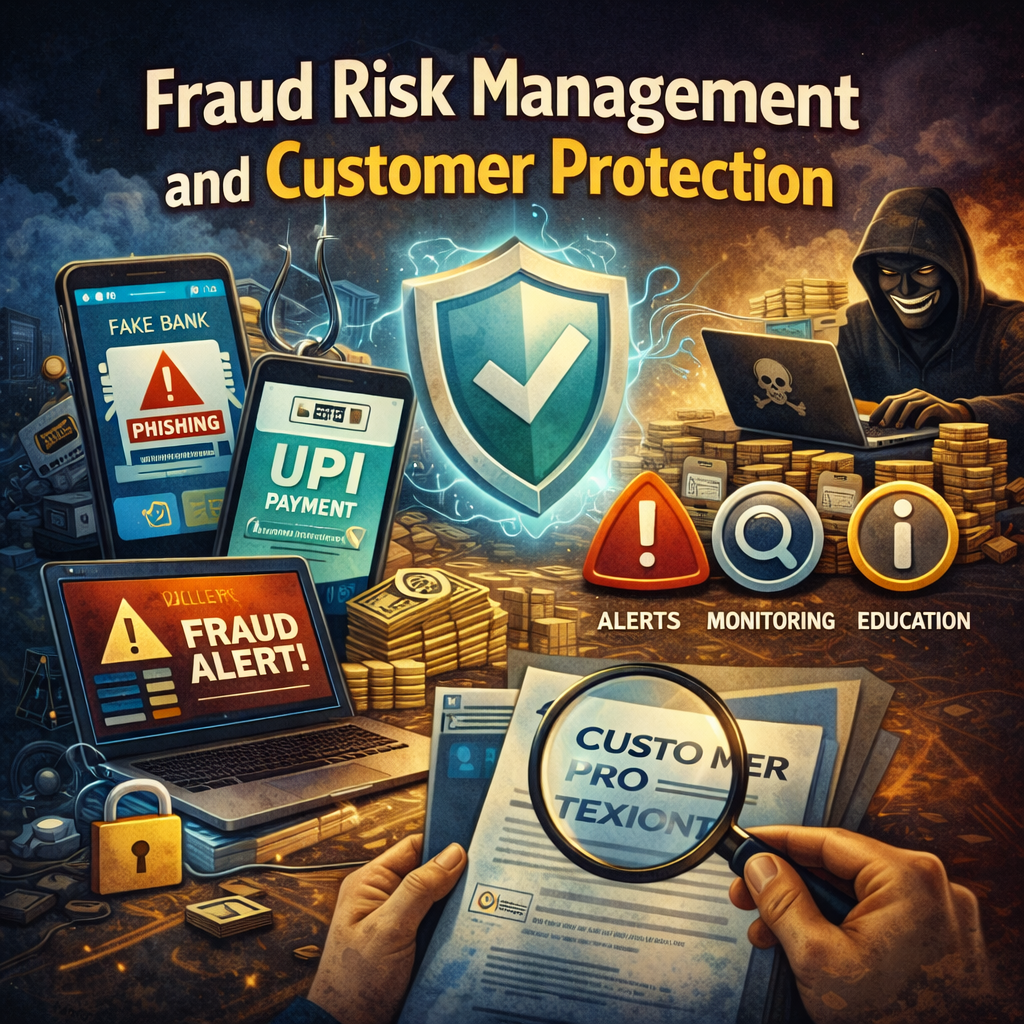
    Fraud Risk Management and Customer Protection

    Security Control Guidelines

    The Direction lays down generic security controls that regulated entities must implement across digital payment channels, including secure communication protocols, appropriate cryptographic standards, robust server‑side security and secure session management. It also requires application security life‑cycle (ASLC) practices, such as secure coding standards, threat modelling and rigorous pre‑production testing for web and mobile applications.​

    Channel‑specific requirements include:

    • Internet banking and mobile banking
      • Strong customer authentication, typically multi‑factor, and, where relevant, device binding or contextual risk‑based checks.​
      • Defence against common web and mobile vulnerabilities (e.g., injection, XSS, insecure direct object references, improper session handling), aligned with frameworks such as OWASP.​
    • Card payments
      • Adherence to PCI card‑security standards for storage, processing and transmission of card data.​
      • Controls for EMV, tokenisation, and secure card‑not‑present flows, including 3‑D Secure and risk‑based authentication.​

    These requirements intersect directly with the CISO’s domain but require CCO/CRO oversight because security control failures translate into reportable incidents, customer disputes and potential supervisory actions.​

    Fraud Risk Management and Customer Protection

    The Direction devotes significant attention to fraud risk management, reconciliation mechanisms, customer protection and grievance redressal related to digital payments.

    The regulated entities are expected to:​

    • Implement real‑time or near‑real‑time fraud monitoring systems, including behavioural analytics and anomaly detection for digital transactions.​
    • Maintain robust reconciliation processes to identify discrepancies and potential fraud patterns across digital channels.​
    • Establish clear policies for sharing liability between the bank and the customer in fraud cases, aligned with RBI’s existing customer liability circulars.​

    Customer awareness and grievance redressal expectations include:

    • Periodic security advisories, alerts and education campaigns on safe digital payment usage.​
    • Effective and time‑bound complaint handling for digital payment issues, with transparent escalation channels and disclosure of turnaround times.​

    For Legal and Compliance teams, these provisions must be embedded into customer‑facing terms and disclosures, internal SOPs, and complaint‑handling frameworks, ensuring that actual practice matches policy and regulatory expectations.​

    RBI Master Directions for Non‑Bank Payment System Operators

    In July 2024, RBI issued the Reserve Bank of India (Cyber Resilience and Digital Payment Security Controls for non‑bank PSOs) Master Directions, 2024, to strengthen the safety and security of payment systems operated by authorised non‑bank payment system operators. These Directions apply to all authorised non‑bank PSOs and seek to enhance overall information‑security preparedness and operational resilience.​

    Key requirements for PSOs include:

    • Board‑approved policies for cyber resilience and digital‑payment security, including risk management of linkages with unregulated entities such as payment gateways and third‑party service providers.​
    • Baseline security measures ensuring system resilience, continuous migration to updated security standards, and alignment of existing card, PPI and mobile‑banking security measures with the new Directions.​

    For regulated entities that rely heavily on PSOs for payment processing, this creates an additional layer of third‑party risk that must be evaluated within the DPSC‑mandated governance and risk‑assessment framework. CCOs and CROs should ensure that outsourcing arrangements, SLAs and due diligence questionnaires reflect both the RE’s and PSO’s regulatory obligations.​

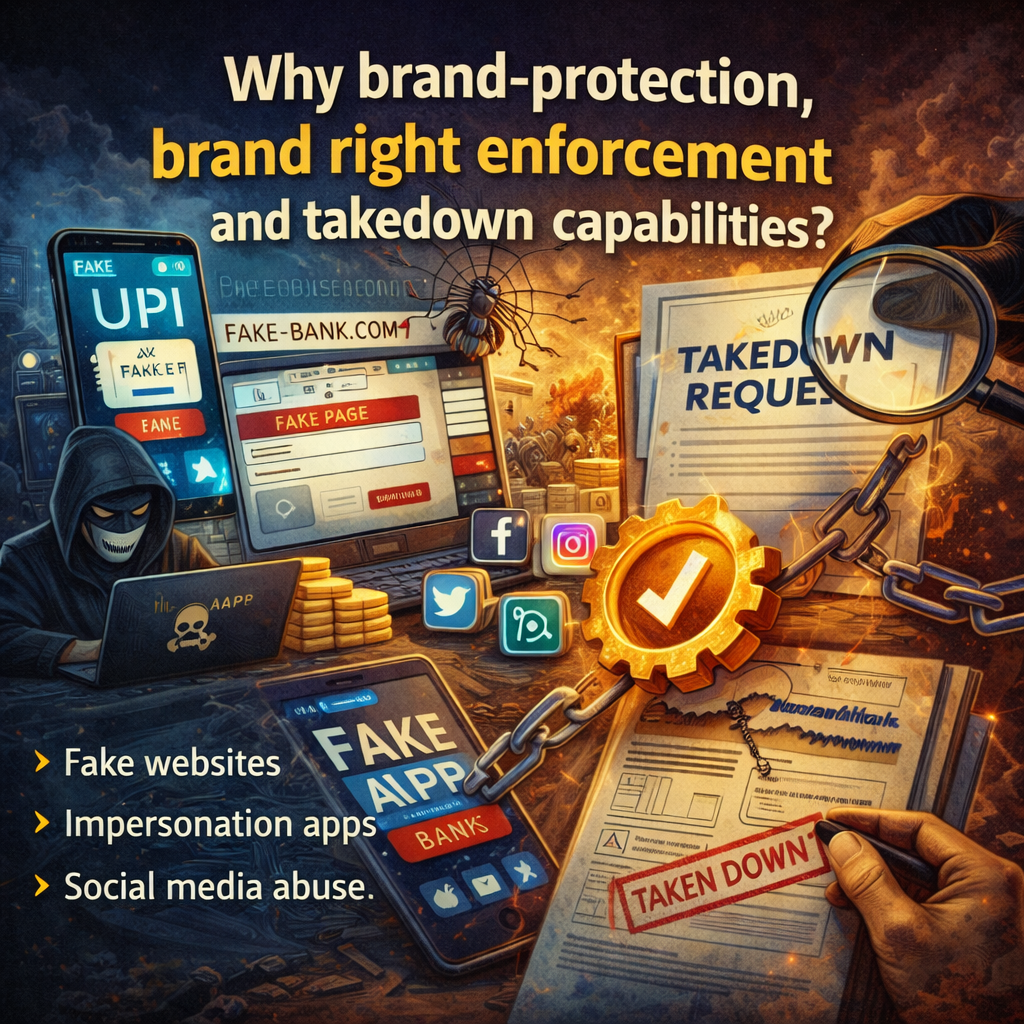
    Brand protection and takedown enforcement

    Why brand‑protection, brand right enforcement and takedown capabilities?

    The DPSC Directions implicitly assume a threat landscape that spans beyond core banking systems, into the broader digital presence where customers interact with the bank’s brand.

    Common patterns now include:​

    • Phishing domains and websites mimicking the bank’s internet banking or UPI interface
    • Fake mobile apps in third‑party app stores using the bank’s name and logo
    • Rogue payment pages and fake offers circulated through social media or messaging apps
    • Impersonation of bank relationship managers or customer‑support handles soliciting credentials or OTPs

    While these fraudulent assets may sit on infrastructure not owned by the regulated entities (banks and financial institutions), the consequences may include fraudulent transactions, customer complaints, negative media and potential regulatory notices seeking an explanation.  The onus is on the financial institutions.

    AiPlex-Your Critical Compliance Partner

    This is where a specialised techno‑legal brand‑protection partner, such as AiPle,x can provide critical support to DPSC compliance.​

    This is how AiPlex can help:

    • Attack‑surface and brand‑abuse monitoring
      • Continuous scanning of domains, app stores, social platforms and marketplaces for use of the bank’s brand, trademarks and payment interfaces.​
      • Prioritisation based on risk signals (e.g., active credential capture, real‑time fraud reports, traffic patterns).
    • Evidence‑grade investigation and documentation
      • Packaging URLs, screenshots, WHOIS data, hosting information and incident summaries in formats suitable for internal fraud teams, law‑enforcement agencies and regulators.
      • Mapping each incident to relevant regulatory expectations (e.g., DPSC fraud‑risk management, customer protection, grievance redressal obligations) to support internal reporting.
    • Takedown execution and follow‑through
      • Coordinating with registrars, hosting providers, app stores and social‑media platforms to remove phishing sites, fake apps and impersonation accounts.​
      • Providing closure documentation (takedown confirmations, timelines) to feed into DPSC compliance reporting, Board‑level MIS and risk‑committee dashboards.

    The value proposition that AiPlex brings to the table is the ability to demonstrate to RBI that the regulated entity (banks & financial institutions) has a structured, proactive programme to detect and neutralise digital threats that exploit the bank’s brand and payment interfaces, even when those threats sit on third‑party infrastructure.

    An Action Plan to Stay Compliant with RBI Master Direction

    To translate DPSC requirements into a defensible, auditable programme, CCOs, CROs, and the Legal teams of the financial institutions (regulated entities) can consider the following steps:

    Update the Board‑approved digital payment policy

    • Ensure it explicitly references the DPSC Directions, ecosystem risk, and the role of third‑party providers (including PSOs and brand‑protection partners).​
    • Embed clear responsibilities for Compliance, Risk, InfoSec and Business for ongoing adherence.

    Integrate DPSC metrics into risk and compliance dashboards

    • Track digital‑fraud events, attempted phishing/impersonation incidents, complaint volumes and resolution times for digital‑payment issues.​
    • Link brand‑abuse takedown statistics (sites identified, sites removed, time‑to‑takedown) with fraud‑loss and complaint metrics.

    Align outsourcing and vendor‑risk frameworks

    • Incorporate DPSC and PSO Master Directions into vendor due diligence, including requirements for cyber resilience, incident reporting and external threat monitoring across unregulated entities in the payment chain.​
    • For specialised providers handling brand‑abuse detection and takedowns, ensure NDAs, data‑handling clauses and reporting obligations meet RBI’s expectations on outsourcing and confidentiality.

    Strengthen legal and grievance documentation

    • Update customer‑facing terms, privacy notices and disclaimers to reflect digital‑payment risks, liability allocation and official communication channels.​
    • Ensure internal grievance‑redressal SOPs explicitly cover frauds involving impersonation, phishing or fake apps, with clear triggers for engaging external takedown partners and, where appropriate, law enforcement.

    Prepare for supervisory review and incident‑driven scrutiny

    • Maintain audit‑ready documentation showing how DPSC requirements are implemented, including minutes from risk‑committee meetings, Board updates and incident post‑mortems.​
    • For major phishing or impersonation incidents, retain full case files combining technical, legal and customer‑impact analysis to support any RBI queries.
    Staying Compliant with RBI Master Directions

    Staying Compliant with RBI Master Directions is a competitive advantage

    Compliance is not just a defensive exercise; when executed well, it becomes a differentiator in an environment where customers and regulators are acutely sensitive to digital‑fraud risk.

    Institutions that can demonstrate strong governance, ecosystem‑wide risk management and proactive deletion of brand‑abuse and impersonation threats will enjoy more regulatory trust and higher customer confidence.​

    For CCOs, CROs and Heads of Legal, partnering with a specialised techno‑legal brand‑protection provider like AiPlex offers a pragmatic way to extend DPSC‑grade controls into the broader digital landscape where fraudsters operate.

    This combination of internal governance and external enforcement muscle creates exactly what the Master Direction envisages: a secure, resilient and trusted digital‑payments environment for customers and regulators alike.

  • Build Trust via Reputation Management

    Build Trust via Reputation Management

    Trust is the silent currency that fuels every successful business relationship.

    Whether you’re a small business owner or a global brand, your reputation defines how customers perceive your credibility and reliability. Reputation management is no longer an optional aspect of branding—it’s an essential strategy that determines long-term success. When consumers search for your company online, they should find consistent, positive impressions that inspire confidence. Building this image takes time, strategy, and careful oversight, which is where professional reputation management becomes indispensable.

    This blog will explore the importance of reputation management, its various dimensions, and how it helps organizations foster trust among their audience. You’ll learn about the key factors influencing brand perception, the steps to strengthen online credibility, and how businesses can actively maintain their reputation through proactive measures. By the end, you’ll understand how a structured approach to reputation management can safeguard your brand image and how Aiplex ORM can help you achieve that goal with precision and expertise. Contact Aiplex ORM to start managing your reputation effectively.

    Understanding the Foundation of Reputation Management

    Reputation management is about shaping public perception through strategic communication, consistent engagement, and proactive monitoring. Before diving into specific tactics, it’s important to understand the core components that form its foundation. These elements work together to build a trustworthy brand identity.

    1. Online Visibility and Brand Perception

    • Visibility is the first pillar of a strong reputation. A brand’s presence across search engines, social media, and review platforms significantly affects how it is perceived. When potential customers search for your company, what they find determines their trust level. If positive reviews, authentic stories, and thoughtful engagement dominate search results, it enhances credibility. On the other hand, lack of visibility or negative mentions can erode trust quickly.
    • Maintaining an accurate, consistent, and engaging presence across digital channels ensures that your audience sees your best side. Optimized content, social proof, and customer interaction collectively influence perception. For example, responding professionally to reviews on Google or social media strengthens a brand’s authenticity and transparency—core elements of reputation management.

    2. Monitoring and Responding to Feedback

    • Reputation management thrives on awareness and responsiveness. Monitoring what people say about your brand across digital platforms helps you stay informed and proactive. Feedback—both positive and negative—provides insights into customer expectations. Ignoring it can lead to dissatisfaction and mistrust, while timely, empathetic responses demonstrate accountability.
    • Businesses that acknowledge feedback show they value customer voices. Using online reputation monitoring tools allows organizations to identify emerging issues early and address them before they escalate. Regularly engaging with users on review platforms, social media, or forums strengthens relationships and reflects a brand’s commitment to improvement.

    3. Content Credibility and Consistency

    • Content defines how your brand communicates values and expertise. Every piece of content—from blogs to social media posts—shapes your public image. Credible content demonstrates authority, while inconsistent or misleading messaging damages trust. Maintaining accuracy, tone, and alignment across all communication channels is crucial to sustaining a solid reputation.
    • To reinforce credibility, businesses should prioritize fact-based storytelling, share client success stories, and update content regularly. Transparency in communication builds long-term relationships with audiences. A consistent content voice establishes brand familiarity, making customers more likely to trust the company’s vision and offerings.

    4. Crisis Management and Recovery Strategies

    • Every organization faces challenges at some point, but how it responds defines its reputation. Reputation management includes preparing for and responding to crises strategically. A well-prepared crisis response plan helps mitigate reputational damage and restore public confidence swiftly.
    • By anticipating potential risks and maintaining communication protocols, brands can address issues transparently. Responding promptly, accepting responsibility when needed, and communicating resolutions show leadership and integrity. Partnering with experts like Aiplex ORM ensures that crisis communication remains professional, timely, and consistent, preventing long-term brand erosion.

    5. Building Social Proof and Advocacy

    • Social proof—such as testimonials, reviews, and influencer endorsements—serves as digital word-of-mouth. It reassures potential customers that your brand delivers what it promises. Encouraging satisfied clients to share their experiences amplifies positive narratives online.
    • Reputation management involves nurturing these relationships to create a network of advocates. Highlighting customer success stories and featuring case studies across platforms strengthens credibility. The more authentic voices speak for your brand, the more resilient your reputation becomes.

    Key Components of an Effective Reputation Management Strategy

    Once the foundation is clear, the next step is to implement actionable strategies. A strong reputation management framework includes monitoring, engagement, optimization, and ongoing evaluation—all integrated into a continuous cycle of improvement.

    1. Active Review Management

    • Reviews shape consumer decisions. A proactive approach to review management involves encouraging feedback, addressing concerns, and celebrating positive experiences. Consistent responses demonstrate your commitment to customer satisfaction.
    • Aiplex ORM helps brands maintain balanced review profiles by leveraging technology to monitor mentions and guide appropriate responses. Encouraging authentic feedback while managing criticism professionally strengthens both credibility and trust.

    2. SEO and Content Optimization for Reputation

    • Search engine optimization (SEO) plays a critical role in reputation management. Positive and relevant content needs visibility, and SEO ensures that the right audience finds it. Optimizing web pages, blogs, and social media content enhances ranking and pushes unfavorable results lower.
    • A holistic SEO strategy focuses on publishing high-quality, keyword-optimized content aligned with brand messaging. Integrating the focus keyword ‘reputation management’ in strategic places increases relevance, while backlinks and citations boost authority and visibility.

    3. Transparent Communication and PR Management

    • Effective communication is at the heart of reputation management. Public relations efforts shape narratives and reinforce trust. Transparency, especially during challenging times, helps brands control stories instead of letting rumors spread.
    • PR management includes press releases, interviews, and digital storytelling. Aiplex ORM’s approach integrates modern PR practices with real-time monitoring, ensuring brands project clarity and consistency in every message. Proactive storytelling humanizes brands and fosters stronger emotional connections.

    4. Employee Advocacy and Internal Culture

    • Reputation starts from within. Employees are powerful ambassadors who shape public perception through their interactions, both online and offline. A strong internal culture built on transparency, ethics, and empowerment directly reflects on brand reputation.
    • Encouraging employees to engage positively on social platforms and align with brand values enhances authenticity. Training programs and internal communication strategies ensure consistency. Companies with empowered teams naturally build credibility and attract loyal customers.

    5. Leveraging Technology for Reputation Insights

    • Modern reputation management relies heavily on analytics. Data-driven insights reveal patterns in customer sentiment, engagement, and public perception. Using AI-based monitoring tools helps brands make informed decisions quickly.
    • Aiplex ORM employs advanced reputation intelligence systems that track mentions, analyze sentiment, and forecast reputation trends. These insights enable proactive interventions and better strategy formulation, keeping your brand reputation strong and adaptive.

    Why Choose Aiplex ORM for Reputation Management

    Aiplex ORM stands as a trusted partner for businesses aiming to build and maintain a strong online presence. With a team of experts specializing in reputation monitoring, crisis response, and digital optimization, Aiplex provides comprehensive solutions that safeguard your brand integrity. Their tailored strategies go beyond surface-level management—they are rooted in deep analytics, audience insights, and consistent communication.

    What sets Aiplex ORM apart is its focus on transparency, precision, and results. Whether it’s suppressing negative links, managing reviews, or enhancing brand visibility, Aiplex ensures every action aligns with long-term reputation goals. Partnering with Aiplex ORM empowers your organization to gain control over its narrative, build customer trust, and grow sustainably in an increasingly competitive environment.

    Conclusion

    Reputation management isn’t a one-time effort; it’s an ongoing process that shapes how the world sees your brand. From building credibility to managing crises, every step contributes to the foundation of trust that supports long-term success. Businesses that invest in professional reputation management not only protect their image but also strengthen their market position.

    Aiplex ORM provides the tools, expertise, and strategic guidance needed to manage and enhance your online reputation effectively. By partnering with them, you’re choosing consistency, reliability, and trust—the core elements of sustained growth. Visit Aiplex ORM today to discover how expert reputation management can elevate your brand’s credibility and influence.


  • Why It’s Vital to Repair Online Reputation Early

    Why It’s Vital to Repair Online Reputation Early

    The reputation can change overnight, and the repair can take years; and in middle there will be hard times for the business.

    It is a known fact that single negative review, misleading comment, or viral controversy can quickly overshadow years of hard work and dedication. When customers, partners, or potential employers search for you online, their first impression comes from what appears on search engines and social media. This is where and why the need to repair online reputation becomes not just important, but urgent. Early intervention helps you prevent lasting damage and regain control of the digital narrative before it impacts your credibility or growth.

    The purpose of this blog is to provide a comprehensive understanding of why repairing your online reputation early is essential. We’ll explore key factors influencing your digital reputation, the benefits of timely response, and proven strategies to rebuild trust and visibility. By the end, you’ll know exactly how proactive reputation management through experts like Aiplex ORM can safeguard your brand’s integrity and ensure long-term success. Let’s dive in to see why time is of the essence when it comes to your digital image.

    Understanding the Importance of Early Reputation Repair

    Online reputation plays a pivotal role in how your audience perceives and interacts with you. A tarnished reputation can result in decreased sales, loss of clients, or missed opportunities. When a crisis occurs—whether through poor reviews, negative press, or false accusations, many individuals and businesses delay taking action, hoping the issue will fade away. Unfortunately, the longer negative content stays online, the deeper it embeds itself into search results, making it much harder to remove or suppress. Early intervention helps mitigate the spread of misinformation and keeps the conversation under your control.

    Moreover, early reputation repair enables you to protect the credibility and trustworthiness that define your brand. By actively addressing negative content as soon as it appears, you demonstrate accountability and transparency, qualities that customers value deeply. In many cases, early engagement can even convert negative feedback into an opportunity for improvement and customer loyalty. This section underscores the need to treat online reputation management as a continuous process rather than a one-time fix.

    Key Factors That Influence Online Reputation

    1. The Power of Customer Reviews

    Customer reviews can make or break a brand’s digital image. In fact, over majority of consumers read online reviews before making a purchase decision. Positive feedback can attract potential buyers, while even a few negative reviews can significantly affect trust. Understanding how to manage and respond to these reviews is vital in your efforts to repair online reputation effectively. When businesses engage promptly and constructively with reviewers, they demonstrate professionalism and care for customer experience. On the other hand, ignoring negative reviews can lead to escalating distrust and lost business. Therefore, incorporating a review response strategy early helps maintain transparency and rebuild relationships, which are critical in online reputation repair.

    2. Social Media Presence and Engagement

    Your social media activity shapes how audiences perceive your brand personality. Platforms like Facebook, X (Twitter), LinkedIn, and Instagram serve as the frontline for public communication. A lapse in engagement or the presence of controversial content can easily harm your reputation. Early monitoring of social media mentions allows you to detect potential issues before they spiral out of control. Actively engaging with your audience, addressing complaints, and sharing value-driven content strengthens brand trust. Social listening tools and reputation management services offered by Aiplex ORM can help identify risks early and ensure that your social presence supports your brand’s positive image.

    3. Search Engine Results

    What appears on the first page of Google determines your digital identity. If negative content ranks higher than your website or profiles, it can mislead users about your brand. Repairing your reputation early ensures that positive, authentic content outweighs the negative. This involves SEO-focused strategies such as content creation, link building, and keyword optimization. By leveraging expert ORM (Online Reputation Management) solutions, you can gradually suppress harmful results and replace them with positive narratives. Aiplex ORM specializes in reputation recovery through advanced SEO and content strategies that help you reclaim visibility and credibility in search rankings.

    4. Media Coverage and Public Relations

    News articles, press releases, and blog mentions have long-lasting effects on your digital footprint. Negative coverage can quickly go viral, making early detection and response essential. Businesses that proactively manage their media relations can influence the narrative and prevent misinformation from spreading. Implementing a strong PR strategy as part of your reputation repair plan ensures that accurate and positive stories about your brand are consistently published. With Aiplex ORM’s media monitoring tools, you can stay informed and act quickly before a negative narrative dominates.

    5. Brand Consistency and Transparency

    Consistency across all communication channels reinforces credibility. When your messaging, tone, and visual branding remain aligned, audiences perceive you as trustworthy and professional. In contrast, inconsistent messaging or evasive responses during crises can erode public trust. To effectively repair online reputation, businesses must maintain open communication and take responsibility where needed. Early transparency not only diffuses tension but also positions your brand as authentic and customer-focused; two traits that can turn critics into advocates.

    Benefits of Repairing Online Reputation Early

    1. Preventing Revenue Loss

    Consumers are far more likely to avoid brands associated with controversy or poor reviews.

    Delayed action on reputation repair can lead to significant financial losses. Studies show that even a one-star drop in rating can reduce revenue by nearly 10%. By acting early, businesses can minimize the duration and impact of such damage. Repairing reputation early helps you retain customer confidence and attract new prospects who rely on digital credibility. Whether it’s through proactive review management or social monitoring, swift action directly supports sustained revenue and growth.

    2. Enhancing Customer Trust and Loyalty

    Trust, once broken, takes time to rebuild.

    Early reputation repair efforts allow brands to demonstrate accountability and responsiveness; two key drivers of long-term loyalty. When customers see that you value their feedback and take corrective measures, it strengthens their relationship with your brand. Companies that engage quickly with dissatisfied customers often transform negative experiences into positive outcomes. By addressing issues head-on, you show your commitment to service excellence, a core principle of effective ORM, which firms like Aiplex ORM excel in delivering.

    3. Improving Search Engine Visibility

    Negative online mentions can push down positive search results.

    Repairing your online reputation early through strategic SEO can reverse this effect. Optimized blogs, PR articles, and social media posts can promote positive content that ranks higher than harmful links. Early intervention prevents negative material from gaining traction and ensures that your brand maintains a favorable online presence. With Aiplex ORM’s expertise in ORM-focused SEO, businesses can recover faster and achieve stronger search visibility in competitive niches.

    4. Protecting Career and Partnership Opportunities

    A poor online footprint can deter investors, clients, or employers from engaging with you.

    For professionals and organizations alike, online reputation influences potential partnerships, collaborations, and hiring opportunities. Early reputation repair ensures your professional credibility remains intact and that your digital identity reflects your actual values and achievements. Taking control of your online narrative allows you to stand out positively in a crowded digital space. With proactive management, you can ensure that potential partners view your brand as reliable, responsible, and forward-thinking.

    5. Building Long-Term Brand Resilience

    A strong online reputation acts as a shield against future crises.

    Brands that have invested in early reputation repair tend to recover faster from new challenges. Building a history of positive engagement, transparent communication, and authentic storytelling ensures that even during setbacks, your audience continues to support you. Partnering with experts like Aiplex ORM helps you establish ongoing monitoring systems that detect risks before they escalate. This preventive approach transforms reputation management from a reactive task to a sustainable, proactive process.

    Effective Strategies to Repair Online Reputation

    1. Continuous Monitoring and Response

    The first step to repairing online reputation is to stay informed. Monitoring your brand mentions, reviews, and social discussions enables early detection of potential issues. Quick, personalized responses demonstrate that you value your audience and are committed to resolving concerns.

    Using professional ORM tools ensures you never miss a mention or review that could impact your brand image. Aiplex ORM’s 24/7 monitoring systems and advanced sentiment analysis help businesses respond swiftly and effectively to protect their reputation.

    2. Content Creation and SEO Optimization

    Positive content creation is one of the most powerful ways to restore a damaged online image. Publishing blogs, testimonials, and thought leadership pieces enhances your credibility while pushing down negative search results. Integrating SEO practices ensures that this content ranks high and reaches your target audience.

    High-quality, keyword-rich content, supported by link-building and social sharing—creates a long-term positive footprint. Aiplex ORM offers tailored content strategies designed to elevate your brand’s authority and repair online reputation efficiently.

    3. Leveraging Public Relations and Media Outreach

    Effective PR campaigns can counteract the effects of negative publicity. By sharing authentic success stories, press releases, and client testimonials, you can replace unfavorable narratives with positive coverage. Collaborating with media outlets and influencers expands your brand’s reach and credibility.

    Aiplex ORM integrates PR strategies within ORM campaigns to ensure that every media appearance reinforces your brand’s positive message. Early PR engagement helps manage public perception and strengthens your online standing.

    4. Encouraging Positive Customer Reviews

    Satisfied customers are your best advocates. Encouraging them to share positive experiences online not only enhances credibility but also pushes down negative content. A structured feedback strategy ensures a continuous flow of positive reviews across major platforms like Google, Yelp, and social media.

    Aiplex ORM assists in designing ethical and effective review generation programs that comply with platform policies. This proactive approach ensures a balanced and authentic reputation profile.

    5. Removing or Suppressing Harmful Content

    Sometimes, negative content violates privacy or defamation policies. Identifying such instances early allows you to request removals or deindexing from search engines. In cases where removal isn’t possible, suppression techniques using positive content can effectively push down the harmful links.

    Through proven ORM methods, Aiplex ORM helps businesses and individuals navigate legal and technical aspects of content suppression and removal, ensuring faster recovery and protection from recurring issues.

    Why Choose Aiplex ORM to Repair Your Online Reputation

    Aiplex ORM stands out as a leading name in online reputation management, with years of expertise helping global brands, professionals, and enterprises restore and maintain their digital presence. Their data-driven approach combines cutting-edge technology, ethical strategies, and personalized service to deliver measurable results.

    From comprehensive monitoring and sentiment analysis to SEO-driven reputation recovery, Aiplex ORM provides end-to-end solutions that protect and elevate your brand image. Whether you are facing negative reviews, false news, or social backlash, their expert team crafts tailored solutions to rebuild trust, visibility, and growth.

    Conclusion

    Your online reputation is one of your most valuable assets. In today’s hyperconnected world, people form opinions instantly based on what they see online. Waiting too long to address negative content can cause irreversible harm to your personal or business image. Repairing your online reputation early ensures you stay in control of your digital narrative, protect customer trust, and maintain long-term success.

    Partnering with specialists like Aiplex ORM empowers you to take proactive, strategic steps toward restoring your digital credibility. Their expertise, technology, and commitment to excellence make them the ideal choice for businesses and professionals who value their reputation as much as their results. Start your journey toward a stronger, more resilient online image today.


  • Repair Online Reputation: Complete Business Guide

    Repair Online Reputation: Complete Business Guide

    Whether you’re a global brand or a local enterprise, customers turn to online reviews, search results, and social media impressions to make purchasing decisions. The ability to repair online reputation effectively has become one of the most crucial aspects of business management. Imagine a single negative review appearing on the first page of Google – it can lead to lost trust, decreased sales, and long-term brand damage. Hence, knowing how to manage and repair online reputation isn’t just advisable; it’s essential for survival in today’s market.

    When we talk about repairing online reputation, we’re referring to a comprehensive, ongoing process of monitoring, managing, and restoring your brand’s credibility across digital platforms. In this guide, we will explore actionable strategies to help you rebuild trust, enhance visibility, and maintain positive engagement online. You’ll learn what causes online reputation damage, how to handle it, and why professional ORM (Online Reputation Management) services like those from Aiplex ORM can make the difference between stagnation and growth. Let’s dive into the complete business guide to repair online reputation and ensure your digital presence reflects the excellence of your brand.

    Things to Know Before You Repair Online Reputation

    Before initiating your reputation repair strategy, understanding the underlying causes of online reputation issues is vital. Not all damage comes from the same source – sometimes it’s due to customer dissatisfaction, while in other cases, it could result from misinformation, outdated content, or even malicious attacks. A structured approach allows you to differentiate between these causes and apply appropriate solutions. This section provides a foundation for business owners to identify reputation issues, measure their impact, and prepare a proactive recovery plan.

    A well-rounded reputation repair strategy must also incorporate tools, analytics, and preventive methods. It’s not just about fixing what’s broken; it’s about building systems to prevent future damage. By learning how search engine algorithms, social proof, and content authority influence public perception, businesses can take charge of their digital identity. The following subsections cover the key aspects you must know before beginning your online reputation repair journey.

    Understanding the Impact of Negative Online Content

    Negative content can spread rapidly through reviews, blogs, and social media. Even one negative post can affect your search engine rankings and brand perception. Understanding its impact helps in prioritizing actions. Monitoring mentions using tools like Google Alerts or specialized ORM software helps identify damaging content early. The sooner it’s detected, the easier it is to mitigate its effects and maintain customer trust.

    Moreover, negative feedback isn’t always harmful if managed correctly. Responding professionally, addressing concerns, and demonstrating customer care can turn criticism into an opportunity to strengthen brand credibility. This not only helps repair online reputation but also builds stronger consumer relationships by showing transparency and accountability.

    Importance of Search Engine Results

    Search engines are often the first impression of your brand. Studies show that over 90% of users never look past the first page of Google results. Therefore, negative listings, outdated information, or misleading content appearing in those top results can significantly harm your business. Optimizing your digital presence through SEO-driven content and strategic link building ensures positive content dominates search results.

    Effective SEO strategies don’t just push down negative content—they promote authentic, relevant, and trustworthy content that aligns with your brand values. Collaborating with ORM experts like Aiplex ORM ensures that your search visibility works in favor of your brand, presenting a consistent and positive online identity.

    Recognizing Fake Reviews and Malicious Posts

    Fake reviews are one of the most damaging factors for businesses online. Whether competitors or bots are behind them, such posts can mislead potential customers and distort brand reputation. Recognizing patterns in review behavior—such as identical wording or sudden spikes in negative ratings—helps identify fraudulent activity.

    Once identified, take appropriate steps: report fake reviews to the platform, encourage authentic customer testimonials, and maintain a transparent communication channel with users. Active monitoring and prompt response are crucial to repair online reputation efficiently and demonstrate a commitment to truth and authenticity.

    Evaluating Brand Sentiment

    Before planning any corrective action, evaluating public sentiment around your brand gives clarity on the scale of the issue. Sentiment analysis tools can help categorize opinions as positive, negative, or neutral across various channels. This provides insights into how your audience perceives you and where improvement is needed.

    Regular sentiment tracking allows businesses to identify recurring issues or communication gaps. For instance, if customers consistently mention poor support response times, it signals the need for operational improvement. Addressing these concerns can significantly improve brand sentiment and support long-term reputation recovery.

    Building a Crisis Management Plan

    No brand is immune to crises. Whether it’s a viral complaint or a PR mishap, having a predefined crisis management plan ensures quick and effective action. A detailed plan includes communication protocols, stakeholder responsibilities, and public response templates to minimize panic and misinformation.

    Companies that plan ahead are better equipped to handle unexpected challenges. Aiplex ORM assists organizations in building robust crisis management frameworks that protect brand reputation even during turbulent times. Preparation is key to not only repair online reputation but to safeguard it continuously.

    Top Strategies to Repair Online Reputation

    Repairing an online reputation requires consistent, data-driven strategies. It’s not a one-time fix but a process of rebuilding credibility and trust. Let’s explore the top actionable strategies businesses can apply to effectively repair online reputation and maintain long-term success.

    Monitor Your Brand Continuously

    Consistent monitoring is the cornerstone of reputation management. Using advanced ORM tools, brands can track mentions, comments, and reviews across platforms in real time. Continuous observation helps identify new issues early before they escalate.

    Establishing a regular monitoring schedule allows for timely responses and pattern recognition. This not only helps in mitigating risks but also provides opportunities to engage with satisfied customers, fostering positive online visibility.

    Optimize Positive Content Creation

    Publishing positive, valuable content helps balance any negative search results. Blog articles, case studies, testimonials, and media features can help create a favorable narrative around your brand. Search engine optimization ensures that these assets rank higher than harmful content.

    Collaborating with experienced ORM agencies ensures content is keyword-optimized, authentic, and brand-aligned. Quality content becomes a sustainable method to repair online reputation while continuously reinforcing trust and credibility.

    Leverage Social Media Responsibly

    Social media can be a double-edged sword for reputation management. It’s a platform for brand growth but also a potential source of criticism. Maintaining active, transparent, and responsive profiles helps build audience loyalty and minimize negative exposure.

    Responding thoughtfully to both positive and negative comments demonstrates professionalism. Establishing a consistent posting schedule, using engaging visuals, and sharing success stories enhances your brand image and helps rebuild a trustworthy online persona.

    Request and Manage Customer Reviews

    Encouraging genuine reviews from satisfied customers can offset occasional negative feedback. Review management platforms like Google Business and Trustpilot are vital tools for maintaining a balanced public image.

    Responding promptly and professionally to all reviews, regardless of tone, reflects accountability. Demonstrating appreciation for feedback and addressing issues publicly shows commitment to customer satisfaction, strengthening brand perception over time.

    Employ Professional ORM Services

    Sometimes, managing reputation internally isn’t enough. Engaging professionals like Aiplex ORM provides expert-level monitoring, strategy development, and recovery execution. These experts use proprietary tools and advanced SEO methods to suppress negative content and promote positive visibility.

    Professional services not only repair online reputation but ensure sustainable brand management. Aiplex ORM’s comprehensive approach includes sentiment tracking, content marketing, and legal support for defamation or cyber-related issues, giving your brand a long-term protective shield.

    Why Choose Aiplex ORM for Reputation Repair

    Aiplex ORM stands as a trusted partner in digital reputation restoration. With years of experience in managing global brands, their customized ORM solutions ensure businesses regain control over their online presence. From strategic planning to real-time monitoring, Aiplex covers every stage of reputation recovery with precision and professionalism.

    Their services are designed to align with your brand’s unique goals. Whether you’re dealing with harmful reviews, misinformation, or outdated online profiles, Aiplex ORM’s dedicated team ensures quick, effective solutions. Their data-driven insights help rebuild positive sentiment while maintaining transparency and trust. Partnering with Aiplex means choosing reliability, innovation, and continuous digital success.

    Conclusion

    Repairing your online reputation is not just about removing negative content—it’s about rebuilding trust, authenticity, and visibility. Every brand will face challenges online at some point, but what truly matters is how quickly and effectively those challenges are addressed. A structured strategy that involves monitoring, content creation, and professional ORM support can turn potential crises into opportunities for growth.

    With Aiplex ORM by your side, you can ensure your brand’s digital footprint remains strong and credible. Their comprehensive ORM services help you take control of your narrative, engage positively with your audience, and maintain a consistent brand image across all platforms. Take the first step today—repair your online reputation and secure your brand’s future.


  • Common Mistakes When You Repair Online Reputation

    Common Mistakes When You Repair Online Reputation

    Whether you’re a business owner, influencer, or professional, your digital footprint defines how people perceive you before they even meet you. Attempting to repair online reputation without proper strategy often leads to costly mistakes. Many jump into action without understanding how online reputation management (ORM) works, and end up worsening the damage instead of restoring credibility. Understanding what not to do is just as critical as knowing what steps to take.

    In this blog, we’ll walk you through the most common mistakes made while trying to repair online reputation and how to avoid them effectively. You’ll learn key principles of ORM, discover the right methods to regain trust, and understand why partnering with a professional ORM company like AiPlex ORM can make all the difference. If your reputation has taken a hit online, don’t panic—read on to gain the clarity and actionable guidance you need to rebuild your online credibility the right way.

    Key Things to Know Before You Start Repairing Your Online Reputation

    Before you jump into fixing your online image, it’s essential to understand how online reputation works. Online reputation management involves monitoring, improving, and maintaining your digital presence across multiple channels—search engines, review sites, and social platforms. Missteps made during this process can lead to long-term damage that’s hard to undo. Each move must be strategic, data-driven, and compliant with digital best practices.

    Below are essential concepts to grasp before taking any action to repair your online reputation. Each of these will help you make informed decisions and avoid common traps that businesses and individuals often fall into.

    Understanding How Search Results Impact Reputation

    Search engines are the first place people go to learn about a brand or person. When negative links or outdated content appear on the first page of search results, they shape perceptions immediately. Many people mistakenly think they can delete or hide this content overnight, but that’s rarely possible. Instead, ORM focuses on pushing down negative results by promoting positive and authentic content that builds trust.

    A clear understanding of SEO, digital content creation, and brand communication is vital for effective reputation repair. The goal is to manage visibility—not erase history. By consistently publishing high-quality, optimized content, you can gradually reshape your online narrative.

    The Role of Reviews and Customer Feedback

    Reviews hold tremendous power in influencing purchasing decisions. Businesses often make the mistake of ignoring negative feedback or trying to remove it forcibly. Both actions can backfire, damaging authenticity. The right approach is to respond professionally, acknowledging the issue and offering a solution.

    Engaging constructively with reviews signals transparency and care for customers. It’s also a chance to showcase professionalism. Encouraging satisfied customers to leave positive feedback further balances the narrative, helping repair online reputation organically and sustainably.

    The Importance of Social Media Presence

    Social media platforms act as direct communication channels between brands and audiences. However, posting inconsistently, engaging in arguments, or deleting negative comments can worsen reputation issues. Building an authentic presence requires consistency, empathy, and responsiveness.

    To maintain control, brands should monitor mentions, track sentiment, and share value-driven content. When managed wisely, social media can shift public perception and build credibility faster than most other digital tools.

    Legal and Ethical Boundaries in ORM

    Some individuals attempt to repair online reputation through questionable tactics—such as creating fake reviews or using unethical SEO methods. These shortcuts often lead to penalties from search engines and a loss of trust from the public.

    A sustainable reputation strategy is always ethical. Work with experienced professionals who follow legitimate ORM practices—content optimization, digital PR, and transparent engagement—to ensure your reputation rebuilds on solid ground.

    Measuring the Effectiveness of ORM Efforts

    Repairing online reputation isn’t a one-time effort—it’s an ongoing process. Many fail because they don’t track progress or set measurable goals. Use analytics tools to monitor keyword rankings, sentiment trends, and engagement rates.

    By consistently analyzing results, you’ll know what strategies work and what needs refinement. This proactive approach helps maintain a positive digital footprint over the long term.

    Common Mistakes When Repairing Online Reputation

    When people realize their online reputation is under threat, panic often sets in. Unfortunately, hasty decisions can do more harm than good. Let’s examine the most common mistakes individuals and businesses make when attempting to repair online reputation.

    Ignoring Negative Content Instead of Addressing It

    Pretending that negative reviews or articles don’t exist won’t make them go away. Ignoring criticism allows misinformation to spread unchecked. Acknowledging and addressing issues head-on demonstrates accountability and transparency.

    Proactive communication turns challenges into opportunities to rebuild trust. Craft polite, fact-based responses and show that you value feedback. This approach can convert critics into advocates and strengthen your reputation.

    Responding Emotionally or Aggressively

    When faced with unfair reviews or false accusations, emotional responses are tempting. But reacting aggressively or defensively only amplifies the issue. Public arguments can escalate quickly and cause lasting damage.

    Instead, remain calm and professional. Craft thoughtful responses that reflect maturity and responsibility. A composed tone reinforces credibility and defuses tension, showing audiences that your brand prioritizes integrity over ego.

    Using Black-Hat SEO Techniques

    In an attempt to suppress negative search results, some individuals resort to manipulative SEO tactics like keyword stuffing or link farms. These strategies may offer short-term gains but lead to long-term penalties from search engines.

    Ethical ORM practices focus on genuine engagement, authoritative content creation, and organic growth. By consistently publishing valuable materials and earning authentic backlinks, your online presence will naturally strengthen over time.

    Failing to Create Positive Content

    Many believe reputation repair is only about removing negativity, but it’s equally about building positivity. Without creating meaningful, keyword-optimized content, there’s nothing to counterbalance the bad press.

    Publishing blogs, thought leadership articles, and customer success stories helps establish a positive narrative. Over time, this content dominates search results, making old negative material less visible.

    Inconsistent Online Branding

    Reputation repair becomes challenging when your online profiles convey mixed messages. Inconsistent brand tone, visuals, or values confuse audiences and weaken trust.

    Ensure your website, social media, and external listings align in style and messaging. A cohesive brand identity builds familiarity, which is key to regaining lost confidence.

    Advanced Strategies to Repair Online Reputation Effectively

    Avoiding mistakes is only half the battle; the next step is implementing effective ORM strategies. These advanced methods can help accelerate your journey toward a strong and resilient online image.

    Regular Monitoring and Sentiment Analysis

    Constant vigilance is the backbone of ORM. Tools like Google Alerts and Brandwatch can help track mentions and analyze sentiment in real time. Early detection allows faster responses and prevents small issues from escalating.

    By integrating sentiment analytics into your strategy, you gain data-driven insights into audience perception. This helps refine content tone and engagement style for maximum reputation recovery impact.

    Leveraging PR and Influencer Partnerships

    Positive media coverage is an effective way to overshadow negative content. Collaborating with journalists, influencers, and reputable platforms helps shape the public narrative.

    Strategic PR campaigns can amplify achievements, CSR initiatives, or brand milestones. Each mention builds authority, trust, and visibility, aiding long-term reputation repair.

    Creating Evergreen Value-Driven Content

    Publishing timeless, high-value content reinforces credibility over time. Blogs, guides, and expert interviews build an authoritative online presence that search engines reward.

    Focus on topics that answer customer questions and showcase expertise. This positions you as a reliable source and keeps negative content buried under layers of relevance.

    Managing Online Reviews Systematically

    Develop a structured approach for collecting, analyzing, and responding to reviews. Implement feedback management tools to automate responses and highlight customer satisfaction.

    Encouraging authentic testimonials from happy clients balances overall ratings. It demonstrates transparency and dedication to continuous improvement.

    Partnering With a Professional ORM Agency

    DIY reputation repair has limits. Complex reputation crises require expertise in SEO, PR, and digital psychology. Partnering with a trusted ORM agency like AiPlex ORM ensures a strategic, data-backed approach.

    Experts can identify root causes, implement targeted strategies, and maintain ongoing monitoring. This not only accelerates recovery but prevents future crises effectively.

    Why Choose AiPlex ORM for Online Reputation Repair

    AiPlex ORM is a leading reputation management company specializing in restoring and protecting digital reputations for businesses and individuals alike. With over a decade of experience in the industry, AiPlex ORM combines advanced technology, ethical SEO practices, and strategic communication to deliver measurable results.

    Unlike generic ORM providers, AiPlex offers customized strategies tailored to your unique needs. From crisis intervention to proactive monitoring, every step focuses on transparency, sustainability, and long-term trust building. Their dedicated team ensures that negative content gets buried while positive narratives take center stage, driving consistent brand credibility.

    If your online reputation has been compromised, AiPlex ORM provides end-to-end support—from assessment to restoration—to help you reclaim your digital image with confidence.

    Conclusion

    Repairing online reputation is not just about damage control—it’s about rebuilding trust and crafting a lasting digital legacy. Mistakes like ignoring feedback, using unethical SEO tactics, or inconsistent branding can hinder progress. Instead, focus on transparent communication, positive content creation, and expert guidance.

    Partnering with AiPlex ORM empowers you with the right strategies, tools, and expertise to regain control of your online presence. Take proactive steps today to ensure your reputation reflects your true values and professional excellence. Because in the digital era, your reputation isn’t just what people say—it’s what they find when they search your name.