Category: Sentiment Analysis

  • Sentiment Analysis ORM for Reputation Decisions

    Sentiment Analysis ORM for Reputation Decisions

    Brand reputation is shaped less by isolated campaigns and more by the collective voice of customers, stakeholders, and the wider digital audience.

    Every review, comment, social post, or forum discussion contributes to how a brand is perceived at scale. When leaders try to understand these perceptions without structured data, they often rely on fragmented feedback or anecdotal signals. This creates blind spots in decision-making, especially when emotions shift gradually rather than through a single crisis. Sentiment Analysis ORM helps organizations decode these emotional signals in a systematic way, allowing them to understand not just what is being said, but how it is being felt across digital ecosystems.

    This blog explains how Sentiment Analysis ORM plays a foundational role in reputation decisions and why it is becoming essential for businesses that operate in competitive, review-driven markets. You will gain clarity on the core concepts behind sentiment analysis, the factors that influence its accuracy, and how insights can be translated into strategic ORM actions. By the end, you will also understand why Aiplex ORM solutions are positioned to support brands seeking data-driven reputation control and long-term trust.

    Key Concepts to Understand Before Using Sentiment Analysis ORM

    Before organizations can rely on sentiment insights for reputation decisions, it is important to understand the foundational elements that shape how sentiment analysis works in ORM systems. These concepts determine the quality, relevance, and usability of insights generated from unstructured digital data. A clear understanding of these factors ensures that decision-makers interpret sentiment scores correctly and apply them strategically rather than reactively.

    Understanding Sentiment Polarity in Online Reputation Management

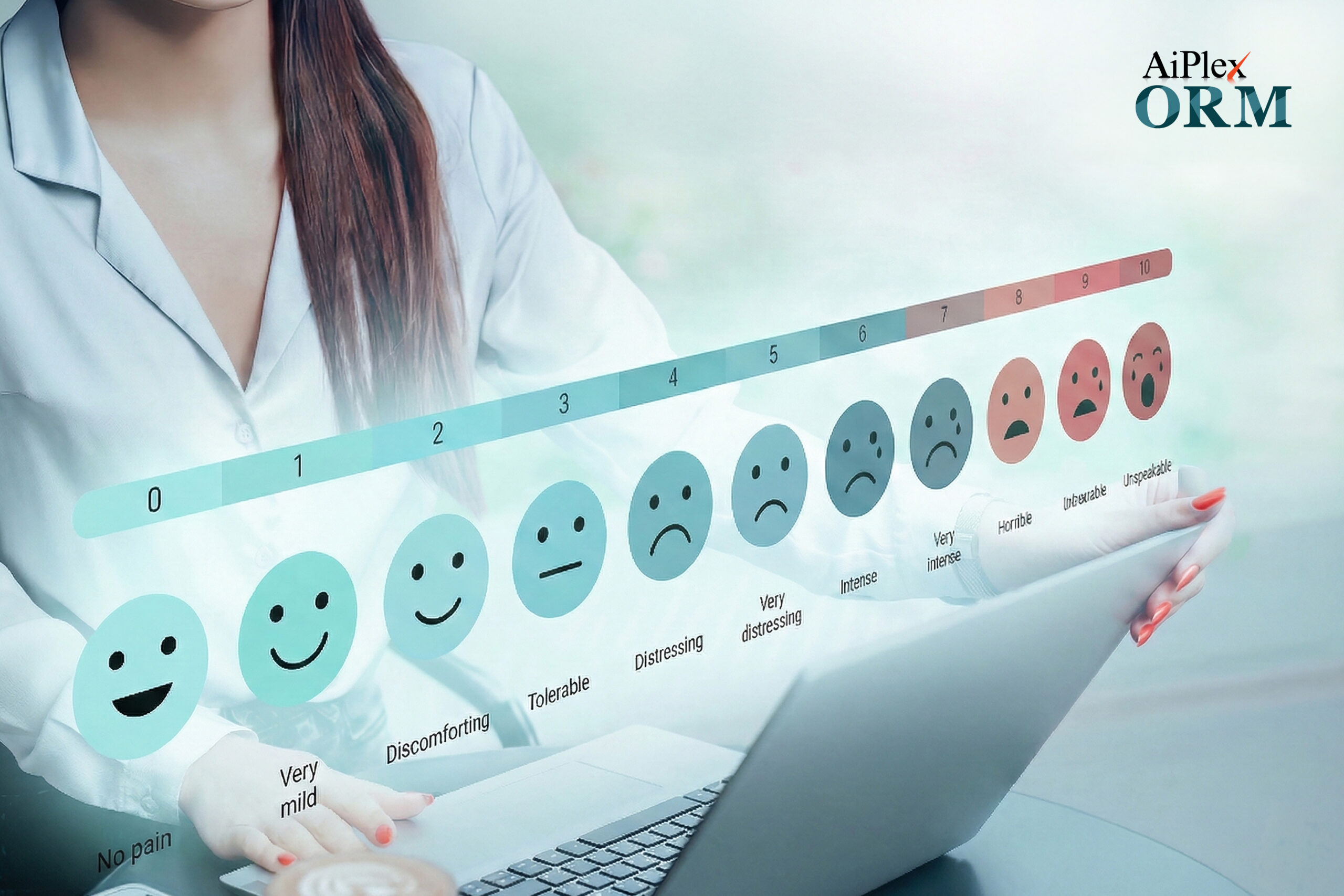
    Sentiment polarity refers to the classification of online content into positive, negative, or neutral categories. In Sentiment Analysis ORM, this categorization helps brands understand the emotional direction of conversations surrounding them. Positive polarity reflects trust, satisfaction, or advocacy, while negative polarity signals dissatisfaction, frustration, or reputational risk. Neutral sentiment often represents informational mentions that may not immediately influence perception but can shift depending on context.

    From an ORM perspective, polarity is not just about counting positive versus negative mentions. It is about understanding how these sentiments evolve over time and across platforms. A sudden increase in negative polarity on review sites may indicate service issues, while neutral sentiment on news platforms may still influence brand credibility. Accurate polarity detection enables organizations to prioritize responses and allocate ORM resources effectively.

    Role of Contextual Analysis in Sentiment Accuracy

    Contextual analysis determines how accurately sentiment is interpreted in real-world conversations. Words can change meaning depending on context, sarcasm, cultural nuances, or industry-specific language. In Sentiment Analysis ORM, failing to account for context can lead to misclassification, where neutral or even positive comments are mistakenly labeled as negative.

    Advanced ORM systems analyze sentence structure, modifiers, and surrounding keywords to refine sentiment interpretation. For example, a phrase like “not bad” conveys mild positivity despite containing a negative word. Contextual accuracy is critical for reputation decisions because misinterpreted sentiment can lead to unnecessary crisis responses or missed opportunities for engagement. Strong context handling ensures sentiment insights align with actual audience perception.

    Data Sources That Influence Sentiment Analysis ORM

    Sentiment analysis depends heavily on the quality and diversity of data sources. Reviews, social media platforms, forums, blogs, news articles, and customer support interactions all contribute different types of sentiment signals. Each source carries a unique weight in shaping public perception and reputation outcomes.

    In ORM, prioritizing the right sources is essential. Review platforms often have higher impact on purchase decisions, while social media sentiment spreads faster and influences visibility. News sentiment affects credibility and investor confidence. Effective Sentiment Analysis ORM integrates multiple data streams to provide a balanced reputation view rather than relying on a single channel.

    Importance of Volume Versus Intensity of Sentiment

    Not all sentiment signals carry equal importance. Volume refers to how often a sentiment appears, while intensity reflects how strongly it is expressed. A small number of highly negative comments can sometimes outweigh a large number of mildly positive mentions in terms of reputational risk.

    Sentiment Analysis ORM evaluates both dimensions to support informed decisions. High-volume neutral sentiment may indicate growing brand awareness, while high-intensity negative sentiment could signal an emerging crisis. Understanding this balance helps organizations avoid overreacting to isolated feedback while remaining alert to meaningful emotional shifts.

    Sentiment Trends and Long-Term Reputation Tracking

    Sentiment trends reveal how brand perception changes over time rather than focusing on isolated moments. ORM decisions based on single-day data often lead to reactive strategies that lack sustainability. Trend analysis helps organizations identify recurring issues, seasonal perception shifts, and the long-term impact of campaigns or operational changes.

    In Sentiment Analysis ORM, trend tracking enables leadership teams to connect sentiment changes with internal decisions, product launches, or policy updates. This long-term view transforms sentiment analysis from a monitoring tool into a strategic asset for reputation planning.

    How Sentiment Analysis ORM Supports Reputation Decisions

    Once the foundational concepts are understood, the real value of Sentiment Analysis ORM emerges in its practical applications. Sentiment insights guide reputation decisions by highlighting risks, validating strategies, and aligning communication with audience expectations. These decisions shape how a brand responds, positions itself, and invests in ORM initiatives.

    Identifying Early Reputation Risks Through Sentiment Signals

    Sentiment Analysis ORM acts as an early warning system for reputation risks. Negative sentiment often appears before issues escalate into public crises. Customers may express dissatisfaction subtly at first, through tone shifts or recurring complaints, long before formal complaints increase.

    By detecting these early signals, ORM teams can address root causes proactively. Whether it involves service improvements, communication adjustments, or targeted engagement, early intervention minimizes reputational damage. This proactive capability distinguishes sentiment-driven ORM from traditional reactive reputation management.

    Guiding Communication Strategy With Emotional Insights

    Reputation decisions are closely tied to communication tone and messaging. Sentiment Analysis ORM provides insights into how audiences emotionally respond to brand messages, announcements, and responses. This allows organizations to refine language, timing, and channels for maximum impact.

    When sentiment data indicates frustration or confusion, communication can shift toward clarity and reassurance. When sentiment is positive, brands can reinforce advocacy and engagement. Emotionally informed communication strengthens trust and demonstrates responsiveness, both critical for long-term reputation health.

    Prioritizing ORM Actions Based on Sentiment Impact

    Not every negative comment requires the same level of response. Sentiment Analysis ORM helps prioritize actions by identifying which issues generate the strongest emotional reactions and widest reach. This ensures that ORM resources are allocated where they matter most.

    For example, recurring negative sentiment about customer support may require systemic changes, while isolated complaints may only need individual responses. Prioritization based on sentiment impact prevents burnout within ORM teams and improves overall efficiency.

    Measuring Reputation Recovery and Campaign Effectiveness

    After implementing ORM strategies, sentiment analysis provides measurable feedback on effectiveness. Shifts from negative to neutral or positive sentiment indicate recovery and improved perception. This data-driven validation supports confident decision-making and continuous optimization.

    Sentiment Analysis ORM allows organizations to compare sentiment before and after campaigns, policy changes, or crisis responses. This measurable approach replaces assumptions with evidence, strengthening leadership confidence in ORM investments.

    Supporting Executive-Level Reputation Decisions

    Reputation decisions often extend beyond marketing teams to executive leadership. Sentiment Analysis ORM translates complex emotional data into actionable insights that leaders can understand and use for strategic planning.

    Executives can assess brand health, stakeholder trust, and public confidence through sentiment dashboards and reports. This alignment ensures that reputation considerations are integrated into broader business decisions, including expansion, partnerships, and risk management.

    Why Choose Aiplex for Sentiment Analysis ORM

    Choosing the right ORM partner is critical for turning sentiment data into meaningful reputation outcomes. Aiplex offers advanced Sentiment Analysis ORM solutions designed to deliver accurate, contextual, and actionable insights for businesses across industries.

    Aiplex integrates multi-source sentiment data, advanced contextual analysis, and trend tracking into a unified ORM framework. This ensures that reputation decisions are based on comprehensive and reliable insights rather than surface-level metrics. With scalable solutions and expert-driven interpretation, Aiplex supports both immediate reputation needs and long-term brand strategy.

    Conclusion

    Sentiment Analysis ORM has become an essential component of modern reputation management. It enables organizations to understand how audiences feel, why perceptions shift, and how reputation decisions should be guided by emotional intelligence rather than assumptions. By analyzing sentiment polarity, context, trends, and impact, businesses gain clarity in an environment where opinions spread rapidly and influence trust.

    When implemented strategically, sentiment analysis transforms ORM from a reactive function into a proactive decision-making system. Partnering with a solution provider like Aiplex ensures that sentiment insights are accurate, actionable, and aligned with business goals. For organizations seeking sustainable reputation control, Sentiment Analysis ORM is no longer optional it is foundational.
  • Sentiment Analysis to Measure Online Brand Perception

    Sentiment Analysis to Measure Online Brand Perception

    Brands are constantly discussed, evaluated, and compared across digital platforms where opinions are formed in real time.

    Customers express satisfaction, frustration, trust, or disappointment through reviews, comments, social media posts, and even support tickets. These expressions collectively shape how a brand is perceived, often influencing purchasing decisions before a company has a chance to respond. Manually tracking these conversations is not only inefficient but also prone to bias and oversight. This is where Sentiment Analysis becomes essential, offering a systematic way to decode emotions and attitudes hidden within vast volumes of unstructured text data and convert them into measurable indicators of brand perception.

    This blog provides a detailed, informational overview of how Sentiment Analysis helps organizations measure and understand online brand perception with clarity and consistency.

    It explains the core concepts, technologies, and data sources involved, along with the key factors businesses should evaluate before implementation. You will also explore practical applications across industries and learn how AI-driven sentiment analysis platforms transform raw textual feedback into strategic insights. For organizations aiming to strengthen reputation management and customer intelligence, this guide outlines how advanced analytics solutions from Aiplex ORM can support informed, data-driven brand decisions.

    Essential Concepts to Understand Before Measuring Brand Sentiment

    Before deploying sentiment analysis to evaluate online brand perception, it is important to understand the underlying concepts that determine accuracy and usefulness. Sentiment analysis relies on structured processes, contextual interpretation, and data relevance rather than simple keyword tracking. Without this foundational understanding, businesses risk misinterpreting customer intent or drawing incomplete conclusions from the data. Establishing clarity on data sources, linguistic complexity, analytical models, and evaluation metrics ensures that sentiment insights align with real customer emotions and business objectives.

    Understanding these essentials also helps organizations set realistic expectations about what sentiment analysis can and cannot deliver. While advanced AI models can process language at scale, human language remains nuanced and context-dependent. By familiarizing yourself with these core factors, you can better assess tools, interpret results, and integrate sentiment insights into broader brand perception strategies rather than treating them as isolated metrics.

    Data Sources That Shape Online Brand Perception Insights

    Online brand perception is influenced by a wide range of digital touchpoints, making data source selection a critical factor in sentiment analysis accuracy. Social media platforms, customer reviews, blogs, forums, news articles, and support interactions each represent different contexts and emotional tones. For example, social media sentiment often reflects spontaneous reactions, while reviews may contain more considered opinions. Aggregating data from diverse sources allows sentiment analysis systems to build a balanced and representative view of how a brand is discussed across the digital ecosystem.

    However, not all data sources carry equal relevance for every business. Selecting sources aligned with your industry, audience, and objectives ensures insights remain actionable. AI-powered sentiment analysis platforms can continuously ingest data from multiple channels, normalize formats, and remove noise. This structured approach helps organizations avoid over-reliance on a single platform and instead measure brand perception through a comprehensive, multi-channel lens.

    Role of Natural Language Processing in Sentiment Detection

    Natural Language Processing plays a central role in enabling machines to understand human language at scale. Unlike basic text analysis, NLP examines grammar, syntax, semantics, and context to determine whether a piece of content conveys positive, negative, or neutral sentiment. Advanced NLP models can identify sentiment modifiers such as sarcasm, negation, and intensity, which are common in online conversations and critical for accurate brand perception measurement.

    By leveraging NLP, sentiment analysis systems move beyond surface-level keyword detection and focus on meaning. This allows brands to understand not just what customers are saying, but how they feel when saying it. NLP-driven sentiment detection is especially valuable when analyzing large datasets where manual interpretation is impractical, ensuring consistency and depth across all analyzed content.

    Understanding Context, Tone, and Language Variations

    Language context significantly impacts sentiment interpretation, especially in global or multi-market environments. Words that appear positive in one context may signal dissatisfaction in another, and cultural language variations can alter emotional meaning. Sentiment analysis models must account for slang, emojis, abbreviations, and evolving digital language trends to avoid misclassification of brand-related conversations.

    Context-aware sentiment analysis incorporates surrounding words, conversation history, and domain-specific language patterns. This allows brands to differentiate between genuine praise, constructive criticism, and ironic commentary. By understanding tone and context, organizations gain more reliable insights into customer sentiment, enabling better-informed responses to emerging perception trends.

    Importance of Accuracy, Precision, and Model Training

    Accuracy in sentiment analysis depends heavily on how models are trained and evaluated. Machine learning-based sentiment models require high-quality, labeled datasets that reflect real-world language usage within a specific industry. Poor training data can lead to biased or misleading results, ultimately affecting brand perception analysis and decision-making.

    Precision and recall metrics help organizations assess how reliably sentiment classifications reflect true customer emotions. Continuous model training and validation are essential as language evolves and new topics emerge. Businesses that prioritize model performance monitoring ensure their sentiment analysis outputs remain relevant, trustworthy, and aligned with actual audience sentiment over time.

    Aligning Sentiment Metrics With Business Objectives

    Sentiment analysis becomes truly valuable when insights are aligned with defined business objectives. Measuring sentiment without a clear purpose can lead to data overload without actionable outcomes. Organizations should determine whether their primary goal is reputation monitoring, campaign evaluation, product feedback analysis, or competitive benchmarking.

    By mapping sentiment metrics to specific objectives, businesses can contextualize insights and prioritize responses. For example, tracking sentiment shifts after a product launch provides different value than monitoring long-term brand trust trends. Strategic alignment ensures sentiment analysis supports broader brand management, customer experience, and growth initiatives.

    Key Ways Sentiment Analysis Measures Online Brand Perception

    Sentiment analysis provides structured methods to quantify how audiences feel about a brand across digital platforms. Instead of relying on anecdotal feedback, it translates qualitative opinions into measurable indicators that can be tracked over time. These indicators help organizations identify patterns, detect changes in perception, and evaluate the impact of business actions on customer sentiment.

    By applying sentiment analysis across multiple use cases, brands gain a dynamic view of perception rather than static snapshots. This section outlines the primary ways sentiment analysis contributes to a deeper understanding of online brand perception, supporting data-driven decision-making at both strategic and operational levels.

    Monitoring Real-Time Brand Sentiment Trends

    Real-time sentiment monitoring allows brands to observe how perception changes as events unfold. Product launches, marketing campaigns, public announcements, or service disruptions often trigger immediate online reactions. Sentiment analysis systems can process incoming data streams continuously, identifying spikes in positive or negative sentiment as they occur.

    This capability enables proactive brand management rather than reactive damage control. Organizations can address emerging concerns quickly, reinforce positive feedback, and adjust messaging based on audience response. Over time, real-time sentiment trend analysis helps brands understand how consistent actions influence long-term perception stability.

    Evaluating Customer Feedback Across Digital Touchpoints

    Customer feedback exists in many forms, including reviews, comments, surveys, and support interactions. Sentiment analysis consolidates these diverse inputs into a unified perception metric. This holistic evaluation helps brands identify recurring themes in praise or dissatisfaction that may be overlooked when feedback channels are analyzed in isolation.

    By systematically evaluating feedback sentiment, organizations gain clarity on customer expectations and experience gaps. This insight supports continuous improvement initiatives and ensures that brand perception reflects actual customer experiences rather than assumptions or isolated feedback samples.

    Measuring Campaign Impact on Brand Perception

    Marketing and communication campaigns aim to influence audience perception, but measuring their emotional impact can be challenging. Sentiment analysis offers a way to assess whether campaigns generate positive engagement, neutral awareness, or negative reactions. By comparing sentiment before, during, and after campaigns, brands can quantify perception shifts with greater confidence.

    These insights allow marketing teams to refine messaging, creative strategies, and channel selection. Over time, sentiment-driven campaign evaluation helps organizations understand which approaches resonate most effectively with their audience and contribute positively to brand perception.

    Identifying Reputation Risks and Emerging Issues

    Negative sentiment often signals underlying issues that may escalate if left unaddressed. Sentiment analysis helps brands detect early warning signs of reputation risks by identifying recurring negative themes or sudden sentiment declines. This early detection is especially valuable in industries where trust and credibility are critical.

    By analyzing sentiment patterns, organizations can prioritize risk mitigation efforts and allocate resources effectively. Addressing issues at an early stage not only protects brand reputation but also demonstrates responsiveness and accountability to customers and stakeholders.

    Benchmarking Brand Sentiment Against Competitors

    Sentiment analysis also enables comparative evaluation of brand perception within a competitive landscape. By analyzing sentiment data for competitors alongside your own brand, organizations gain insight into relative strengths, weaknesses, and differentiation opportunities. This benchmarking provides context that internal sentiment metrics alone cannot offer.

    Understanding how audiences perceive competing brands helps inform positioning strategies and value propositions. It allows businesses to identify areas where they outperform competitors emotionally, as well as gaps where perception improvement initiatives may be required.

    Why Choose Aiplex ORM for Sentiment Analysis Solutions

    Aiplex ORM offers advanced AI-driven sentiment analysis solutions designed to deliver accurate, scalable, and actionable brand perception insights. By combining machine learning, natural language processing, and customizable analytics frameworks, Aiplex ORM enables organizations to analyze large volumes of unstructured data with contextual precision. The platform supports multi-source data integration, ensuring comprehensive coverage across social media, reviews, and digital content.

    What differentiates Aiplex ORM is its focus on aligning sentiment insights with business objectives. The solutions are adaptable to industry-specific language, continuously trained for accuracy, and designed to integrate seamlessly with existing data systems. This ensures sentiment analysis outputs are not just informative, but directly usable for strategic brand management and decision-making.

    Conclusion

    Measuring online brand perception requires more than surface-level monitoring of mentions or ratings. Sentiment analysis provides a structured, scalable approach to understanding how audiences truly feel across diverse digital environments. By analyzing context, tone, and emotional patterns, organizations gain deeper insight into customer attitudes that shape brand reputation and influence business outcomes.

    When implemented with the right data sources, models, and strategic alignment, sentiment analysis becomes a powerful component of brand intelligence. AI-driven platforms like Aiplex ORM make it possible to transform unstructured text into meaningful perception metrics that support informed decisions. For brands seeking clarity, consistency, and confidence in reputation management, sentiment analysis is no longer optional but a strategic necessity.